
  • English
User account menu
  • Log in
Home
International Civil Aviation Organization
ICAO store
User account menu
  • Log in
Seach MENU
About ICAO

About ICAO

  • Overview
  • Strategic Plan 2026-2050
  • Latest News and Highlights
  • FAQs
  • List - ICAO Member States
  • ICAO Museum
  • ICAO Carbon Calculator
  • Report Misconduct
  • Contact ICAO

Diplomatic Bodies

  • ICAO Assembly (193 States)
  • Sessions of the Assembly
  • Resolutions in Force
  • ICAO Council (36 States)
  • President of the Council
  • Sessions of the Council
  • Council State Representatives
  • Air Navigation Commission

ICAO Secretariat

  • Secretary General
  • Air Navigation Bureau
  • Air Transport Bureau
  • Capacity Development and Implementation Bureau
  • Legal Affairs and External Relations Bureau
  • Administration Bureau
  • Regional Offices
Global Priorities

Strategic goals

  • Every Flight is Safe and Secure
  • Aviation is Environmentally Sustainable
  • • CORSIA
  • • State Action Plans for Aviation CO2 Reduction
  • • Finvest Hub
  • Seamless, Accessible, and Reliable Mobility
  • No Country Left Behind
  • • Capacity Development and Implementation Support
  • Comprehensive Legal Framework
  • Economic Development

Enablers

  • ICAO Continuous Improvement
  • Innovation in Aviation
  • Next Generation Aviation Professionals
  • Gender Equality
  • ICAO Global Ambassadors Programme
  • ICAO Training
  • Partnerships and Resource Mobilization
Events

Featured Events

  • ICAO/AWG Joint Regional Workshop on Cross-Border Transferability of Aircraft (XBT) and Compliance with the Cape Town Convention (CTC)
  • ICAO Global Implementation Support Symposium 2026
  • Fourteenth Meeting of the Facilitation Panel (FALP/14)
  • 4th Civil Aviation Legal Advisers Forum (CALAF/4)
  • View the Full List of Coming and Past meetings and Events
  • Host your event at ICAO
Resources

Resources

  • ICAO E-Library
  • Publications
  • Annual Reports of the Council
  • Safety Audit Results - Interactive
  • Aviation Benefits Report
  • Economic Facts and Figures
  • Global Aviation Safety Plan
  • Safety Reports
  • Global Air Navigation Plan
  • Air Navigation Reports
  • ICAO Partnership Programme
  • ICAO API Data Service
  • ICAO Data+
  • ICAO iSTARS
  • Air Transport Monthly Monitor
  • Compendium: Competition Policies/Practices
  • Economic Analyses and Forecasting
  • Databases and Studies
  • Environment Reports
  • Environment Publications
  • ICAO TRIP Strategy Compendium
  • Unmanned Aviation
  • ICAO GIS Aviation Data
Careers
Featured Articles
ICAO TV
Subscribe
About ICAO
About ICAO
  • Overview
  • Strategic Plan 2026-2050
  • Latest News and Highlights
  • FAQs
  • List - ICAO Member States
  • ICAO Museum
  • ICAO Carbon Calculator
  • Report Misconduct
  • Contact ICAO
Diplomatic Bodies
  • ICAO Assembly (193 States)
  • Sessions of the Assembly
  • Resolutions in Force
  • ICAO Council (36 States)
  • President of the Council
  • Sessions of the Council
  • Council State Representatives
  • Air Navigation Commission
ICAO Secretariat
  • Secretary General
  • Air Navigation Bureau
  • Air Transport Bureau
  • Capacity Development and Implementation Bureau
  • Legal Affairs and External Relations Bureau
  • Administration Bureau
  • Regional Offices
Global Priorities
Strategic Goals
  • Every Flight is Safe and Secure
  • Aviation is Environmentally Sustainable
  • • CORSIA
  • • State Action Plans for Aviation CO2 Reduction
  • • Finvest Hub
  • Seamless, Accessible, and Reliable Mobility
  • No Country Left Behind
  • • Capacity Development and Implementation Support
  • Comprehensive Legal Framework
  • Economic Development
Enablers
  • ICAO Continuous Improvement
  • Innovation in Aviation
  • Next Generation Aviation Professionals
  • Gender Equality
  • ICAO Global Ambassadors Programme
  • ICAO Training
  • Partnerships and Resource Mobilization
Events
Featured Events
  • ICAO/AWG Joint Regional Workshop on Cross-Border Transferability of Aircraft (XBT) and Compliance with the Cape Town Convention (CTC)
  • ICAO Global Implementation Support Symposium 2026
  • Fourteenth Meeting of the Facilitation Panel (FALP/14)
  • 4th Civil Aviation Legal Advisers Forum (CALAF/4)
  • View the Full List of Coming and Past meetings and Events
  • Host your event at ICAO
Resources
Resources
  • ICAO E-Library
  • Publications
  • Annual Reports of the Council
  • Safety Audit Results - Interactive
  • Aviation Benefits Report
  • Economic Facts and Figures
  • Global Aviation Safety Plan
  • Safety Reports
  • Global Air Navigation Plan
  • Air Navigation Reports
  • ICAO Partnership Programme
  • ICAO API Data Service
  • ICAO Data+
  • ICAO iSTARS
  • Air Transport Monthly Monitor
  • Compendium: Competition Policies/Practices
  • Economic Analyses and Forecasting
  • Databases and Studies
  • Environment Reports
  • Environment Publications
  • ICAO TRIP Strategy Compendium
  • Unmanned Aviation
  • ICAO GIS Aviation Data
Careers
Featured Articles
ICAO TV
ICAO store
Subscribe
  • English

Breadcrumb

  1. Homepage
  2. Environmental Protection
  3. Climate Change : Adaptation
  • Home
  • Scientific Understanding
  • Environmental Trends
  • Technology Goals & Standards
Aircraft Noise
  • Trends
  • Technology Goals
  • Technology Standards (Reduction of noise at source)
  • Land Use Planning and Management
  • Noise Abatement Procedures
  • Operating Restrictions
  • Noise from Emerging Technology Aircraft
Local Air Quality
  • Trends
  • Technology Goals
  • Technology Standards
  • Guidance on Airport Air Quality
Climate Change
  • LTAG - Long-term global aspirational goal
  • Trends
  • Technology Goals
  • Technology Standards
  • Operational Measures
  • Sustainable Aviation Fuels
  • Lower Carbon Aviation Fuels
  • CORSIA
  • Adaptation
  • Financing
  • Climate Neutral Initiative
  • non CO2 emissions
State Action Plans
  • Frequently Asked Questions
  • Facts and Figures
  • E-learning Course
Capacity Building and Assistance
  • ACT-SAF
  • ACT-CORSIA
  • Buddy Partnerships
  • ICAO-EU Project -Phase II
  • ICAO-EU Project -Phase I
  • ICAO-UNDP Project
Airports
  • ATM Environmental Assessment
  • Community Engagement
  • Eco-Airport Toolkit e-collection
  • CAEP
E-Tools and Models
  • ICAO E-Tools
  • Models and Databases
Innovation
  • Innovative Fuels
  • Electric Aircraft (E-HAPI)
  • Circular Economy
  • Publications
  • Statements
  • Events
  • Contact Us

Climate Change : Adaptation

Introduction

Climate change is considered to be one of the most serious environmental threats to sustainable development. Its impacts are already being felt across human health, food security, economic systems, natural resources, and physical infrastructure. While mitigation efforts measures have reduced greenhouse gas (GHG) emissions, the climate continues to shift, with significant consequences projected.

The Intergovernmental Panel on Climate Change (IPCC), through its Sixth Assessment Report (AR6) (2022), outlines the projected impacts of climate change and emphasizes the need for adaptation strategies across all sectors, including aviation. IPCC definitions distinguish between adaptation (adjusting systems to reduce the harm caused by climate change) and mitigation (efforts to reduce or prevent greenhouse gas emissions). Both are critical in building resilience, and a combination of the two is required for effective climate action.


Aviation Climate Resilience and Adaptation

In aviation, climate resilience and adaptation involve making proactive adjustments to operations, infrastructure, and schedules to prepare for projected climate changes and to limit adverse impacts to an acceptable level. These efforts ensure continued safety, efficiency, and sustainability of air travel in a changing climate. This includes reinforcing airport facilities, upgrading air traffic management, and adapting aircraft performance to new environmental challenges.

Infrastructure Resilience Adjustments

Extreme weather events such as floods, storms, and rising sea levels pose significant risks to airport infrastructure. To adapt, airports should reinforce critical structures, such as runways, terminals, and airfield systems, to withstand these impacts. Additionally, shifting climate patterns may require airports to use more resilient materials and implement flexible infrastructure solutions.

Operational Adjustments

Weather-related disruptions can significantly impact flight schedules and air traffic flow.  Adaptation measures may involve updating air traffic management systems to integrate advanced weather forecasting and adjusting flight routes and schedules to avoid adverse conditions.

Aircraft Design Adjustments

More extreme weather conditions will require advancements in aircraft design and operational safety. Adaptation measures may involve improving aircraft stability and turbulence resistance, developing more efficient cooling systems, and optimizing engine performance.

ICAO Guidance Documents on Climate Adaptation 

ICAO assists States and aviation stakeholders by providing guidance materials to help them develop strategies for adapting to climate change and mitigating risks.

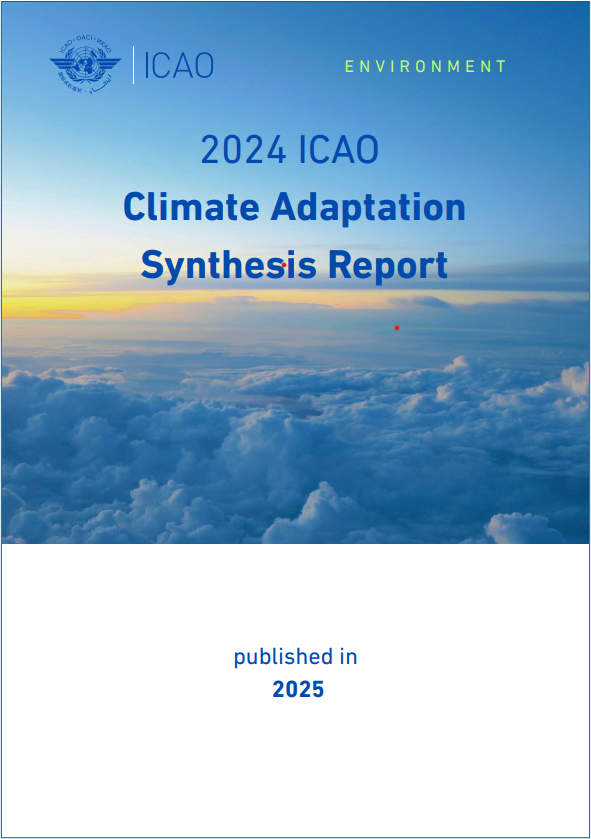
ICAO Climate Adaptation Synthesis Report (2024) 
​
 
The 2024 edition of the Climate Adaptation Synthesis Report updates the 2018 version by highlighting current and future climate risks to international aviation, including impacts on airports, airlines, and air navigation services. It supports a wide range of stakeholders—from ICAO Member States to infrastructure managers—and emphasizes the urgent needs of Small Island Developing States and other vulnerable regions. Featuring the latest science, stakeholder input, and practical examples, it aims to guide informed resilience planning. For more details, visit Climate Adaptation Synthesis Report Website 

ICAO Climate Risk Assessment, Adaptation and Resilience Guidance - Click here to get more information
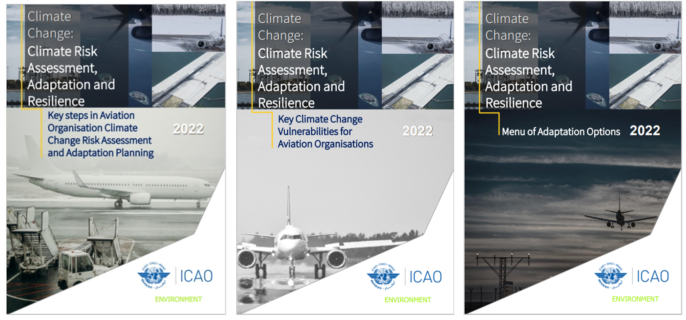
 

These three distinct, yet interconnected documents offer guidance to States and aviation organizations on conducting climate risk assessments and developing adaptation strategies. They present various adaptation options for stakeholders, enabling informed decision-making in their planning efforts. Each report functions as an independent document. To download the documents, visit: Climate Change: Climate Risk Assessment, Adaptation and Resilience.

Collaboration with Other Organizations


The United Nations Sand and Dust Storm (SDS) Coalition

​
 

​Dust storms can severely impact aviation, reducing visibility and posing risks to aircraft. ICAO is part of the UN SDS Coalition. This Coalition coordinates international efforts to monitor and respond to dust storms at local, regional, and global levels. By improving storm monitoring, the Coalition aims to enhance aviation safety and minimize disruptions caused by these natural hazards.

Conclusions

The aviation industry is increasingly aware of the risks posed by climate change and must incorporate these into future planning. ICAO’s leadership in developing standards and guidance for climate adaptation will continue to be vital to support Member States in managing climate risks. While progress has been made, the need for more ambitious adaptation efforts remains. Ensuring that aviation systems remain resilient to the effects of climate change is essential for sustainable global connectivity.

Learn more about ICAO
  • Contact ICAO
  • The United Nations
  • Terms & Conditions
  • External Resources
  • web [at] icao.int (Web Support)
  • FAQ
Connect with us :
  • linkedIn
  • Facebook
  • Unitingaviation
  • ICAO-TV
  • Instagram
  • Youtube

© 2025 International Civil Aviation Organization