  • English
  • Français
  • 中文
User account menu
  • Log in
Accueil
International Civil Aviation Organization
Boutique OACI
User account menu
  • Log in
Seach MENU
À propos de l'OACI

À propos de l`OACI

  • Vue d’ensemble
  • Plan stratégique 2026-2050
  • Dernières nouvelles et faits saillants
  • FAQ
  • Liste – États membres de l’OACI
  • Musée de l’OACI
  • Calculateur de carbone
  • Dénoncer une faute
  • Joindre l'OACI

Corps diplomatiques

  • Assemblée de l’OACI (193 États)
  • Sessions de l’Assemblée
  • Résolutions en vigueur
  • Conseil de l’OACI (36 États)
  • Président du Conseil
  • Sessions du Conseil
  • Représentants des États au Conseil
  • Commission de navigation aérienne

Secrétariat de l’OACI

  • Secrétaire général
  • Direction de la navigation aérienne
  • Direction du transport aérien
  • Direction du renforcement des capacités et de la mise en œuvre
  • Direction des affaires juridiques et des relations extérieures
  • Direction de l’administration et des services
  • Bureaux régionaux
Priorités mondiales

Objectifs stratégiques

  • Chaque vol est sûr et sécurisé
  • L’aviation est durable sur le plan environnemental
  • • Initiative CORSIA
  • • Plans d'action des États pour la réduction des CO2 en aviation
  • • Finvest Hub
  • Une mobilité fluide, accessible et fiable
  • Aucun pays laissé de côté
  • • Renforcement des capacités et soutien à la mise en œuvre
  • Un cadre juridique exhaustif
  • Développement économique

Enablers

  • ICAO Continuous Improvement
  • Innovation dans l'aviation
  • Professionnels de l'aviation de la prochaine génération
  • Égalité des sexes et OACI
  • Programme OACI des Ambassadeurs Mondiaux
  • Formation OACI
  • Partnerships and Resource Mobilization
Événements

Événements en vedette

  • Atelier régional conjoint OACI/AWG sur la transférabilité transfrontières des aéronefs (XBT) et le respect de la Convention du Cap (CTC)
  • Symposium mondial sur le soutien à la mise en œuvre 2026
  • Quatorzième réunion du Groupe d’experts de la facilitation (FALP/14)
  • 4e Forum des conseillers juridiques en aviation civile (CALAF/4)
  • Voir la liste complète des réunions et événements passés et à venir
  • Organisez votre événement à l'OACI
Ressources

Ressources

  • Bibliothèque électronique de l'OACI
  • Publications
  • Rapports annuels du Conseil
  • Résultats des audits de sécurité - Interactif
  • Rapport sur les avantages de l'aviation
  • Faits et chiffres économiques
  • Plan mondial de sécurité aérienne
  • Rapports de sécurité
  • Plan mondial de navigation aérienne
  • Rapports de navigation aérienne
  • Programme de partenariat de l'OACI
  • Service de données API de l'OACI
  • ICAO Data+
  • ICAO iSTARS
  • Moniteur mensuel du transport aérien
  • Compendium : Politiques/pratiques de concurrence
  • Analyses économiques et prévisions
  • Bases de données et études
  • Rapports sur l'environnement
  • Publications sur l'environnement
  • Compendium de la stratégie TRIP de l'OACI
  • Aviation sans pilote
  • Données d'aviation GIS de l'OACI
Carrières
Articles en vedette
OACI TV
S'abonner
À propos de l'OACI
À Propos De L`oaci
  • Vue d’ensemble
  • Plan stratégique 2026-2050
  • Dernières nouvelles et faits saillants
  • FAQ
  • Liste – États membres de l’OACI
  • Musée de l’OACI
  • Calculateur de carbone
  • Dénoncer une faute
  • Joindre l'OACI
Corps Diplomatiques
  • Assemblée de l’OACI (193 États)
  • Sessions de l’Assemblée
  • Résolutions en vigueur
  • Conseil de l’OACI (36 États)
  • Président du Conseil
  • Sessions du Conseil
  • Représentants des États au Conseil
  • Commission de navigation aérienne
Secrétariat De L’oaci
  • Secrétaire général
  • Direction de la navigation aérienne
  • Direction du transport aérien
  • Direction du renforcement des capacités et de la mise en œuvre
  • Direction des affaires juridiques et des relations extérieures
  • Direction de l’administration et des services
  • Bureaux régionaux
Priorités mondiales
Objectifs Stratégiques
  • Chaque vol est sûr et sécurisé
  • L’aviation est durable sur le plan environnemental
  • • Initiative CORSIA
  • • Plans d'action des États pour la réduction des CO2 en aviation
  • • Finvest Hub
  • Une mobilité fluide, accessible et fiable
  • Aucun pays laissé de côté
  • • Renforcement des capacités et soutien à la mise en œuvre
  • Un cadre juridique exhaustif
  • Développement économique
Enablers
  • ICAO Continuous Improvement
  • Innovation dans l'aviation
  • Professionnels de l'aviation de la prochaine génération
  • Égalité des sexes et OACI
  • Programme OACI des Ambassadeurs Mondiaux
  • Formation OACI
  • Partnerships and Resource Mobilization
Événements
Événements En Vedette
  • Atelier régional conjoint OACI/AWG sur la transférabilité transfrontières des aéronefs (XBT) et le respect de la Convention du Cap (CTC)
  • Symposium mondial sur le soutien à la mise en œuvre 2026
  • Quatorzième réunion du Groupe d’experts de la facilitation (FALP/14)
  • 4e Forum des conseillers juridiques en aviation civile (CALAF/4)
  • Voir la liste complète des réunions et événements passés et à venir
  • Organisez votre événement à l'OACI
Ressources
Ressources
  • Bibliothèque électronique de l'OACI
  • Publications
  • Rapports annuels du Conseil
  • Résultats des audits de sécurité - Interactif
  • Rapport sur les avantages de l'aviation
  • Faits et chiffres économiques
  • Plan mondial de sécurité aérienne
  • Rapports de sécurité
  • Plan mondial de navigation aérienne
  • Rapports de navigation aérienne
  • Programme de partenariat de l'OACI
  • Service de données API de l'OACI
  • ICAO Data+
  • ICAO iSTARS
  • Moniteur mensuel du transport aérien
  • Compendium : Politiques/pratiques de concurrence
  • Analyses économiques et prévisions
  • Bases de données et études
  • Rapports sur l'environnement
  • Publications sur l'environnement
  • Compendium de la stratégie TRIP de l'OACI
  • Aviation sans pilote
  • Données d'aviation GIS de l'OACI
Carrières
Articles en vedette
OACI TV
Boutique OACI
S'abonner
  • English
  • Français
  • 中文

Breadcrumb

  1. Accueil
  2. Publications
  3. Journal OACI
  • Rapports annuels du Conseil
  • 42nd Assembly Documentation
  • Archive des assemblées
  • Séries des documents
  • Recueil de la Stratégie TRIP
  • TRIP Magazine
  • Rapports sur la navigation aérienne
  • Rapports sur la sécurité
  • Journal OACI
  • Rapports régionaux
  • Rapport de formation
  • Les États de l’OACI aujourd’hui
  • Indicatif de types d'aéronef (Doc 8643)
  • Catalogue des produits et services
  • Bibliothèques dépositaires
  • Échantillons des publications en ligne
  • Opportunités commerciales
  • Rapport du EAAC
  • Annex – Aviation 2026 - 2028

Journal OACI

The objective of the Journal is to provide a concise account of the activities of the International Civil Aviation Organization and to feature additional information of interest to Contracting States and the international aeronautical world. 
(ICAO Journal is available in English only from 2013)

Éditions précédentes
No. 7

This is the year of what is universally being called the Air and Space Bicentennial, symbolized by our cover photos showing lift-off of a Montgolfière in September 1783 and a Space Shuttle in November 1982. The balloon, carrying animals was a prelude to manned flight two months later in France; the Columbia space launch from Kennedy Center in Florida was its fifth successful flight.

EN
No. 8

Studies are under way at Bell Helicopter Textron for possible development of a large tilt-rotor V/STOL aircraft. (Teamed with Boeing, the firm already is developing a large version of this V/STOL concept for military use.) The XV-15 prototype has demonstrated a cruise speed of over 550 km/h at an altitude of 16,000 feet. Thus, a large commercial version would be superior in many operating roles currently performed by more conventional helicopters and STOL aircraft, developers believe.

EN
No. 9

Wideband conical antennas such as this one are widely used in ground-air communications for omnidirectional HF transmission and reception. A special system using such an antenna was designed and installed recently at Shannon Aeradio, Ireland, by CSA (C&S Antennas Ltd.). This was, in part, for the NARTEL (North Atlantic Radio/Telephone) HF communication system used by aircraft on North Atlantic flight paths. Shannon Aeradio also comprises the communications centre for Scotland's Prestwick Airport.

EN
No. 10

Wideband conical antennas such as this one are widely used in ground-air communications for omnidirectional HF transmission and reception. A special system using such an antenna was designed and installed recently at Shannon Aeradio, Ireland, by CSA (C&S Antennas Ltd.). This was, in part, for the NARTEL (North Atlantic Radio/Telephone) HF communication system used by aircraft on North Atlantic flight paths. Shannon Aeradio also comprises the communications centre for Scotland's Prestwick Airport.

EN
No. 11

The way of the future? Shown are" interactive-graphics" technicians at Westinghouse's Baltimore facility employing computer-aided design to develop different concepts that might be applied to the new ASR-9 Airport Surveillance Radar now being developed. Award of the over US$480-million contract to the firm to develop and build the system -- the largest radar production contract ever let by the U.S. FAA -- was announced last month. In all, 137 of the ASR-9s will be delivered over a five-year period, beginning in 1986. (For technical details on this system, see the 1CAO Bulletin, September 1983, pages 37-40.)

EN
No. 12

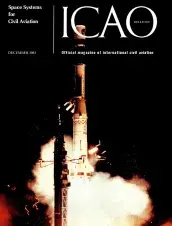
The European Space Agency employed Ariane L04 to launch the Marecs-A special-purpose communication satellite into a geostationary orbit over the Atlantic Ocean on 20 December 1981. Marecs-A is leased to the International Maritime Satellite Organization (INMARSAT) to provide efficient long range telecommunications for shipping and off-shore industries. It could also be used for initial experimental use for aeronautical communications, before INMARSAT begins operations with its new series of space vehicles in 1988.

EN
No. 1

ASTRE, an airport surface detection and display system developed by Thomson-CSF, is shown as installed in the tower at Charles de Gaulle Airport. To provide the necessary panorama of the airport ground traffic scene, sophisticated digital processing is required. The presentation of this information in the control tower is based on direct conversion of the radar scan into a television scan.

EN
No. 2

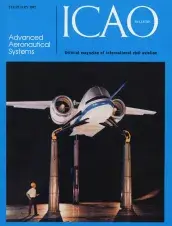
Full-scale modal of a tilt-fan vertical / short take-off and landing (V/STOL) aircraft design is shown undergoing proof-of-principle testing in the Ames Research Center wind tunnel in California. Powered by two General Electric TF-34 high-bypass-ratio engines, aircraft vertical lift-off is achieved by rotating the turbofans to the vertical position. Control is achieved during this phase through use of computer-controlled moveable aerodynamic surfaces (vanes) immersed in the exhaust of the engines. Strakes, or longitudinal fences, are employed on the fuselage undersurface to make maximum use of ground effect and also to prevent the upwash of hot exhaust from being reingested by the engines, thus maintaining maximum thrust.

EN
No. 3

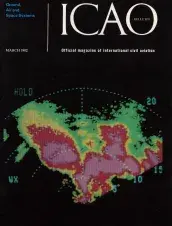
A fourth colour, magenta, has been introduced by Bendix Corp. into its RDR-1150 weather radar system to reveal severe storm areas within a contouring cell. Four levels of rain-rate discrimination are now employed — the traditional green, yellow and red plus magenta (set within the red) to show higher orders of rainfall rate. By helping the pilot to understand better the dynamics of severe weather conditions, he will be in a better position to make faster, safer storm-avoidance decisions. Another new feature is "weather attenuation compensation," which increases receiver detection sensitivity. Eight range presentations can be made from 5-320 NM (9-593 km).

EN
No. 4

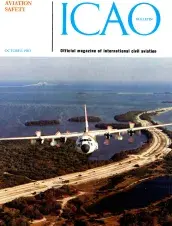
First civil application of the Boeing 234, a derivative of the venerable Chinook helicopter, is by British Airways Helicopters, operating out of Aberdeen, Scotland, to support offshore oil operations in the North Sea. Shown is Shell Oil's Brent-D platform, one of four working in this particular field.

EN
No. 5

Link's Laser Image Generator visual system provides realistic scene detail at all altitudes. A multicoloured laser beam scans a model board within the pilot's field of view; the reflected light is detected by a bank of photomultipliers, which furnish high-resolution displays to the flight simulator.

EN
No. 6

The Fletcher Gresco topdressing agricultural aeroplane is a product of Aerospace Industries in New Zealand. It is powered by a 440-kW (600 HP) Lycoming LTP-101 gas-turbine engine. For a full review of ag-aircraft, see story beginning on page 30 herein.

EN

Pagination

  • First page First
  • Previous page Prev
  • …
  • Page 18
  • Page 19
  • Page 20
  • Page 21
  • Page 22
  • Page 23
  • Page 24
  • Current page 25
  • Page 26
  • Next page Next
  • Last page Last
En savoir plus sur l'OACI
  • Contacter l'OACI
  • Les Nations Unies
  • Conditions générales
  • Ressources externes
  • Assistance Web
  • FAQ

© Organisation de l'aviation civile internationale