
History
THE ICAO SOUTH AMERICAN REGIONAL OFFICE IN LIMA, PERU
The Origins of ICAO
The Chicago Convention on International Civil Aviation was signed on December 7, 1944. The first South American States to sign it were Bolivia, Brazil, Chile, Colombia, Ecuador, Panama, Paraguay, Peru, Uruguay, and Venezuela.
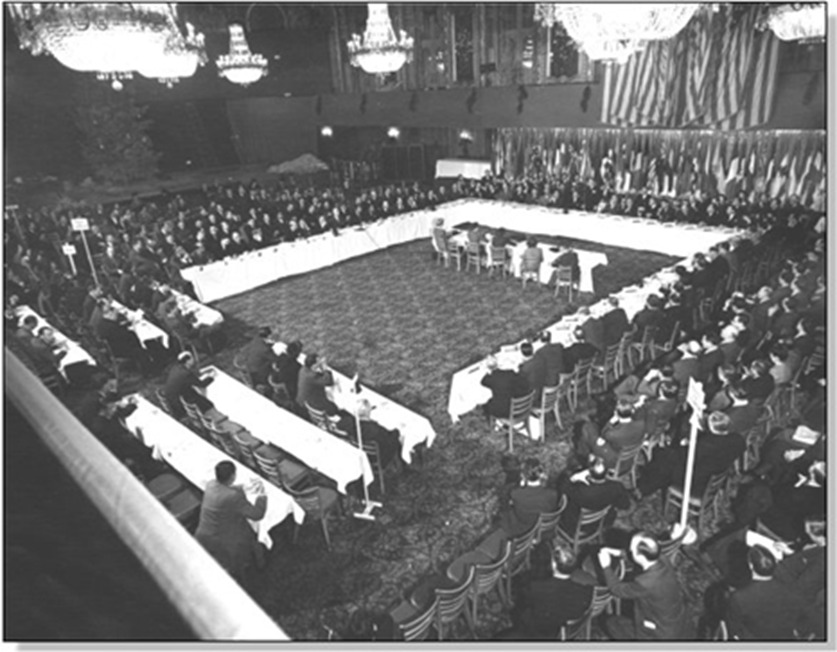
The Chicago Convention also formalized the expectation that a specialized International Civil Aviation Organization (ICAO) would be established, in order to organize and support the intensive international co-operation which the fledgling global air transport network would require.
Because of the usual delays expected in ratifying the Convention, the Chicago Conference presciently signed an Interim Agreement which foresaw the creation of a Provisional ICAO (PICAO) to serve as a temporary advisory and coordinating body.
The PICAO consisted of an Interim Council and an Interim Assembly, and from June 1945 the Interim Council met continuously in Montreal, Canada, and consisted of representatives from 21 Member States. The first Interim Assembly of the PICAO, the precursor to ICAO’s triennial Assemblies in the modern era, was also held in Montreal in June of 1946.
On 4 April 1947, upon sufficient ratifications to the Chicago Convention, the provisional aspects of the PICAO were no longer relevant and it officially became known as ICAO. The first official ICAO Assembly was held in Montreal in May of that year.
Currently, ICAO establishes international civil aviation standards that are mandatory for compliance by its 192 Member States. Its headquarters are located in Montreal, Canada, and it has seven (7) Regional Offices worldwide.
The History of the Regional Offices
Among the notable achievements of PICAO, and later ICAO as an international organization, its regional structure proved to be an essential mechanism that countered any tendency toward isolationism, such as that which occurred shortly after the First World War. It helped promote the vision of a unified world based on cooperation to establish international standards and regulations for civil aviation among its Member States.
Although the Chicago Convention contained no provisions for a regional dimension of ICAO, it quickly became clear that some of the technical problems and navigation requirements faced by the international civil aviation community could be addressed more effectively at the regional level among the States concerned within a particular region.
For this reason, during the first sessions of the Air Navigation Committee and the Interim Council of PICAO in 1945, regional differences were recognized, and it was agreed to divide the world into ten flight or air navigation regions (whose boundaries roughly coincided with continental and oceanic landmasses). A regional office could then be established in each of these regions.
At that time, it was not considered desirable to define precisely the boundaries of the route service organizations. Overlapping areas were necessary because the Route Service Organizations were developed to facilitate the implementation of PICAO Standards through local consultations on specific technical problems affecting international civil aviation in certain areas where international air routes appeared to be well defined and where distinct operational issues existed.
Not all geographic areas of the world were covered in the description of the Route Service Organizations, as it was assumed that in those areas international route service activities would be handled by the individual countries through which the routes passed, in accordance with the procedures and practices established by PICAO.
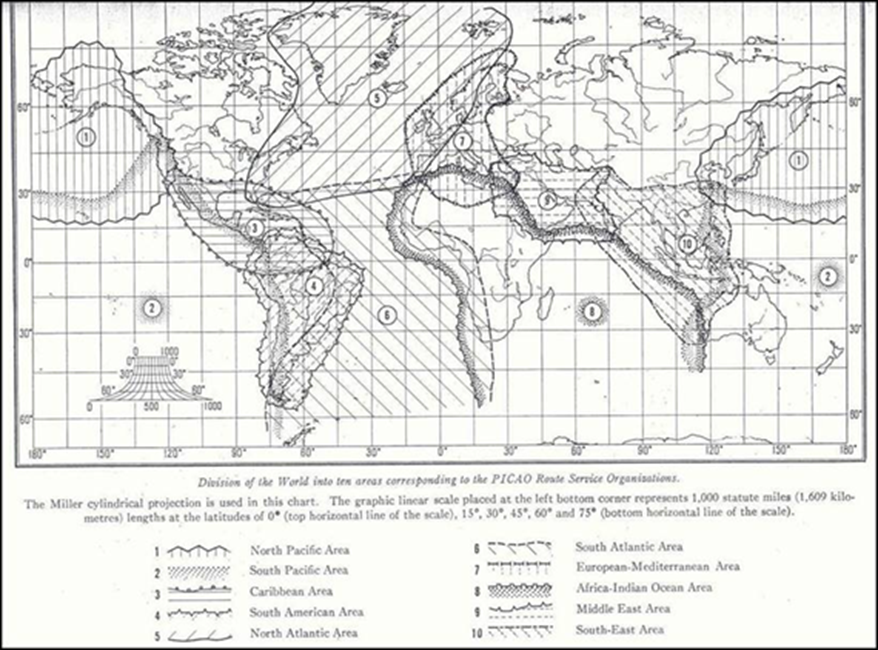
Regional agreements or special regional organizations, known as Regional Route Service Organizations (RRSOs) and, from 3 April 1946 onward, renamed Regional Air Navigation Meetings (RANs), were considered necessary to plan special cooperative measures for air navigation facilities; to consider the application and interpretation of standards and practices in order to address the particular circumstances of a given geographic area; and to study and develop local operating practices that would complement international standards.
The 10 original regions included:
1. North Pacific
2. South Pacific
3. Caribbean
4. South America
5. North Atlantic
6. South Atlantic
7. Europe and the Mediterranean
8. African-Indian Ocean
9. Middle East
10. Southeast Asia
The Regional Route Service Conferences, later called Regional Air Navigation Meetings (RANs), were to be held in each separate region or in areas covering multiple regions.
During the 16th Session of the ICAO Council (May 1952), the number of air navigation regions was reduced from ten to eight through the merger of the North Pacific and South Pacific regions into a single Pacific Region, and the South America and South Atlantic regions into one region.
Because of the existence of military facilities useful to international civil aviation and the likelihood of their interruption following the cessation of hostilities, early coordination actions were considered desirable and necessary in four of the ten regions:
North Atlantic
Europe-Mediterranean
Caribbean
Near and Middle East
Due to the drastic reduction of military air transport services in the North Atlantic, the first regional meeting held under the auspices of PICAO was the North Atlantic Route Service Conference, convened in Dublin, Ireland, on 4 March 1946. This conference established the pattern for future meetings of this kind.
The Dublin meeting became the precursor to a series of regional air navigation meetings held during the PICAO years. This Regional Air Navigation Meeting (originally called a Route Service Meeting) was divided into Committees on Communications, Air Traffic Control, Meteorology, Aerodromes and Ground Aids, and Search and Rescue.
Two additional committees of special importance were established to study, respectively, the content and characteristics of a North Atlantic Route Manual and the establishment and functions of a regional office. The Manual Committee developed the general plan for the Manual and made recommendations regarding its format and organization. Each technical committee prepared portions of the Manual's text. The Committee concluded that PICAO should be responsible for preparing the Manual.
The Manual was intended to meet the needs of both flight crews and ground personnel and to contain the text of all procedures peculiar to the North Atlantic region. It would also indicate, through maps, charts, and descriptive text, the locations and characteristics of facilities useful to North Atlantic operations. In particular, the Committee recommended the preparation of a separate sheet for each aerodrome, showing on one side a medium-scale chart of the aerodrome procedures and approaches and, on the reverse side, a large-scale diagram of the actual landing area.
With regard to the first meeting in the Middle East (MID), many factors were considered in selecting Egypt as the host country, including its strategic position in relation to Europe, Africa, and Asia; its international importance in air transport, demonstrated by the fact that many regular air routes passed through its territory; and the experience of the Egyptian authorities in international air transport operations in the Middle East.
Five RAN meetings were held during the PICAO years, resulting in the creation of a Regional Route Service or Air Navigation Manual to assist in the implementation of the Standards and Recommended Practices. Generally, a regional office was established following a regional air navigation meeting held in that region. Its functions included compiling and editing regional manuals, serving as a clearinghouse for correspondence and information exchange, and organizing and acting as the secretariat for regional meetings.
When ICAO replaced the Provisional Organization in 1947, regional offices were located in:
Paris for the European-Mediterranean Region (opened on 12 August 1946);
Dublin for the North Atlantic Region (opened on 1 January 1947);
Cairo for the Middle East Region (opened on 20 January 1947);
Melbourne for the Far East and Pacific Region;
The functions of the North American Office were carried out by the Air Navigation Bureau (ANB) at Headquarters in Montreal.
However, in all cases, the establishment of the regional offices was to be considered provisional.
Upon the recommendation of the First ICAO Assembly (May 1947, Resolution A1-16), the Council reviewed ICAO’s system of representation among States. In 1948, it was decided that, in the interest of efficiency and economy, the number of ICAO Regional Offices would not exceed five, each being responsible for two of ICAO’s ten air navigation regions.
The new system did not in any way affect the continued recognition and use of the air navigation regions, but it changed the basis of ICAO representation from regional to territorial. Instead of ten possible Regional Offices, there would be five:
North America
South America
Europe and Africa
Middle East and Far East
Pacific
The Paris Office was renamed the European and African Office.
To avoid duplication and overlap, only one ICAO office would normally maintain liaison with each Contracting State. States with dependent territories could adopt a liberal approach toward establishing direct relations between those territories and the nearest ICAO office, but they could also require that the office accredited to the metropolitan country maintain liaison with their overseas possessions.
In 1948, a new position of Chief of Regional Organization (later renamed Regional Affairs) was established within the ANB, with responsibility for the administration, direction, and coordination of the work of the regional offices. A section of this new office functioned as the North American Office.
Also in 1948, the ICAO Council decided that there were no longer technical grounds for maintaining the Dublin Office, and arrangements were therefore made to transfer its responsibilities to the Paris Office.
In 1948, the existing South Pacific Mission in Melbourne became an Interim Far East and Pacific Office, with the understanding that the question of its permanent location would be considered later.
In October 1952, during its seventeenth session, the ICAO Council authorized the transfer of the Far East and Pacific Office from Melbourne to Bangkok, bringing it closer to the region it served.
In 1956, it was decided that the Caribbean Regional Office should be separated from the Regional Affairs Office within the ANB and established as an independent entity in Mexico City. This transfer became effective on 15 February 1957.
Thus, at that time, there were five Regional Offices located in five different cities around the world, namely Bangkok, Cairo, Lima, Mexico City, and Paris.
Between 1960 and 1962, new countries emerged through decolonization in Africa, and 23 new States joined ICAO in just three years. As a result, a sixth Regional Office began operations in 1963 in Dakar (Senegal) to serve African States.
At the Fourteenth ICAO Assembly (Rome, 1962) and again at the Fifteenth Assembly (Montreal, 1965), the need for a further review of the regional structure was expressed. Consequently, the Council was instructed to undertake a study of the regional structure in light of existing and future developments and to address issues such as overlapping regions and the exclusion of certain areas.
The results of the Council’s study confirmed that planning on an area basis should continue and that the concept of dividing the world into air navigation regions should be maintained, primarily to provide a starting point for determining the geographical area to be considered by a Regional Air Navigation Meeting (RAN) and to serve as the basis for publishing, through a series of Air Navigation Plan documents, all facilities and services planned through the regional planning process.
The resulting regional structure currently comprises the following eight regions:
Africa (AFI)
Asia/Pacific (ASIA/PAC)
Caribbean (CAR)
European (EUR)
Middle East (MID)
North American (NAM)
North Atlantic (NAT)
South American (SAM)
On 27 May 1969, during its 67th Session, the ICAO Council approved the transfer of the Regional Affairs Office at Headquarters and the six Regional Offices from the Office of the Director of the Air Navigation Bureau to the Office of the Secretary General.
At the beginning of 1982, the ICAO Secretary General visited Ethiopia, Kenya, and Rwanda. These States had indicated their willingness to become the host country for the establishment of a new Regional Office in Eastern Africa. The Secretary General’s conclusions and recommendations were presented to the Council in March 1982. The Council selected Nairobi (Kenya) as the location of the Eastern African Regional Office, subject to satisfactory agreements with the Government of Kenya regarding office premises, other essential facilities, and the granting of the customary privileges and immunities.
In 1983, the seventh Regional Office was established in Nairobi, assuming responsibilities for Eastern Africa and thereby returning Cairo to its original role as the Middle East Office. Later in the 1980s, the Nairobi Office became the Eastern and Southern African Office, while the Dakar Office was renamed the Western and Central African Office.
The South American Regional Office in Lima
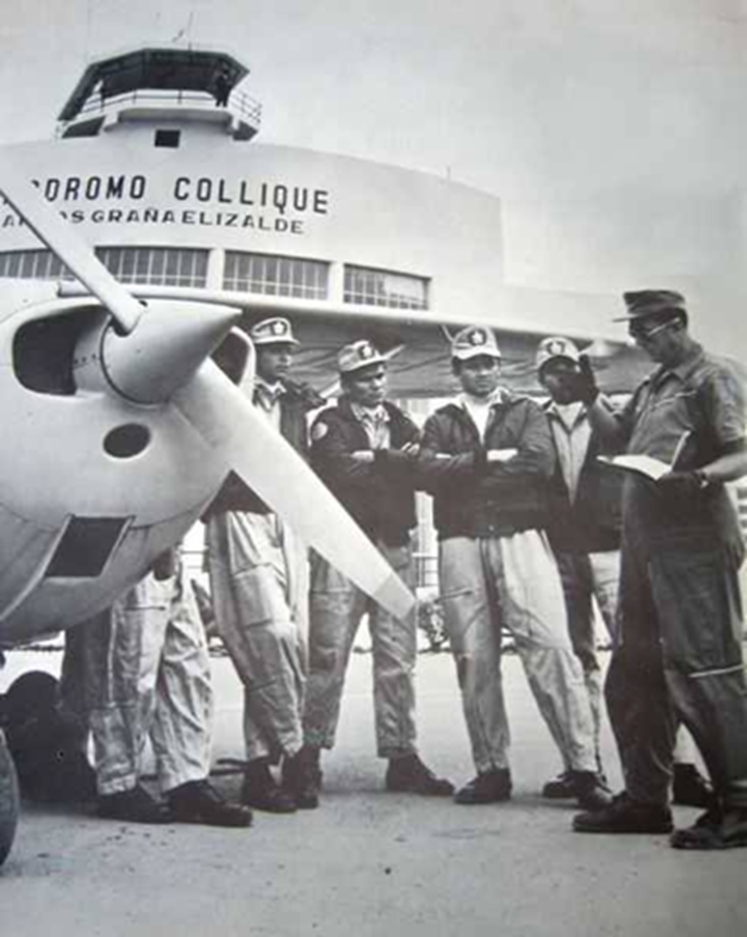
Following an invitation from the Government of Peru to act as host State, the first South American Regional Air Navigation Meeting was held in Lima in 1947, at the facilities of Collique Airport.
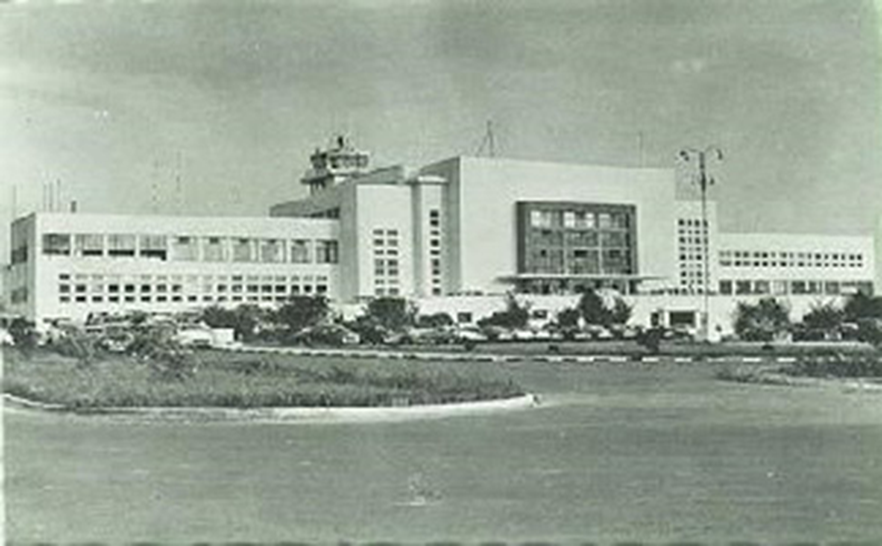
Following the precedent established by other regional meetings, the meeting requested the creation of a Regional Office for South America. After reviewing the various offers presented by States of the Region, the ICAO Council decided to establish the headquarters of the Regional Office in Lima, Peru, taking into account its geographic location and the facilities offered by the Peruvian Government for the establishment and operation of the South American Regional Office. Accordingly, an agreement between Peru and the International Civil Aviation Organization was signed on 22 October 1948.
The Office was initially located in the terminal building of Limatambo Airport, operated by the recently established Peruvian Corporation of Airports and Commercial Aviation (CORPAC).
In 1969, the Office moved to Jorge Chávez International Airport in Lima/Callao.
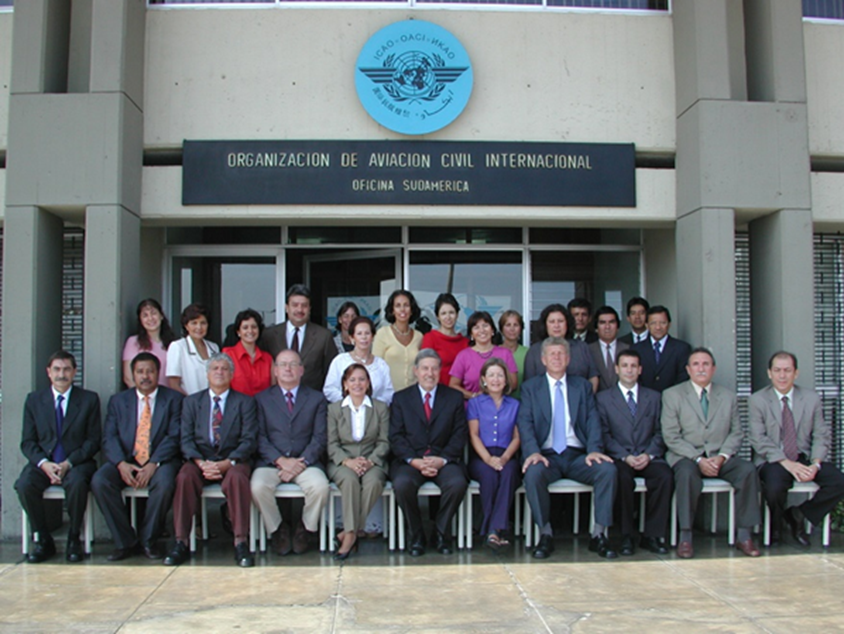
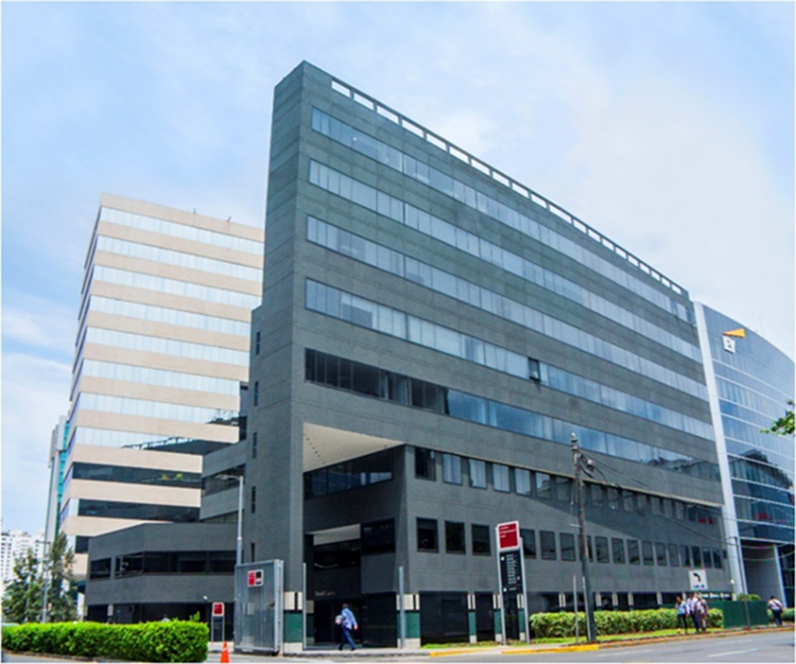
In 2006, the Government of Peru generously offered ICAO a more strategic and accessible location within the city, and the Office was relocated to its current premises in San Isidro.
According to our records, the Regional Office opened in March 1948, and at that time Mr. Hernán B. González, a Chilean national, was appointed Deputy Director in charge of the Regional Office until all formalities were completed.
In 1952, the first Director of the Regional Office was appointed: Colonel Cloyce Joseph Tippett, an American national and professional pilot. As an interesting historical note, he had been a member of the Flying Tigers and was an adventurer who also participated in the certification of Tuskegee pilots.
In 1960, he was succeeded by Mr. César Piacena of Uruguay, who remained in office for only three months. Mr. Robert Steward, a Chilean national, was then appointed Acting Director. Later that same year, Mr. Edgar Pol Pacieri of Bolivia, a communications specialist, was appointed Director. In 1978, Mr. Rafael Henríquez Therán of Colombia, an air traffic control specialist, assumed the position and served until 1987, when Mr. Pol was once again appointed Director for the period 1987–1988.
In 1988, Mr. Paulo Imre Hegedus of Brazil was appointed Director of the Office. Under his leadership, the Office embarked on several strategic initiatives whose benefits continue to be realized today..
Subsequently, Mr. José Miguel Ceppi of Chile was appointed Director of the Office. Under his leadership, several strategic projects were consolidated and advanced, including the LAR Project, in which he played a key role..
He was succeeded by Mr. Franklin Hoyer of Brazil, a specialist in communications. During his tenure, he continued to advance and consolidate the progress achieved by the Office, promoted regional priorities, and oversaw significant improvements to the Office’s infrastructure. He also fostered an environment that enabled staff to effectively carry out their responsibilities..
From February 2018 until 2026, the South American Regional Office was under the leadership of Mr. Fabio Rahnemay Rabbani of Brazil, an aerodrome specialist with a strong technical and analytical background. His administration strengthened internal processes, promoted more structured and data-driven decision-making, and enhanced integration among the SAM Office, the NACC Office, Headquarters, and the other Regional Offices. He led the Office through the challenging period of the COVID-19 pandemic, demonstrating particular concern for staff well-being and successfully guiding the Organization’s adaptation to new ways of working. Under his leadership, the SAM Region strengthened its position in sustainability, strategic planning, and interregional cooperation.
Beginning on 1 July 2026, Dr. Luis Fernando Fiallos Pazmiño of Ecuador assumes the position of Regional Director for South America, becoming the first Ecuadorian to hold this position at the ICAO South American Regional Office. A lawyer by profession, he holds specialized studies in air and space law, a master's degree from McGill University, and a doctorate from Leiden University. He brings extensive experience in aviation law, diplomacy, and the international air transport industry. His background includes service in the Ecuadorian Foreign Service and work as a Senior Legal Adviser at IATA, providing him with a broad perspective on the regulatory, institutional, and cooperative challenges facing civil aviation.
Achievements of the Office and the Region
This historical account, however, is not merely a sequence of dates and names. The Regional Office is also distinguished by its activities and accomplishments, which have contributed significantly to the development of civil aviation in the Region.
We view ourselves as a coordinating and facilitating element within the Region, working to build regional consensus in line with ICAO’s Strategic Objectives and the United Nations Sustainable Development Goals, while guiding States and maintaining a strong focus on the development of civil aviation throughout South America.
The vision that has consistently guided the Regional Office is founded on regional integration and cooperation. In recent years, considerable effort has been devoted to positioning South America as a leading region in aviation safety and as a proactive, unified participant in global aviation forums.
From the outset, horizontal cooperation among States was considered an ideal means of mutual support in overcoming common challenges, and the States of the Region embraced this approach. Consequently, beginning in the 1990s, regional projects based on this concept of cooperation were implemented to support the implementation of ICAO Standards and Recommended Practices (SARPs), with the Regional Office serving as the coordinator and facilitator of these assistance efforts.
The South American Directors Meeting held in Cusco in 1996 marked a significant milestone with the creation of two major regional cooperation initiatives: the LAR Project and a program supporting improvements in air navigation. Subsequently, the Region also implemented the REDDIG Project.
Today, we have an integrated Region with a strong culture of teamwork and mutual support, striving to promote a civil aviation system that connects the peoples of South America and contributes to their socio-economic development. As a result, the Region has made substantial progress toward achieving its regional objectives for Operational Safety and Air Navigation Capacity and Efficiency, as established in the Bogotá Declaration. The Region has achieved one of the highest levels of aviation safety compliance worldwide and has made significant advances in airspace optimization and modernization. Nevertheless, we have chosen not to rest on our achievements, and the Region remains committed to further advancing the development of civil aviation.
Integration and Coordinated Work with Other Regions
The South American Region has achieved remarkable progress and must now become accustomed to playing a greater leadership role on the global stage. For this reason, it is increasingly important to work in a more integrated manner with other regions, particularly our neighbors in Central America and North America.
For several years, the Office has fulfilled its role as a facilitator of regional consensus, enabling the Region to participate in global forums with a unified voice, contribute proactively to worldwide technical discussions, strengthen its sense of belonging, and reinforce its commitment to regional integration.
The Future of Civil Aviation in the Region
The Region’s civil aviation system faces significant challenges. In recent years, internationally recognized organizations such as IATA, ATAG, Boeing, and Airbus have estimated that air traffic in the SAM Region will grow by approximately 3 to 4 percent annually on average. Air traffic in the Region is projected to more than double by 2045.
This growth implies that the civil aviation systems of the States must be prepared, both in terms of infrastructure and operational systems, to safely and efficiently accommodate this increase in demand.