
国际民航组织期刊
The objective of the Journal is to provide a concise account of the activities of the International Civil Aviation Organization and to feature additional information of interest to Contracting States and the international aeronautical world.
 (ICAO Journal is available in English only from 2013)
Our feature articles this month focus on security-related topics including the recent implementation of a programme of universal, mandatory and regular aviation security audits.
Recursion, stop!
Civil aviation makes an important contribution to economic prosperity. Newly developed ICAO guidance material can help States determine the extent of this contribution to their local, regional and national economies.
Recursion, stop!
Feature articles in this edition focus on safety oversight developments. Included is an overview of the ICAO Universal Safety Oversight Audit Programme (USOAP): five years after its launch, USOAP is preparing to widen its focus to all safety-related provisions contained in the annexes to the Chicago Convention.
Recursion, stop!
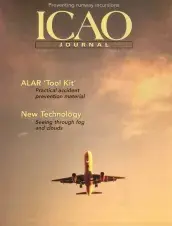
Both controlled flight into terrain (CFIT) and approach and landing accidents are known to be major contributors to the aircraft hull loss and passenger fatality statistics. As the article on page 5 indicates, a new "tool kit" for approach and landing accident reduction provides material that can be directly" used in developing training and accident prevention programmes.
Recursion, stop!
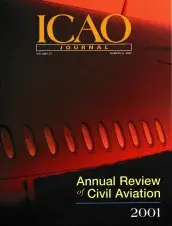
A sunset is reflected on the fuselage of a wide-body airliner parked on the tarmac in this photo by Ron Stroud/Masterfile. A year forever etched in memory, the air transport industry flew into crisis in 2001 and continues to address the challenges raised by the events of 11 September.
Recursion, stop!
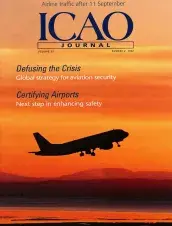
An action plan for strengthening aviation security worldwide was recommended by ICAO's Contracting States at a conference in Montreal in February. ICAO has been called on to adopt the plan of action not later than 14 June 2002, and to implement it within the shortest feasible time frame.
Recursion, stop!
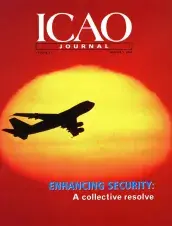
As an integral part of global security, aviation security strategy is focused on creating a security net that is global in nature. Our feature articles this month examine security developments, and ways to restore public confidence in air transport.
Recursion, stop!
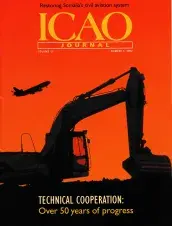
Several articles inside this issue focus on the role of technical cooperation, a permanent priority for ICAO. For more than half a century, the organization's technical cooperation programme has been helping countries around the world to improve all aspects of their civil aviation administration and infrastructure.
Recursion, stop!
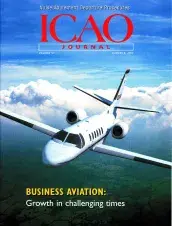
Most of our feature articles this month examine various aspects of the business aviation sector, whose outlook for long-term growth remains strong despite an anticipated decline in new aircraft deliveries in 2002 and 2003.
Recursion, stop!
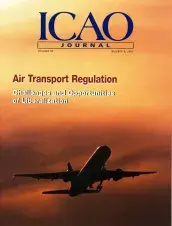
Several articles in this edition focus on the key issues related to the liberalization of the air transport environment. In March 2003 ICAO will hold a conference that is expected to develop a framework for the progressive liberalization of international air transport while providing various safeguards, including measures to ensure the effective and sustained participation of developing countries.
Recursion, stop!

In recent years the level of electromagnetic interference experienced by aviation has grown dramatically. The increasing pressure on the utilization of the radio frequency spectrum requires that special measures be taken to preserve the interference-free operation of essential radiocommunication and radio navigation services.
Recursion, stop!
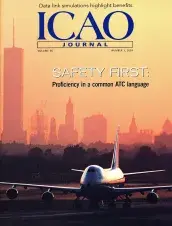
Most of our feature articles this month focus on air traffic management, including an article on the need to strengthen provisions for proficiency in a common aviation language. The potential consequences of an aviation mishap as a result of ambiguous communication or lack of language proficiency are serious enough that experts are reviewing ways to address the issue as a matter of priority.
Recursion, stop!