
Journal OACI
The objective of the Journal is to provide a concise account of the activities of the International Civil Aviation Organization and to feature additional information of interest to Contracting States and the international aeronautical world.
 (ICAO Journal is available in English only from 2013)

Qantas Airways has developed a modern flight planning system that can compute the optimum four-dimensional flight plan track and altitude profile for minimum fuel, time or cost. For details on how this system is being used, see page 10.
Recursion, stop!
The feature articles in this month's issue focus on safety-related topics. Included is an accident analysis, page 5, which indicates that while safety is improving overall, efforts to prevent controlled flight into terrain need to be intensified.
Recursion, stop!
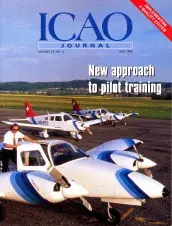
At Horizon Swiss Flight Academy, pilot training commences with a simple familiarization flight in a Piper Archer and is followed by 20 hours in the simulator. This unusual approach to ab initio training was adopted by the flight academy as part of its airline pilot qualification programme.
Recursion, stop!
High-level representatives from the world's civil aviation administrations, aviation industry and the financial community met for five days in May to discuss financing arrangements for the CNS/ATM systems. Conference delegates also discussed a global strategy for addressing various institutional, legal, training and technical cooperation issues.
Recursion, stop!
Scheduled air traffic increased by about 8 per cent worldwide last year, despite the economic slow-down experienced in the Asia/Pacific region, and airline revenues are estimated to have reached $291 billion for the first time, resulting in an operating profit of over $16 billion. A review of the year's developments begins on page 10.
Recursion, stop!
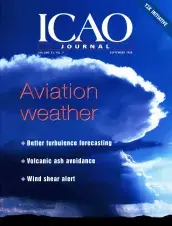
Most of our features this month focus on aeronautical meteorology, including three articles that look at inflight turbulence and the efforts to improve the forecasting of this sometimes invisible weather hazard.
Recursion, stop!
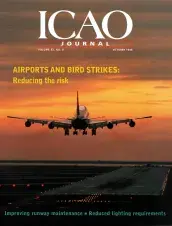
Included among this month's features on airport operations and development are two articles on bird-strike prevention. While most bird strikes have little or no effect on aircraft, statistics compiled by ICAO show that 11 per cent of strikes cause some damage and a very few endanger safety, occasionally leading to a fatal accident.
Recursion, stop!
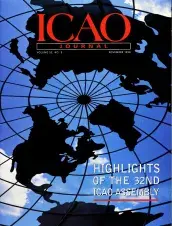
The 32nd Session of the ICAO Assembly held recently in Montreal will probably be remembered most for its decision to establish a universal safety oversight audit programme, but other key issues at the forefront of its agenda included environmental protection, implementation of the worldwide air navigation system and, with the change of century not far away, measures to address possible year 2000 computer date change problems.
Recursion, stop!
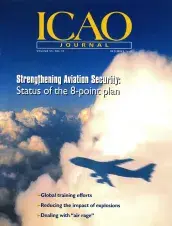
Ten years ago this month Pan Am Flight 103 was destroyed over Lockerbie, Scotland by an improvised explosive device concealed in a radio cassette player. The act of terrorism galvanized the world to take action, and many of the security deficiencies identified by the Lockerbie tragedy have now been addressed. A report on the implementation of stronger security measures in the United Kingdom begins on page 4.
Recursion, stop!
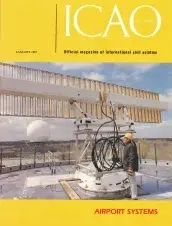
In the Canadian air traffic control radar replacement programme, a Cossor monopulse SSR will be interfaced to a Raytheon primary radar. Shown is the SSR's large vertical aperture (LVA) antenna undergoing integration trials.
Recursion, stop!
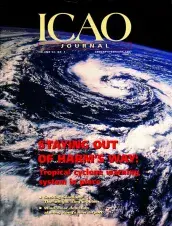
Our capability to disseminate information about the trajectory of tropical cyclones has improved in recent years with the implementation of a worldwide warning system.
Recursion, stop!

Controlled flight into terrain (CFIT) is the leading type of air transport accident today, with 17 such accidents reported worldwide during the 1991-9S period alone. A number of articles this month focus on this serious issue, and describe workable prevention strategies.
Recursion, stop!