
Climate Change Technology Standards
In October 2010 the 37th Assembly (Resolution A37-19) requested the development of an ICAO CO2 Emissions Standard. Following six years of development, ICAO's Committee on Aviation Environmental Protection (CAEP) at its tenth meeting (CAEP/10) recommended an aeroplane CO2 emissions certification Standard.
This new standard is part of the ICAO "Basket of measures" to reduce greenhouse gas emissions from the air transport system, and it is the first global technology Standard for CO2 emissions for any sector with the aim of encouraging more fuel efficient technologies into aeroplane designs. After adoption by the ICAO Council, the new aeroplane CO2 emissions certification Standard was published as a new Annex 16, Volume III – Aeroplane CO2 Standard (2017).
In 2025, to support achieving LTAG, and as a part of the Integrated Dual Noise-CO2 Stringency standard-setting, CAEP at its thirteenth meeting (CAEP/13) recommended the new CO2 Standard for subsonic aeroplanes with 10 per cent more stringent limits for large aeroplanes with the alleviations of 3 per cent for small aeroplanes, with an applicability date on 31 December 2031 for new aeroplane types, and more stringent emissions standard for in-production aeroplane types applicable on 1 January 2035.
Following the adoption by the ICAO Council in March 2026, the new aeroplane CO2 emissions certification Standard will be published in the updated Annex 16, Volume III – Aeroplane CO2 Standard.
To increase the efficiency of rulemaking within ICAO Member States and to facilitate the adoption of the proposed new aeroplane CO2 emissions and noise Standards, ICAO documented the results of an Integrated Dual Noise-CO2 Stringency modelling analysis in a Regulatory Impact Assessment (RIA), including an assessment of the environmental benefits, costs, technical feasibility, and interdependencies of the various stringency options.
Figure 1 shows an overview of the CO2 Standard regulatory limit lines for both NT and InP CO2 Standards.
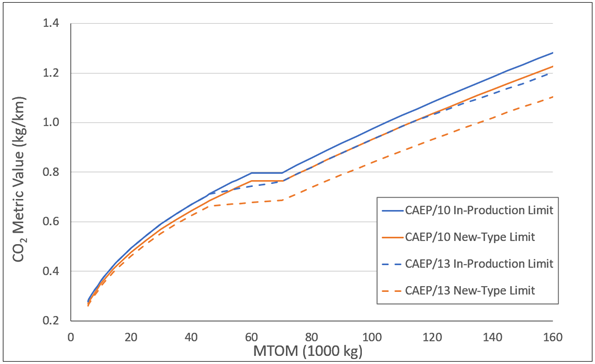
Figure 1 – The CO2 Standard Regulatory Limits
To establish the fuel efficiency of the aeroplane, the CO2 metric system uses multiple test points to represent the fuel burn performance of an aeroplane type during the cruise phase of flight. Specifically, there are three averaged (i.e. equally weighted) points representing aeroplane high, middle and low gross masses, which are calculated as a function of Maximum Take-Off Mass (MTOM). Each of these represents an aeroplane cruise gross mass seen regularly in service. The objective of using three gross mass cruise points is to make the evaluation of fuel burn performance more relevant to day-to-day aeroplane operations. An overview of the CO2 Metric System can be found in Figure 2.
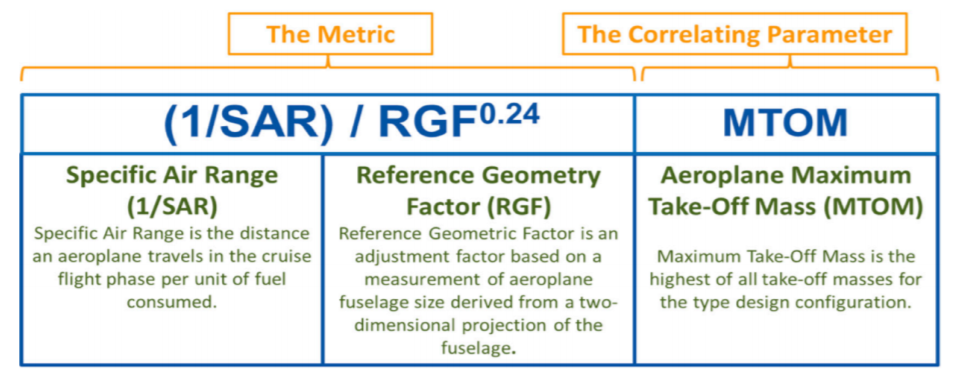
Figure 2 – An overview of the CO2 Metric System
The metric system is based on the inverse of Specific Air Range (i.e. 1/SAR), where SAR represents the distance an aeroplane travels in the cruise flight phase per unit of fuel consumed. In some aeroplane designs, there are instances where changes in aeroplane size may not reflect changes in aeroplane weight, for example when an aeroplane is a stretched version of an existing aeroplane design. To better account for such instances, not to mention the wide variety of aeroplane types and the technologies they employ, an adjustment factor was used to represent aeroplane size. This is defined as the Reference Geometric Factor (RGF), and it is a measure of aeroplane cabin size based on a two-dimensional projection of the cabin. This improved the performance of the CO2 metric system, making it fairer and better able to account for different aeroplane type designs.
The ICAO Aeroplane CO2 Standard has direct effects by increasing the importance of fuel efficiency in the design process such that an aeroplane type not just meets the regulatory limit but also has good relative product positioning in terms of a margin to the limit.