NGAP Programme
Background
The Next Generation of Aviation Professionals (NGAP) Initiative was established to ensure a sufficient supply of qualified and competent professionals to operate, manage, and maintain the future international air transport system.
This initiative is crucial as the aviation industry faces multiple challenges. A significant portion of the current workforce is nearing retirement, many professionals transitioned to other industries following the COVID-19 pandemic, and access to affordable training and education remains a major hurdle. Additionally, aviation is competing with other sectors for highly skilled talent. Further complicating workforce development are issues such as a lack of harmonized competencies and qualifications in some aviation disciplines, as well as limited awareness among young people about the diverse career opportunities available in aviation.
In 2016, ICAO’s 39th Assembly adopted Resolution A39-29 on NGAP, underscoring the importance of aviation workforce planning and encouraging Member States to identify long-term human resource needs and promote gender equality in attracting, educating, training and retaining aviation professionals.
In 2025, the 42nd Assembly significantly strengthened this mandate through Resolution A42-24 on Global Aviation Talent Development. The new Resolution expands the scope of the NGAP Programme beyond a youth-focused approach to encompass talent from all generations, backgrounds and experience levels, recognizing workforce shortages as a strategic risk to safety and sustainable growth. It reinforces the call for structured national workforce strategies, enhanced international cooperation, support to Developing States, and sustained ICAO leadership in forecasting, coordination and best-practice sharing.
To support these efforts, the ICAO NGAP strategy—articulated through its Vision, Mission, Objectives, and Key Focus Areas—provides a global framework for aviation workforce development. This strategy helps guide the creation of workforce plans at international, regional, and national levels, while bringing together all aviation stakeholders to address current and future human capital challenges in the industry.
NGAP Vision
A global aviation community that has sufficient and competent human resources to support a sustainable aviation system that connects the world for the benefit of all people.
NGAP Mission
To guide the development of global, regional, and national planning and serve as a global forum for exchanging information, promoting strategies, sharing best practices and guidance to support States capabilities and industry partners in attracting, educating, and retaining the next generation of aviation professionals.
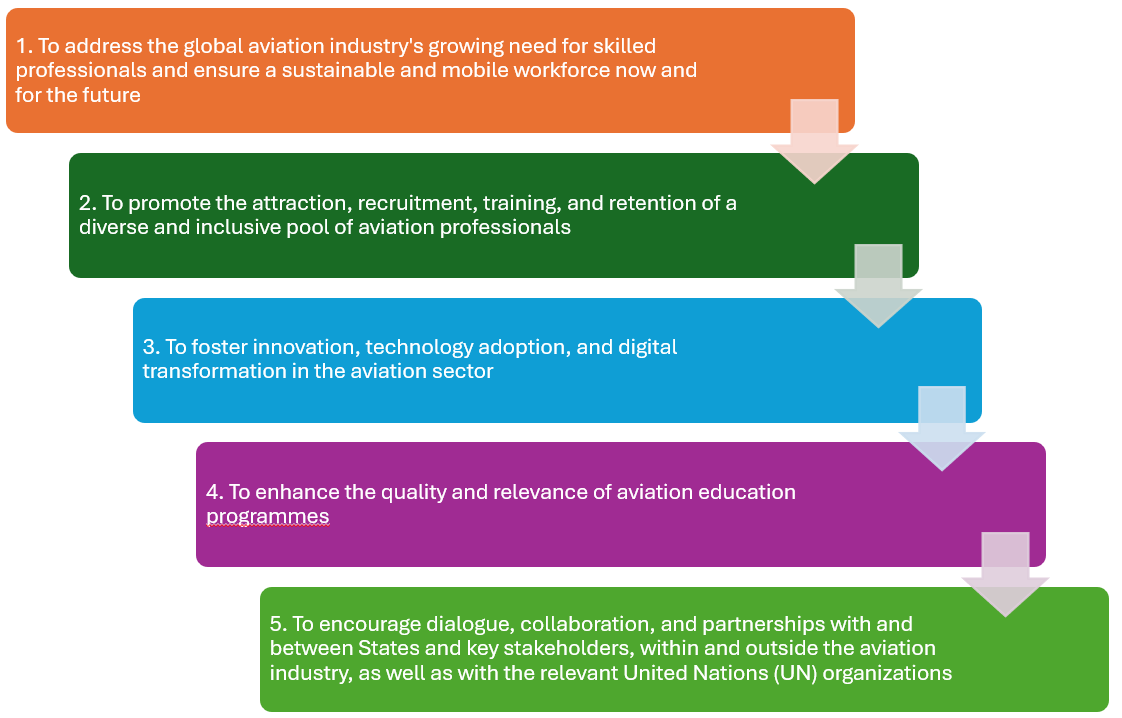
NGAP Objectives
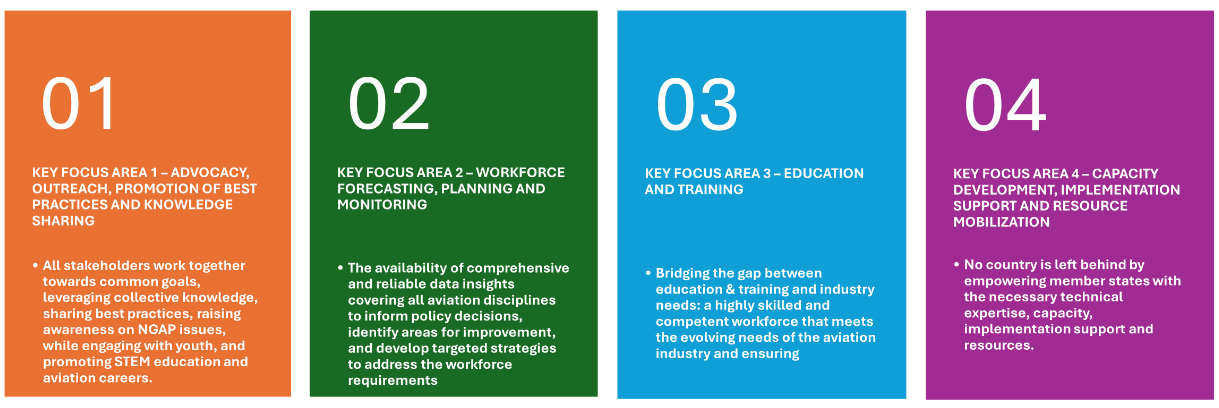
NGAP Key Focus Areas
The objectives of the NGAP programme can be achieved through concerted efforts among all stakeholders across these 4 key focus areas:
The full version of the ICAO NGAP strategy is available here. The strategy serves as a dynamic framework, adaptable to the evolving needs of the industry and the outcomes achieved.
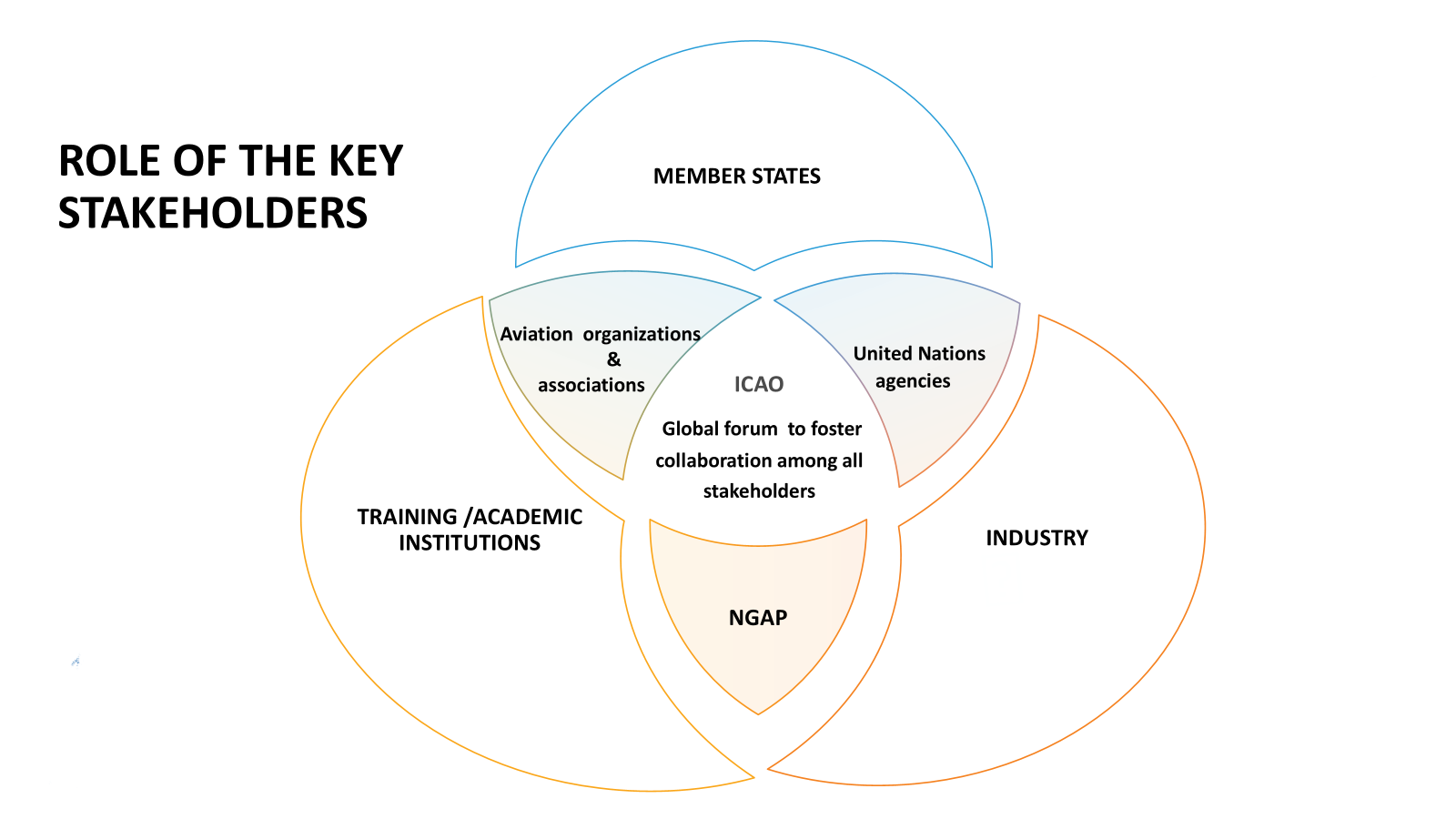
NGAP Key Stakeholders
NGAP issues are of critical interest to a broad range of stakeholders, including airlines, air navigation service providers, airports, manufacturers, training institutions, universities, member states, youth and aviation workers. Effectively attracting, educating, and retaining the next generation of aviation professionals necessitates strong collaboration with both national and international education and labor organizations and industry partners. This collaboration is essential for aligning industry requirements with educational curricula, fostering diverse and inclusive work environments, and ensuring sustainable talent pipelines.