
3. Training and Education General Recommendations
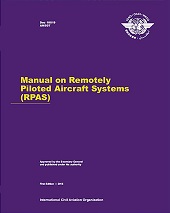 | RPAS Manual The primary focus of the RPAS manual addresses international IFR operations of RPA versus the operation of smaller and likely non-certified UA/UAS. The RPAS manual is currently being updated to reflect the latest RPAS standards and recommended practices. It is expected that the updated document will be available shortly. |
The competency requirements for remote pilots must reflect the risk level of the operations. Several levels of requirements can be proposed, as for example:
- Basic training (via e-learning or tutorial, or any other suitable media) for very low risk operations including model aircraft: the Authority will need to define the learning objectives
- Theoretical certificate and a practical training for low to medium risk operations
- Theoretical certificate; practical training; a practical test; and, eventually other requirements such as a radiotelephony licence or an experience in manned aviation for higher risk and BVLOS operations. A final step could be a remote pilot licence
3.1 CAA personnel should also be educated
Encourage contact between CAAs, manufacturers and operators. CAA personnel will have to understand technical questions concerning UAS and be experts for operational questions.
CAAs should develop regulation presentations including economic development and benefits. Presentations need to be regularly updated and be widely disseminated within the organization for use as necessary with stakeholders, other organizations and their own personnel. Statistics are often required from CAAs such as number of professional operators, professional UAS, UAS types, including recreational.
3.2 Operators and remote pilots
Automated technology requires different skills than traditional aircraft; flying the UA requires less skill than their manned counterparts but other skill sets of flight programming and unusual situational awareness are required. Remote pilots may not be aware of the need to acquire professional aviation knowledge.
- Manufacturers may not be familiar with aviation requirements. Toy or electronic manufacturers may not understand the possible hazards and consequences posed by their products to aviation safety
- Operators, whether private, professional or commercial, are responsible for the training and competency of anyone flying their UA or serving as an RPA observer
Note. - The information below (3.3 - 3.9) is a simplified overview of considerations for remote pilot licensing and training
3.3 Remote Pilot minimum age
The regulation may define a minimum age for remote pilot applicants.
3.4 Professional remote pilot training and competencies
- Remote pilots are not the same as traditional pilots of manned aircraft. Manned aviation requirements should not be transposed
- A balance should be sought between simple requirements for low risk operations and more stringent requirements for heavier UA used for complex operations
- The operator is responsible for development of manuals for maintenance and operations
- The operator should perform regular inspection of knowledge and flying skills
- Remote pilots require a general aviation awareness, e.g.: radiotelephony, right of way rules, airspace allocations, aviation law, etc
3.5 Theoretical training: learning objectives
- UAS general knowledge
- Principle of flight applied to UAS/ Rules of the Air / Operational procedures
- Airspace structure
- Human performance
- Meteorology
- Navigation/communication/surveillance
3.6 Practical skills
Remote pilot practical training objectives should be defined in the regulation, including:
- Flight preparation
- UAS preparation
- Normal procedures
- Abnormal procedures
3.7 Practical tests
The organization conducting the training may issue a certificate stating that flight training has been successfully completed.
BVLOS operations are often more complex and pose higher risk than VLOS operations and may require greater skill and knowledge levels on the part of the remote pilot.
3.8 Should the training facility be approved?
A determination should be made if approval is needed for the training facility. Other options can be:
- Define the practical learning objectives in the regulation
- Require the training facility to certify that trainees have acquired the specified skills
- Approval or certification of instructors
- Encourage the creation of a professional label for the training facility
3.9 Medical standard
Should a medical standard be defined for remote pilots conducting low risk VLOS operations? Third class medical standards are being proposed by some States for remote pilots by some States.
ICAO Annex 1 provides medical standards and recommended practices for remote pilots conducting international, IFR operations.
3.10 Licence Recognition
States should consider how, or if, they, would provide credit towards a UAS/RPAS licence based on their existing manned aviation licensing system and whether they will recognize UAS/RPAS licences held by pilots from other States.
ICAO UAS Advisory Group
| ICAO formed an advisory group in March 2016 to share best practices and to assist States in the development of guidance material regarding UAS operations. In addition to continuing to develop guidance materials for UAS operations the UAS Advisory Group is also developing guidance material on the development and deployment of UAS Traffic Management (UTM) systems. UTM guidance material can be found at: https://www2023.icao.int/safety/UA/Pages/UTM-Guidance.aspx. |