
4. Additional Considerations
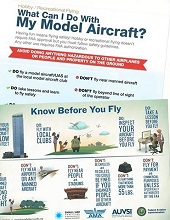 | Awareness Campaigns (Extra info) Awareness campaigns to educate the public concerning the safe operation of small drones are needed. Many States have not yet developed such initiatives. |
4.1 Whole of Government Approach
Given the complexity of UAS and the demands made by the industry on CAAs, States may wish to consider putting forward a whole-of-government UAS strategy that could benefit all departments and could include key components, such as:
- A roadmap that identifies safety, security, and economic objectives of the future UAS industry
- A government interdepartmental UAS committee to share information and help departments operating UAS to plan their activities
- A methodology to align the needs of the industry with government resources Coordination activities to enhance industry stakeholder access to funding to explore new technologies and market applications
4.2 Stakeholder Consultation
States may wish to consult with key stakeholders early in the regulatory development process. Formation of a joint government/stakeholder UAS working group tasked with reviewing existing legislation and making recommendations for a new UAS regulatory framework could be effective. UAS stakeholders should include manned aviation operators, manufacturers and organizations. Once regulations have been drafted, soliciting feedback from both aviation and non-aviation stakeholders will help to ensure that the regulations capture all relevant requirements.
4.3 Civil Aviation Authorities - Collaboration
States may wish to establish a mechanism to share experiences related to UAS with other CAAs with a view to aligning regulations especially with those States that share their borders. Engaging with international regulatory partners will be particularly important when developing the regulatory framework for BVLOS UAS operations. States should consider collaborating on UAS matters on topics such as:
- Technical, safety, and operational requirements for the safe operation of UAS
- Research & development including sharing outcomes and identifying opportunities to collaborate on future projects and, in particular, traffic management
- Information systems
- Enforcement and compliance strategies including partnerships with law enforcement agencies
- Programmes for training State personnel who are responsible for UAS oversight
- Lessons learned and best practices
- Safety awareness and promotion campaigns
4.4 Public Outreach - Education and Awareness
To ensure the successful integration of UAS into the current manned aviation system, it is critical that pilots, operators, manufacturers, buyers, sellers, importers and the general public are all aware of UAS. Most importantly the remote pilot needs to accept responsibility and understand that he/she is responsible and accountable for the safe operation of the UAS. Slogans such as “YOU are now a REMOTE PILOT” or “YOU are in CONTROL” of your UAS can be incorporated into awareness campaigns. The message should also include a reminder of the risk to safety that flying a UAS close to an airport or aircraft could pose.
4.4.1 Education
Education should be provided to manufacturers, importers and sellers of UAS in order for them to convey key safety information directly to the buyers of UAS. This awareness and/or education should include the following:
- Online reference to the specific State’s UAS guidance or regulations, web links must be easily accessible
- A simple, clear web based handout of the do’s and don’ts when operating UAS
- Pamphlets or educational material regarding guidance and/or regulations should be provided to: manufacturers, dealers and sellers of UAS, some UA are “home-build” products for recreation/experimental purposes, law enforcement agencies and academic Institutions
4.4.2 Safety campaigns
Information booths at conferences, airshows and trade shows may be effective. Consider utilizing existing events as UAS awareness platforms. Other entities that could provide a role in providing education and awareness are listed below. By using the services of these entities, the information can be transferred globally.
- Immigration offices, including travel advisories
- Tourism bureaus
- Social media including frequently updated web pages such as YouTube and blogs
- Websites and a handbook explaining the regulation, leaflets, media communication campaigns can all be used to inform the general public and UAS operators
- Registered operators may also be informed by email if the CAA establishes mailing lists
- A frequently asked questions (FAQ) page may be useful, including a process to answer questions by email
- Online situational awareness and flight planning tools
- Regulatory authority’s safety campaigns as part of their State safety programme/aviation awareness
- Examples of various information campaigns and flight planning tools can be found below:
USA https://faadronezone.faa.gov/#/
USA https://www.faa.gov/uas/recreational_fliers/where_can_i_fly/b4ufly/
Denmark https://www.droneluftrum.dk/#/
Austria https://map.dronespace.at/
Belgium https://map.droneguide.be/
Canada https://www.tc.gc.ca/en/services/aviation/drone-safety.html
Canada https://nrc.canada.ca/en/drone-tool/
4.5 Enforcement
States will need to determine who will enforce UAS regulations and develop an enforcement strategy. In order to ensure effective enforcement, UAS need to be identifiable; the most common form of identification is registration. By registering the UAS, the owner is acknowledging responsibility and accountability for the safe operation of the aircraft.
Enforcement methods may range from providing education and awareness to the issuance of fines and penalties, depending on the severity of the transgression. The responsibility for enforcement may rest with the national authority or alternatively with local law enforcement agencies. Many law enforcement officers may not have a robust understanding of the regulations, resulting in inconsistent enforcement of the regulations. States should determine what agency is best positioned to conduct enforcement action and ensure that they are given the authority and training to act effectively.
It must be remembered that existing aviation or legal enforcement policies can be considered for dangerous, reckless or negligent flying practices.
4.6 Incident and Accident Reporting
In order to ensure the safe development of the UAS industry as well as effective regulatory procedures, National Authorities require data. Therefore, the new dynamic industry of UAS is encouraged to report incidents and accidents to the regulatory authority. A non-punitive mechanism will best support reporting and data collection.
Procedures for submitting a hazard report should be clear, well documented and should include details of where and to whom reports should be submitted. This will reduce confusion over where safety reports go and will ensure that all events are brought to the attention of the appropriate authority.
Keeping official statistics on types of UAS activities and incident and accident rates will help decision makers develop informed policies that impact the regulated community. An accident report system coupled with a non-punitive, de-identified incident reporting system is essential to assessing the effectiveness of the regulation.
4.7 Privacy
Where States have no existing privacy legislation or an agency responsible for investigating privacy complaints associated with aircraft, they may wish to consider assigning an agency for privacy oversight. Consideration of privacy laws while ensuring a balanced approach to safety and privacy may require responding to complaints about UA operating around sensitive areas and critical infrastructure.
4.8 UAS dedicated test facilities and airspace
In response to the high demand for airspace access by industry stakeholders and as rapid technological UAS development outpaces rulemaking activities, States may wish to consider supporting initiatives to establish UAS R&D facilities with segregated airspace structures. This approach would enable stakeholders to realize the full potential of UAS in a variety of operational conditions. Benefits may include:
- Supporting academic aerospace and engineering programmes
- Testing new UAS and new technologies for operators and manufacturers
- Testing in real conditions to demonstrate UAS capability to aviation authorities
- Testing the integration of UAS payload in order to validate that it fits the intended application
- Testing and training for remote pilots
- Reducing ad hoc requests for artificially restricted airspace
Responsibilities of Regulators
Develop and disseminate clear and concise aviation safety standards. Conduct surveillance of the aviation industry. Conduct regular reviews of safety to monitor the aviation industry’s performance and to identify safety trends and risks. Issue licences, aircraft registration and other permits. Carry out assessment of international safety developments. Encourage the aviation industry to maintain high safety standards though education, training and advice. Promote full and effective consultation and communion with all people and organizations that have an interest in aviation safety. The RPAS and UAS industry is rapidly evolving and regulators should make every effort to remain current on the latest developments through attendance at events such as ICAO’s DRONE ENABLE symposium and industry led forums/conferences. |