December 1928: The International Civil Aeronautics Conference
|
|
|
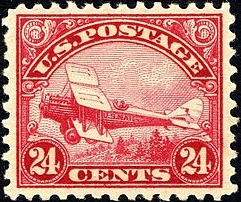
US commemoratives honouring this Conference
|
|
|
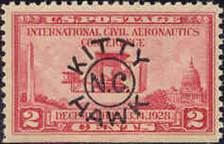
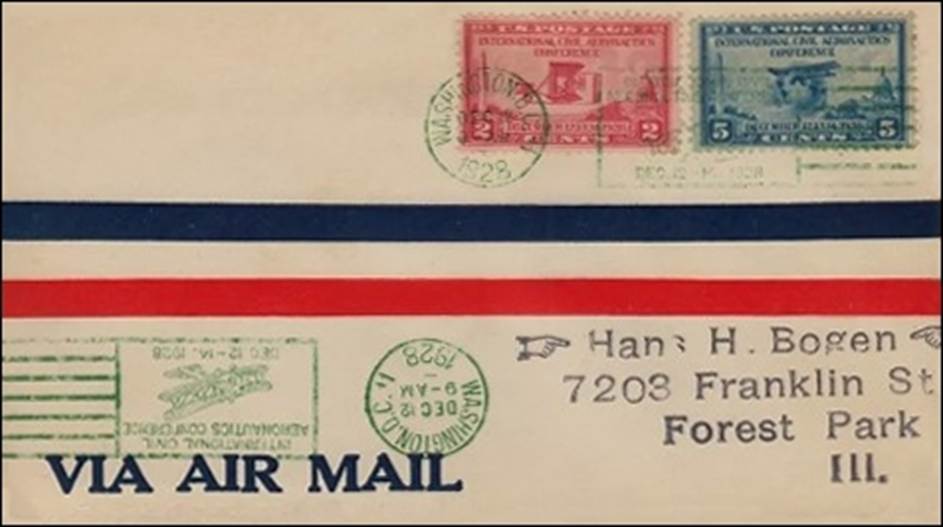
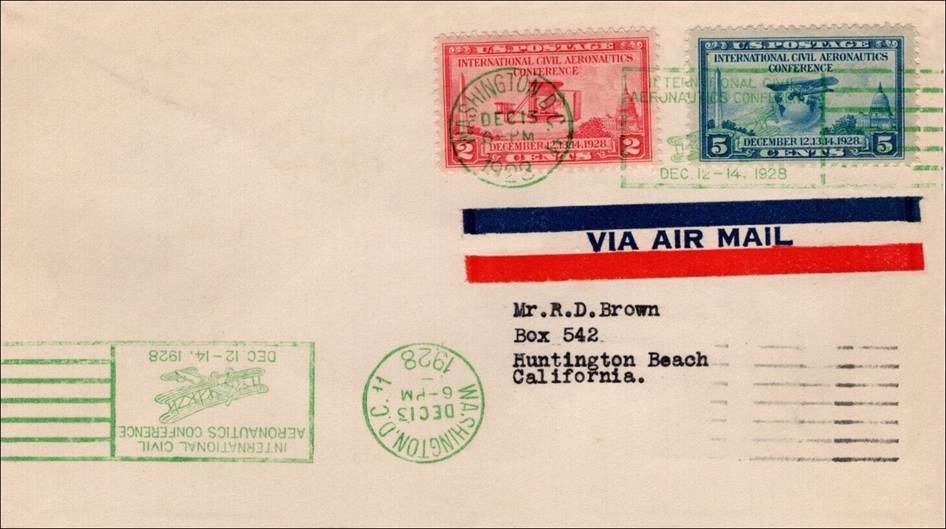
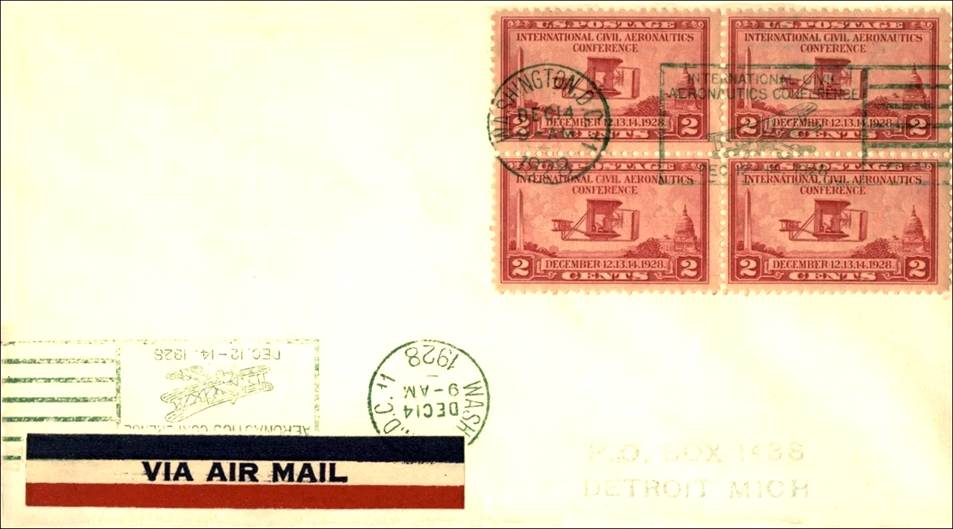
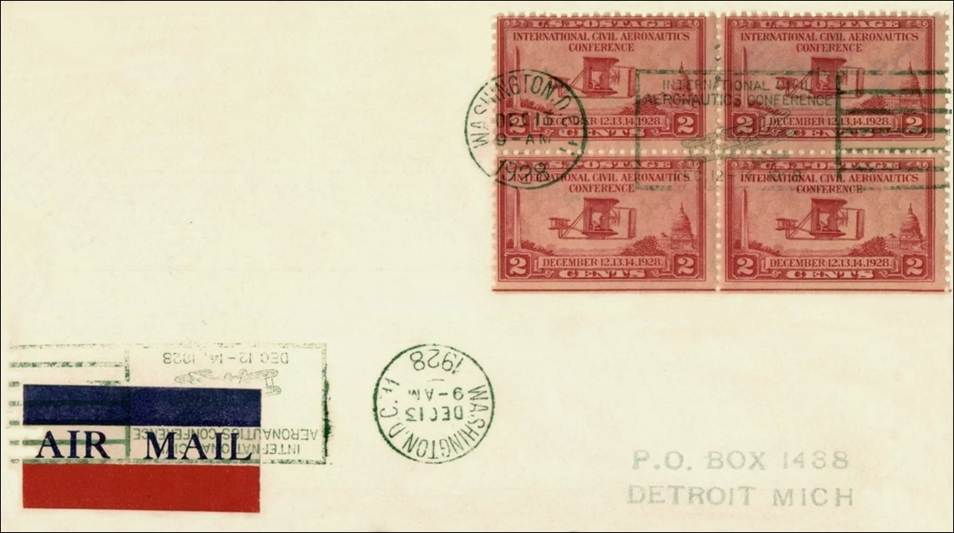
2-Cent stamp showing the Wright Flyer I airplane, in left profile, used by the Wright brothers in their first successful flight at Kitty Hawk, N.C., on 17 December 1903. Scott #649. |
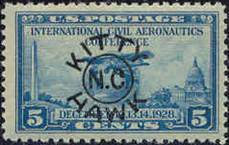
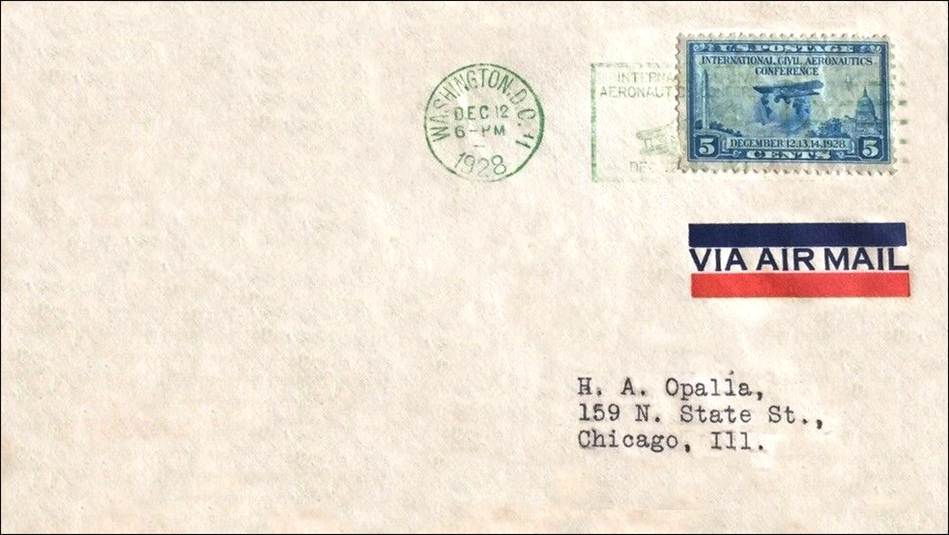
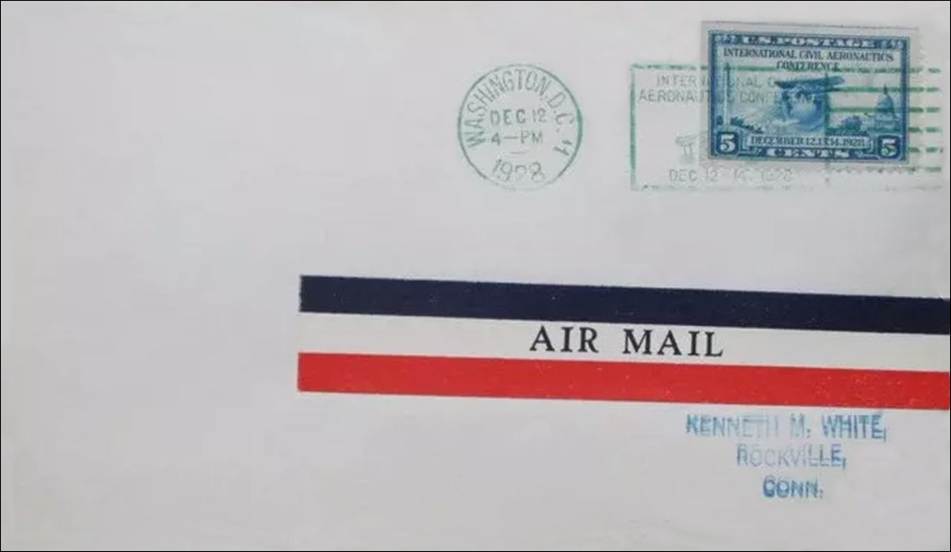
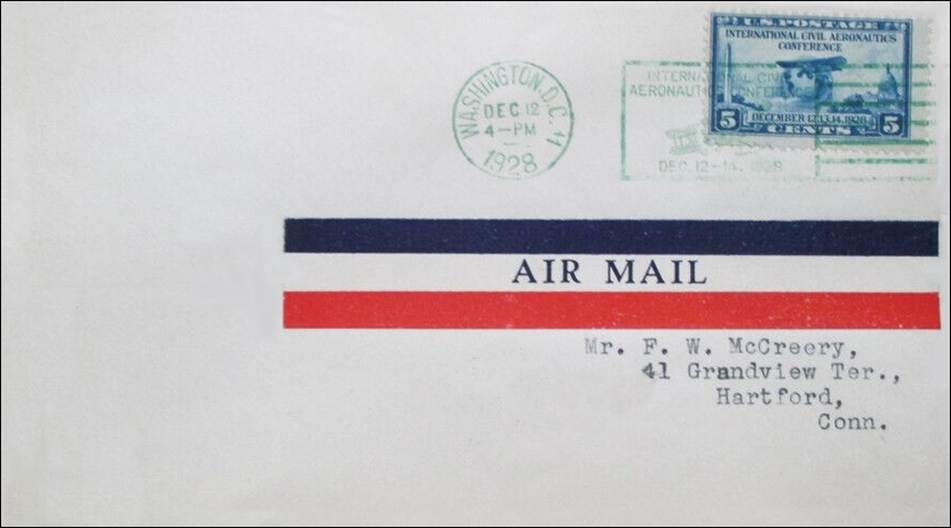
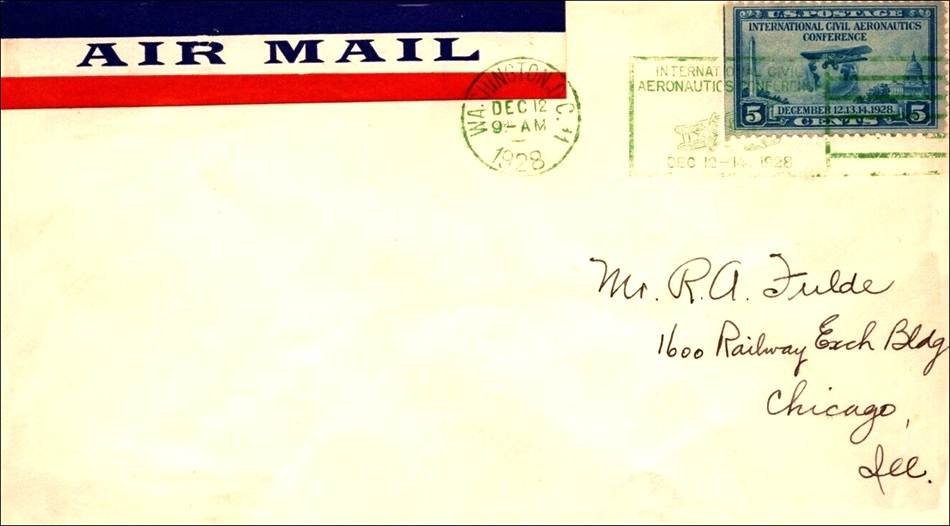
5-Cent stamp showing a Ryan B‑5 Brougham airplane with an outline of the globe in the background. Scott #650. |
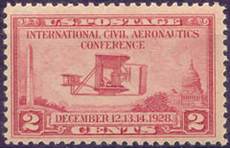
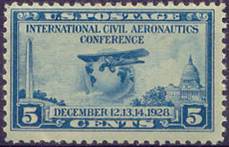
On 8 December 1927, President Calvin Coolidge wrote a short note to the Conference of the Aeronautical Industry meeting in Washington, D.C., expressing his interest in having an international conference in Washington the next year. He wanted to honour the twenty-fifth anniversary of the Wright brothers' first powered flight and to further establish the United States among the world leaders in aviation.
Congress appropriated funds, and the State Department issued an international call for papers to those countries with which the United States had diplomatic relations. However, the Commerce Department assumed oversight of the conference during its presence in Washington. Herbert Hoover, then-Secretary of Commerce, was an avid stamp collector. On 12 December 1928, President Coolidge welcomed aviation leaders and representatives gathered to exchange information and honour aeronautical achievements, especially those of the guest of honour, Orville Wright (Wilbur had died in 1912) at the opening of the International Civil Aeronautics Conference held in Washington, D.C. between 12 and 14 December 1928,
|
Delegate’s card. The vignette on the card is the same as on the 2-cent stamp. Courtesy National Archives.
|
|
|
|
Conference (bronze) Badge. |
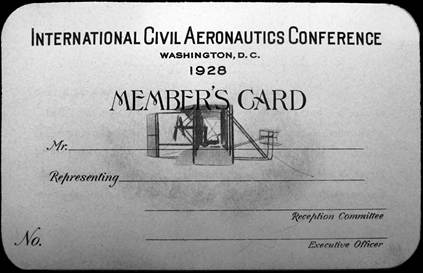
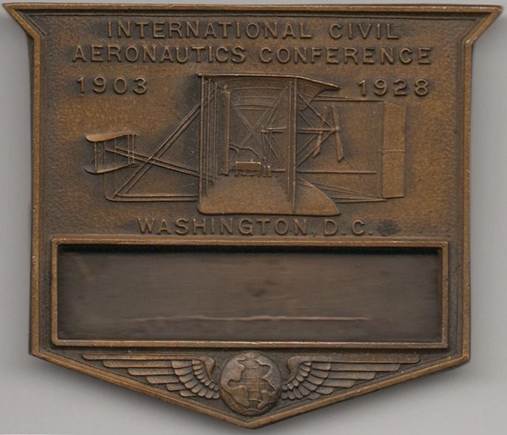
The purpose of the Conference was to consider the strides made throughout the world in the science and practice of civil aeronautics since the first power-driven flight, and to discuss ways and means of further developing it for the benefit of mankind. It provided an opportunity for an exchange of views upon problems pertaining to aircraft in international commerce and trade, and suitably commemorated the twenty-fifth anniversary of the first flight of the Wright brothers. It also streamlined the way international airmail was prepaid and handled; before that, rules for prepaying international airmail depended on country-to-country treaties. Orville Wright was the honorary guest (Wilbur had died in 1912); Charles Lindbergh was also present. A total of 77 official and 39 unofficial delegates from 50 foreign countries attended, in addition to the 12 official American delegates, 43 technical representatives, 238 representatives, and 32 committee members, for a total official attendance of 441. Many of the countries they represented were still occupied. Delegates participated in meetings, conferences, lectures, discussions, and a general exchange of aeronautic ideas, as well as official and unofficial dinners, banquets, entertainments and sightseeing tours.
Among the delegates were notables such as Orville Wright, Charles Lindbergh, Amelia Earhart, Igor I. Sikorsky, Senator Hiram Bingham, Giovanni B. Caproni and Lady Mary Heath. Both Heath and Caproni were later honoured with their own postage stamps in their native countries commemorating their achievements in aviation history.
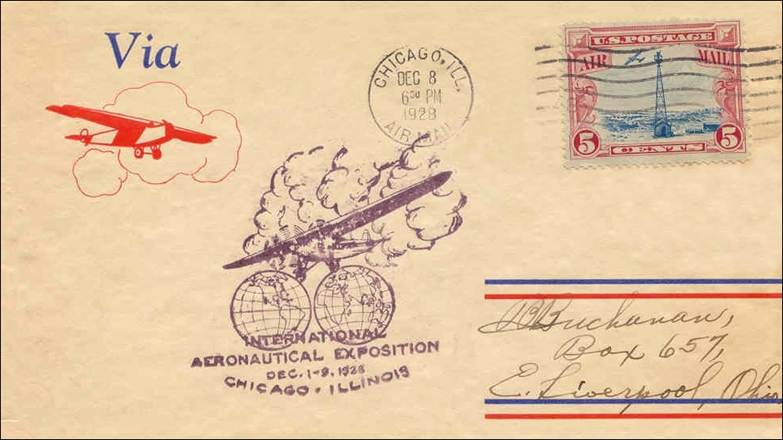
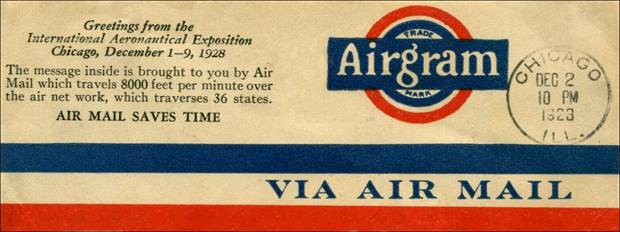
Attendees to the Conference were also invited to the International Aeronautical Exhibition/Exposition held in Chicago the week before the conference, from 1 to 9 December 1928, under the auspices of Aeronautical Chamber of Commerce of America. It was a major aviation showcase featuring 62 aircraft from 44 exhibitors, highlighting the industry's shift towards metal monoplanes, featuring Ford tri-motors and numerous engines, marking a high point in 1920s aviation; it included nearly every American airplane in production, motors and accessories, special exhibits, and displays of foreign aircraft as well.
|
|
|
|
Cover sent from the International Aeronautical Exposition. Held in Chicago from 1 to 9 December 1928. Postmark dated 8 December 1928. |
International Aeronautical Exposition - Cut from cover (Varney Airgram)
|
|
|
|
|
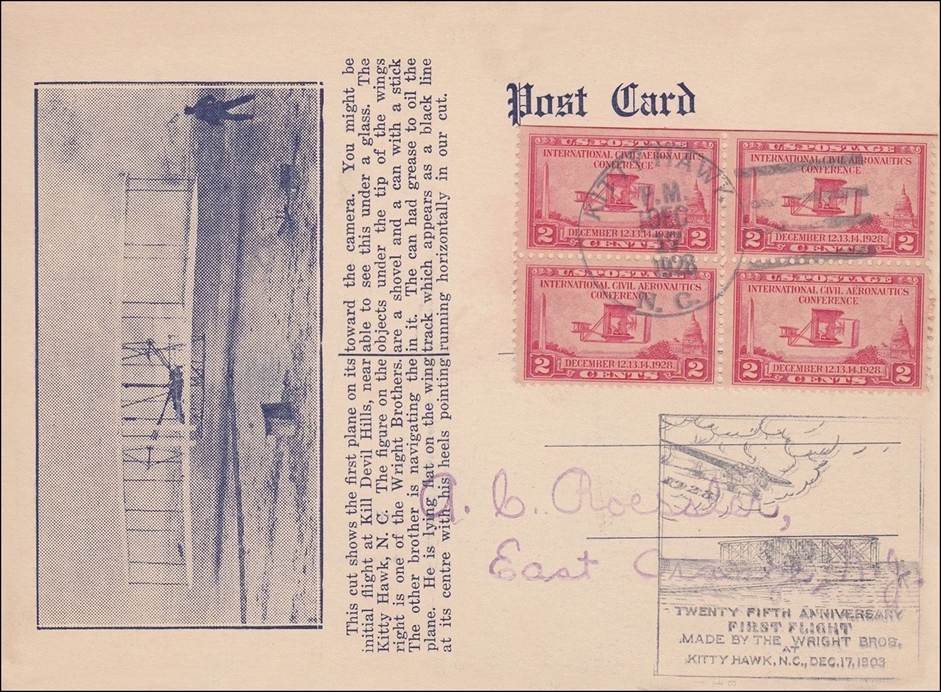
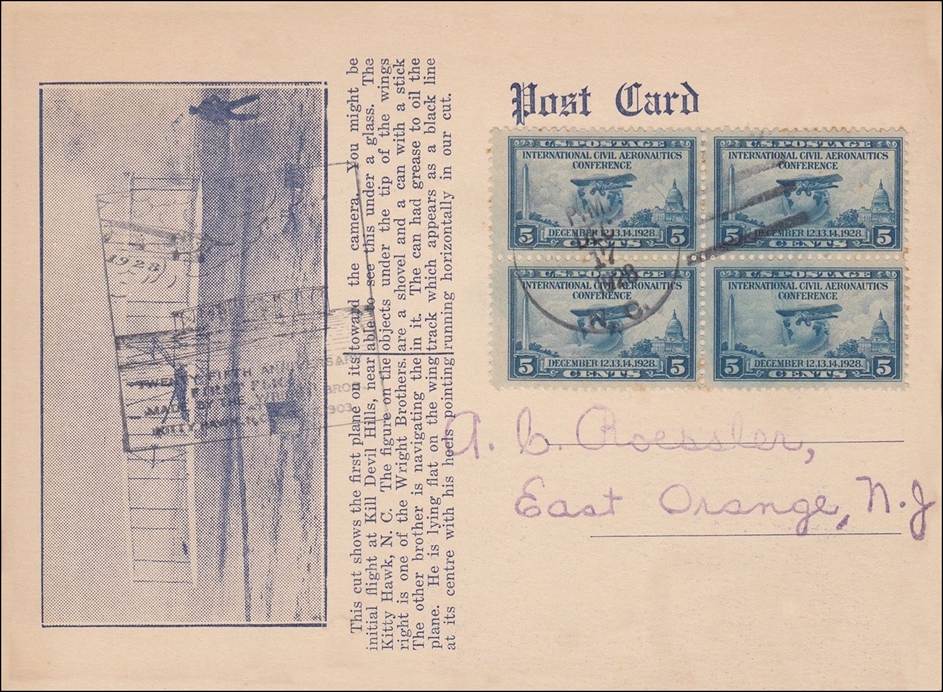
Legendary New Jersey stamp dealer-publisher-cachet maker Albert C. Roessler (1883-1952) added his own tribute to the Wright brothers by privately overprinting KITTY HAWK with N.C. inside a circle. He overprinted the stamps as a sales gimmick soon after they were issued. |
|
The International Civil Aeronautics Conference of 1928 was the first significant national recognition of the Wright brothers' achievement of powered manned flight. Since Orville and Wilbur Wright's historic flight a quarter-century earlier, powered flight had come a long way. Airplanes were now accepted as part of the fabric of modern life. They had proved their military value in the First World War and were increasingly finding roles in the civilian world, such as airmail service. The conference was held at the Chamber of Commerce Building, across Lafayette Park from the White House. Then president, Calvin Coolidge opened the gala proceedings with a laudatory speech from the White House, which highlighted the advances in aviation from 1903 to 1928, including the airplane as a method of mail delivery and military defence. On the opening day, the Clifford B. Harmon (a wealthy sportsman and aviator) trophy was presented to Charles Lindbergh.
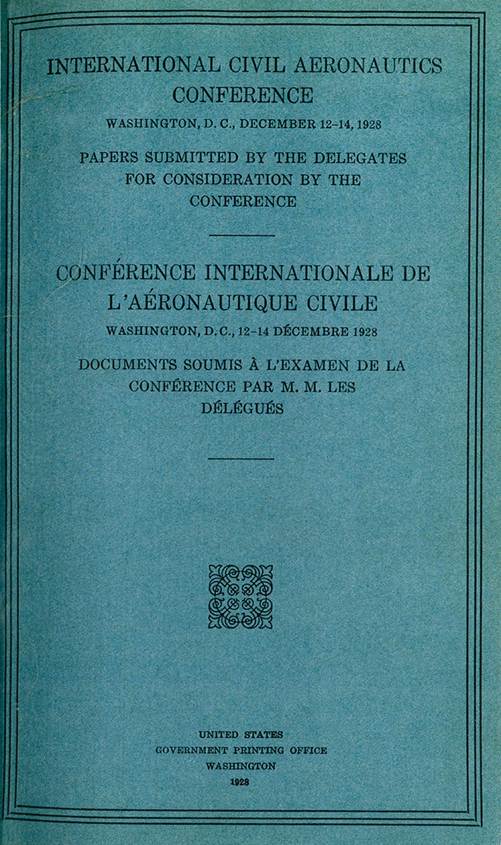 Each day was devoted to a different topic: 12 December, international
air transport; 13 December, airway development, including meteorology and communications;
14 December, foreign trade in aircraft and engines. Selected papers of special interest
were read in the morning plenary sessions and, along with the other papers, formed
the topics for discussion in the afternoon sub-sessions. General topics included
air transportation, airway development, aeronautical research, aerial photography,
aero propaganda (or, more correctly, public relations), trade in aircraft and engines,
and private flying and competitions. Following the conference, the delegates travelled
together to
different sites, including the Wright Air Field
in Dayton, Ohio, where the Wright Brothers were born,
and even to
Kitty Hawk, North Carolina, to attend ceremonies on the site exactly
twenty-five years after the Wrights' historic flight which changed the course of aviation history.
Each day was devoted to a different topic: 12 December, international
air transport; 13 December, airway development, including meteorology and communications;
14 December, foreign trade in aircraft and engines. Selected papers of special interest
were read in the morning plenary sessions and, along with the other papers, formed
the topics for discussion in the afternoon sub-sessions. General topics included
air transportation, airway development, aeronautical research, aerial photography,
aero propaganda (or, more correctly, public relations), trade in aircraft and engines,
and private flying and competitions. Following the conference, the delegates travelled
together to
different sites, including the Wright Air Field
in Dayton, Ohio, where the Wright Brothers were born,
and even to
Kitty Hawk, North Carolina, to attend ceremonies on the site exactly
twenty-five years after the Wrights' historic flight which changed the course of aviation history.
No international agreements or conventions were produced by the conference, as none were intended. Its most lasting legacies may well be the two U.S. postage stamps issued to commemorate such a monumental event at the time. In the end, State Department officials may have correctly categorized it as "nothing but a celebration". Perhaps so, but it was still a fitting way to recognize the twenty-fifth anniversary of the day "America gave wings to the world" (as indicated on one of the commemorative covers).
The effects of the Depression muted the long-term impact of the International Civil Aeronautics Conference in establishing the United States as the world leader in civil aviation. While the period of the 1920s and 1930s is characterized as "Aviation's Golden Age", the aviation industry faced daunting challenges over these two decades.
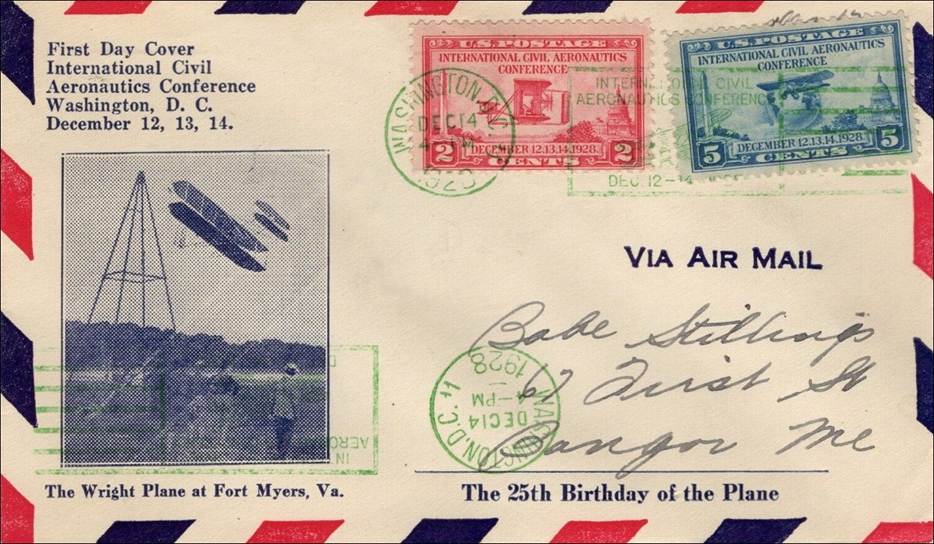
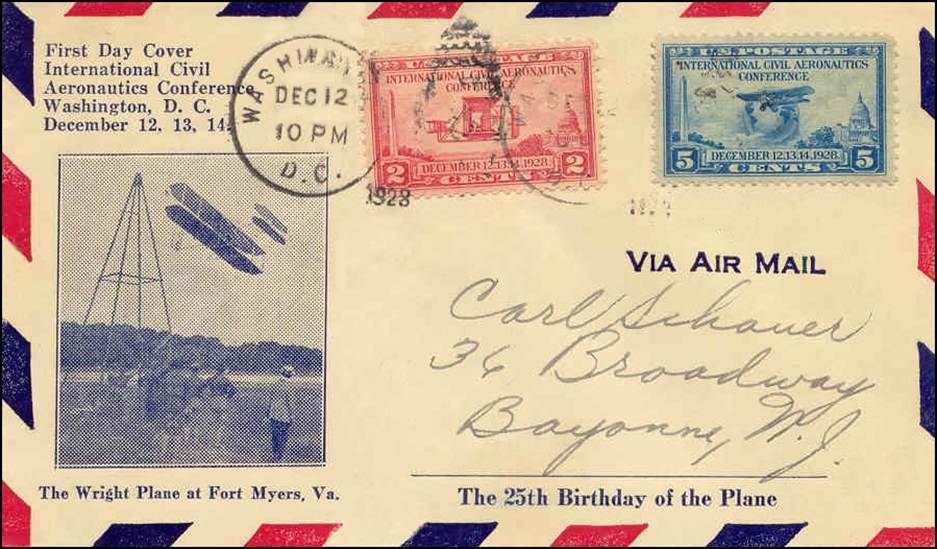
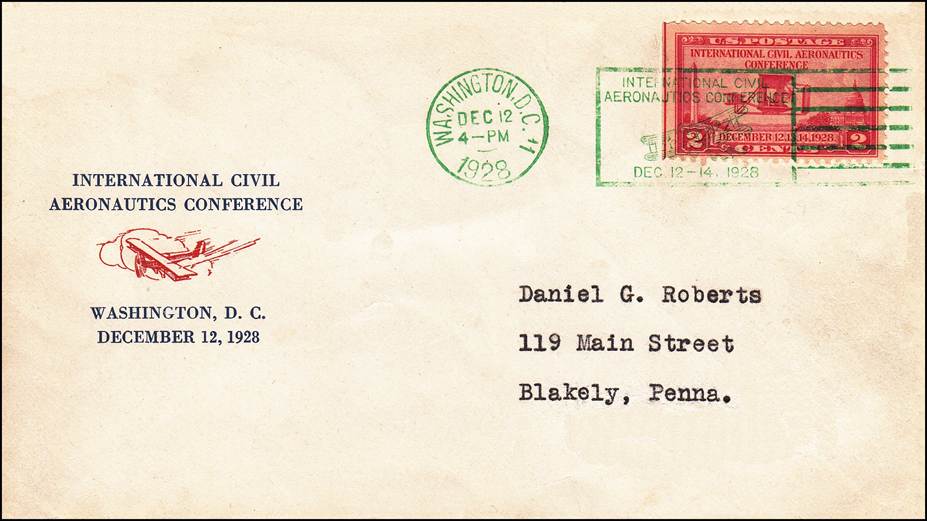
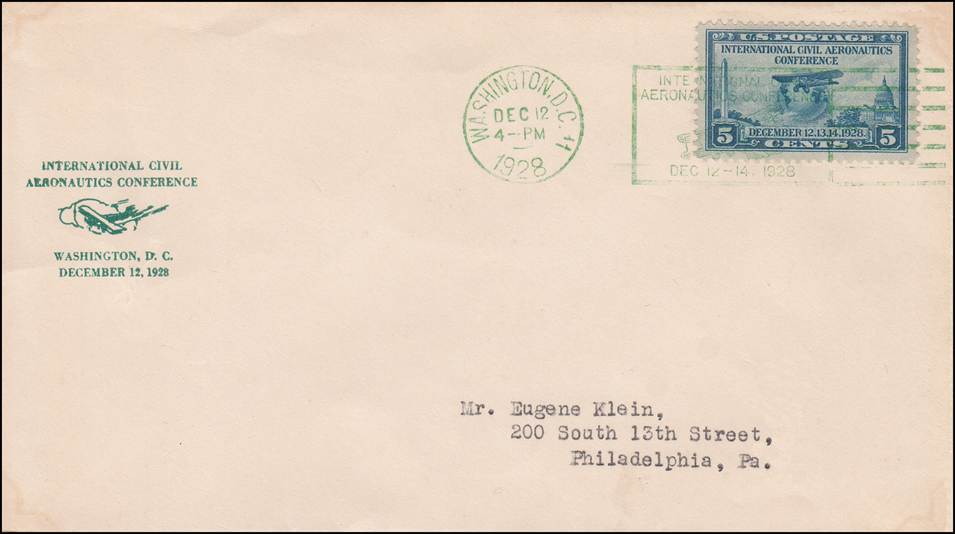
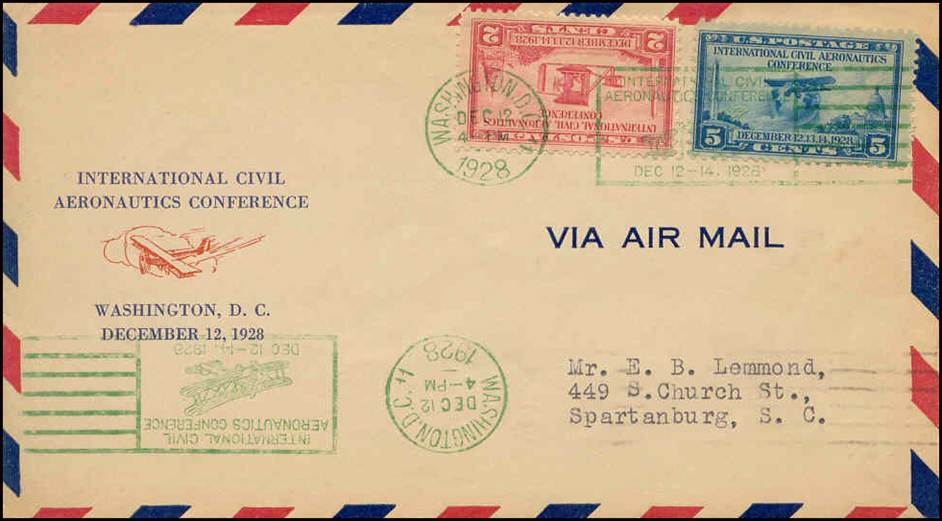
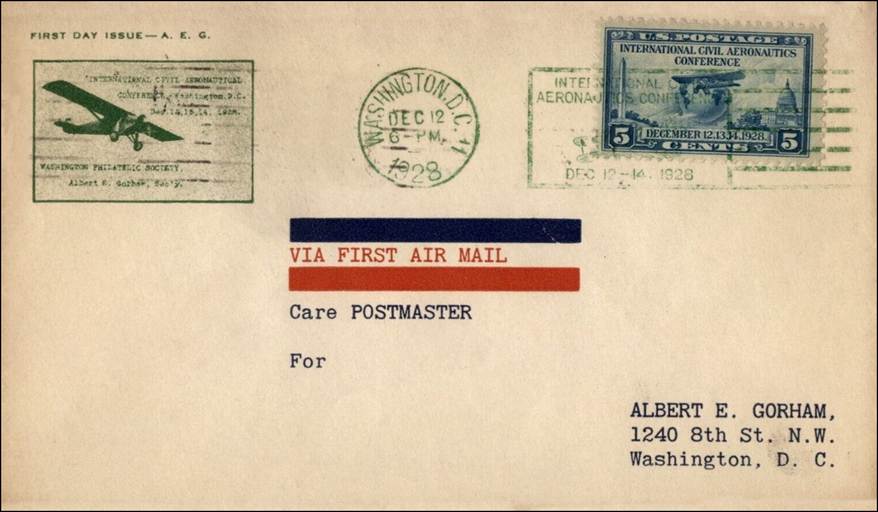
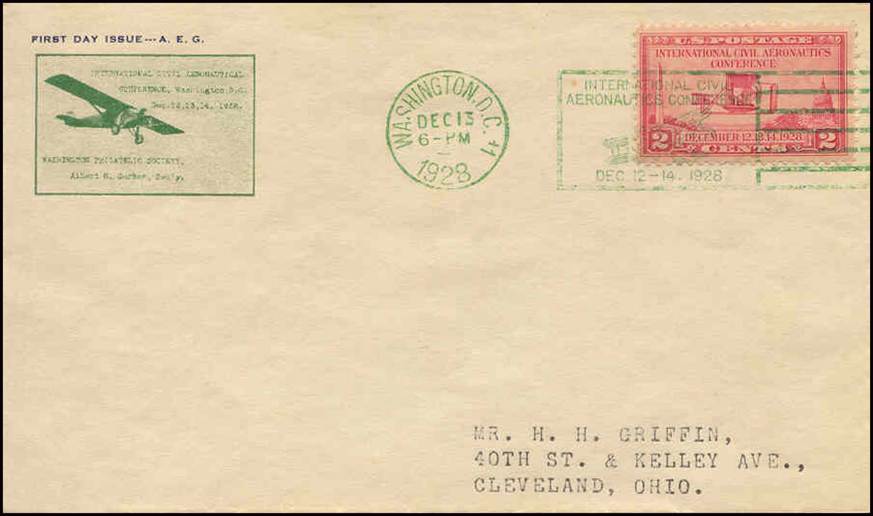
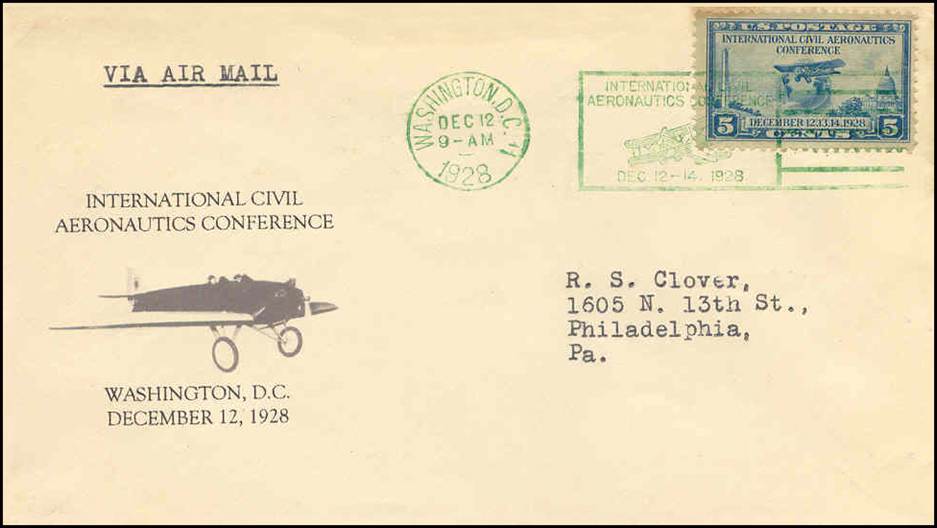
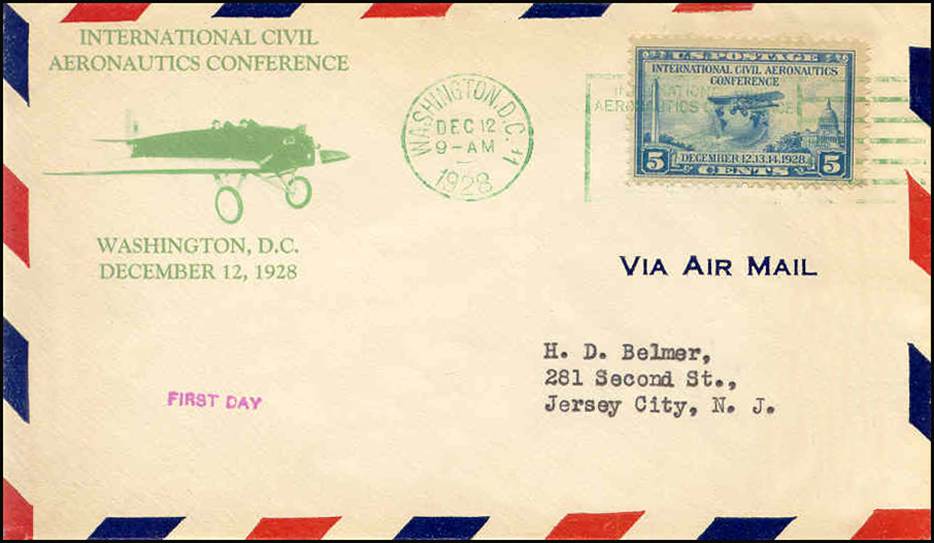
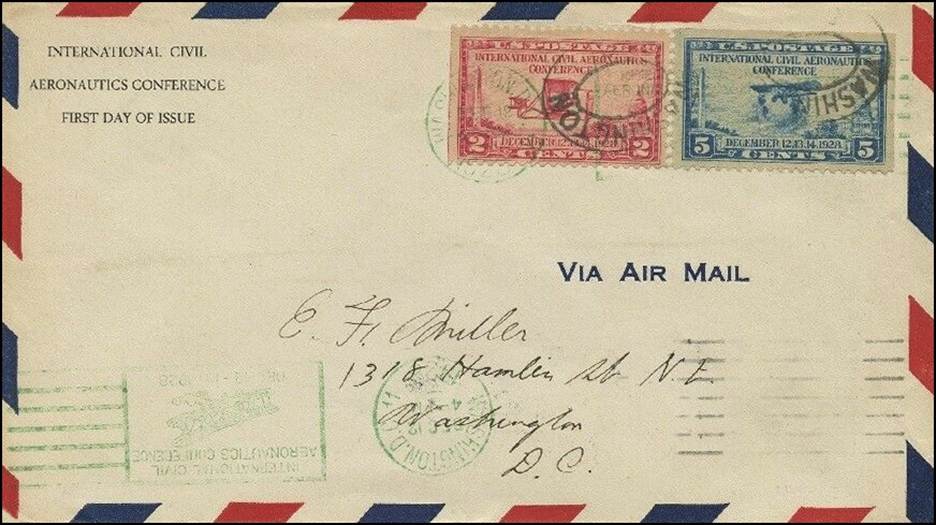
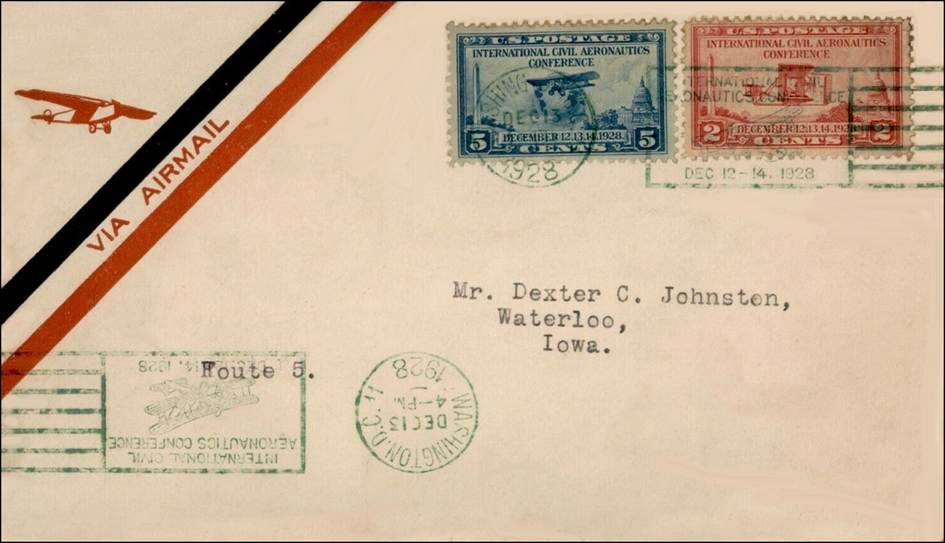
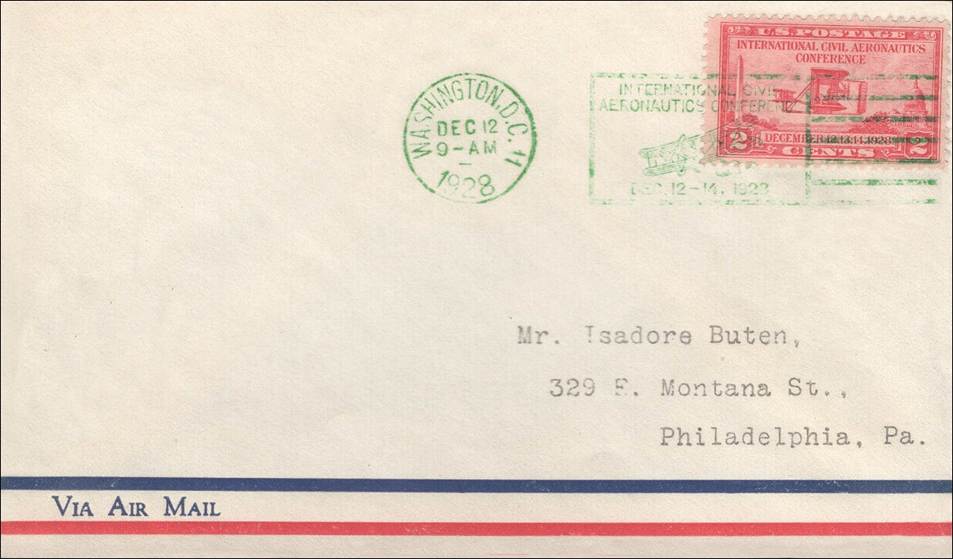
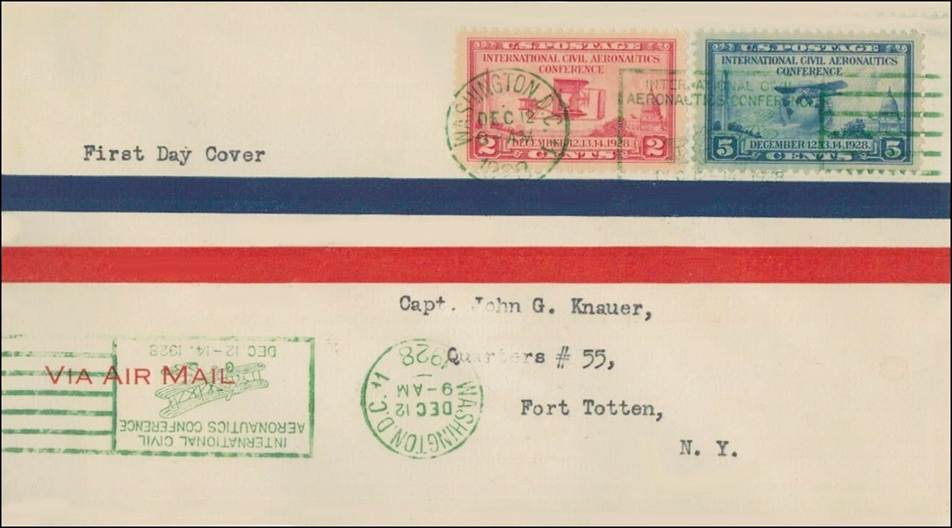
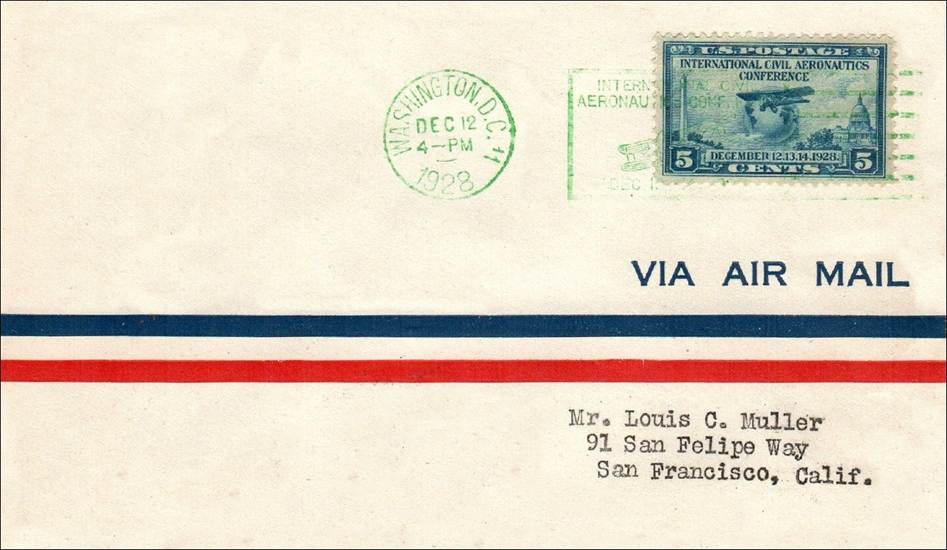
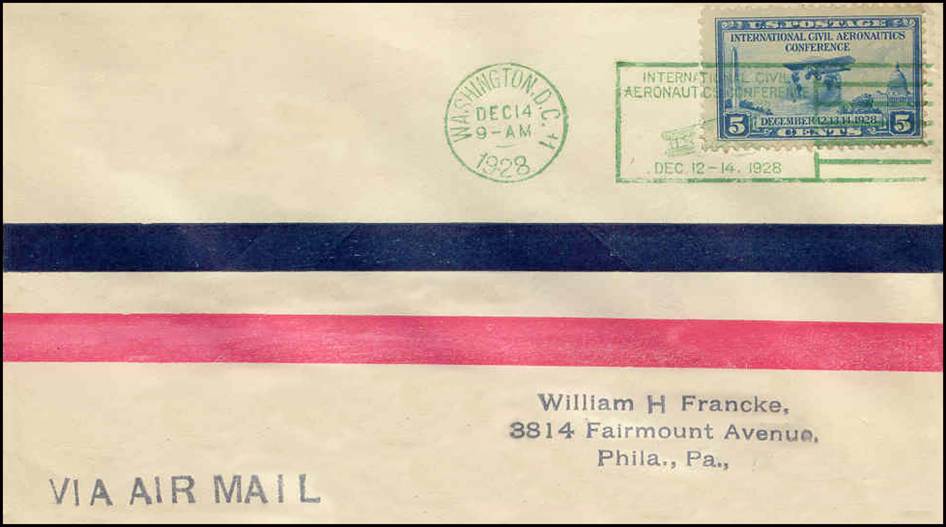
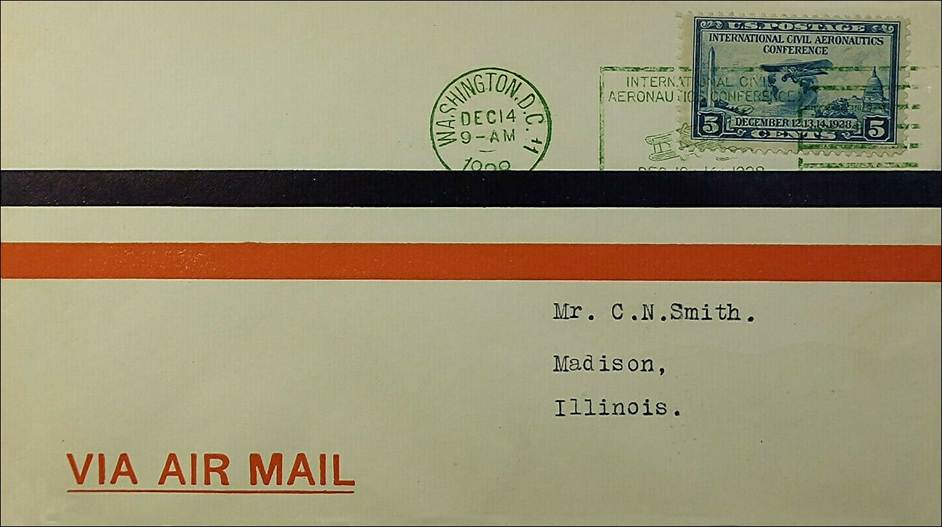
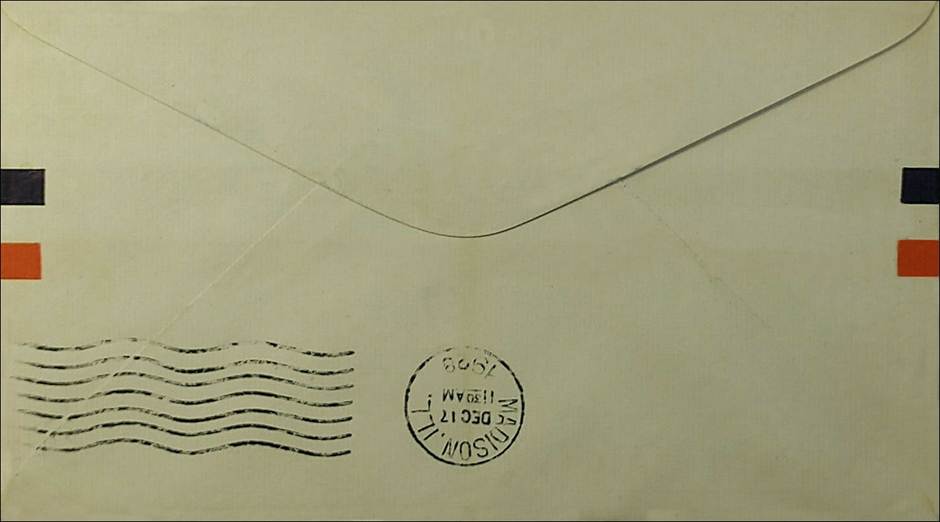
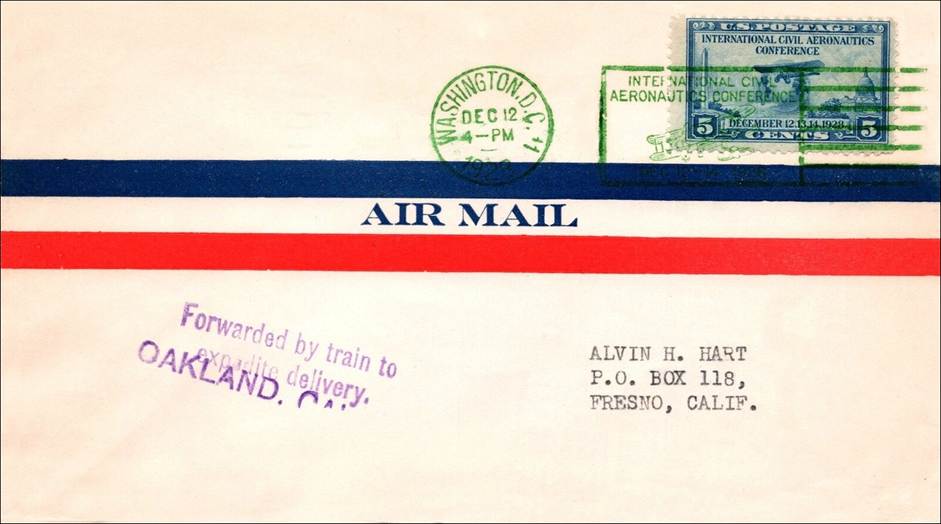
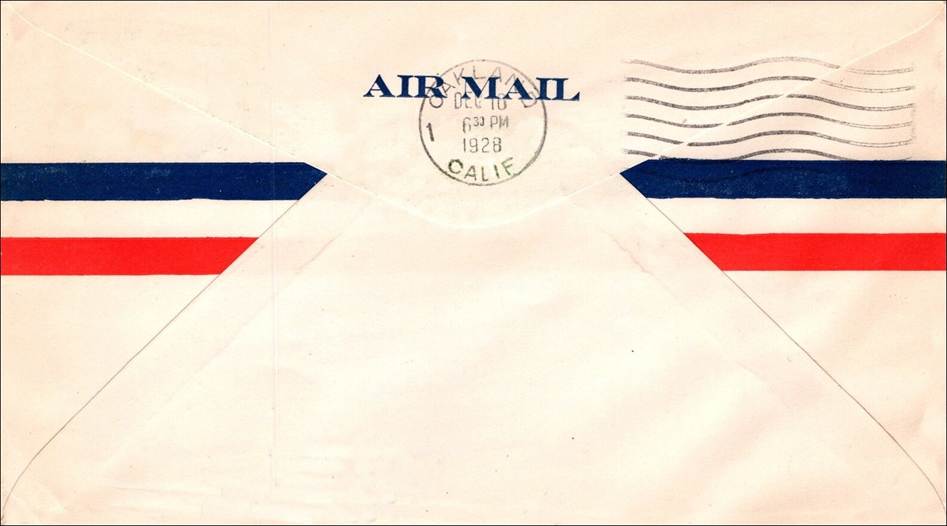
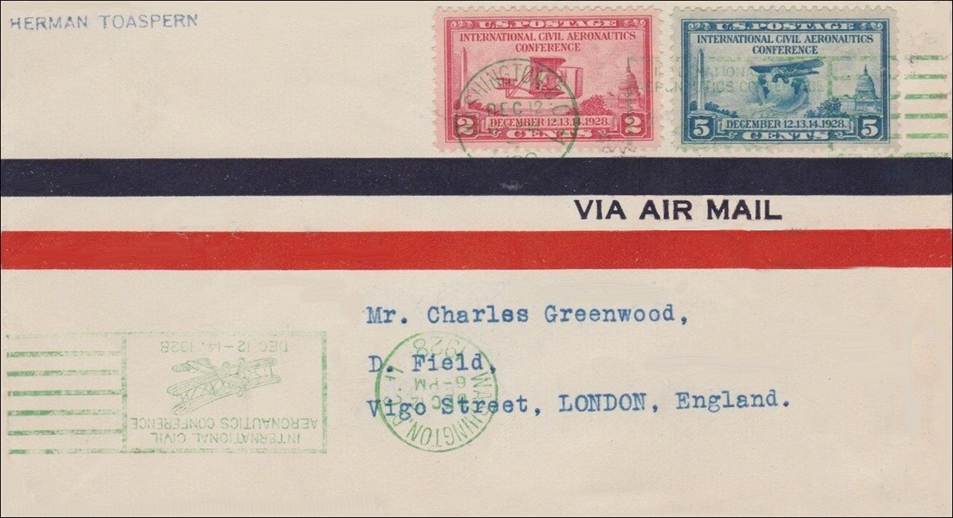
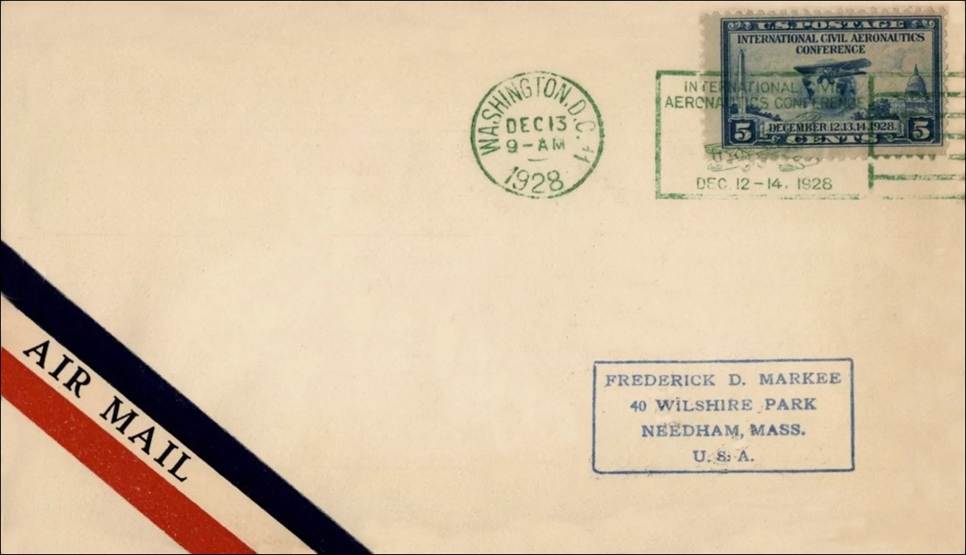
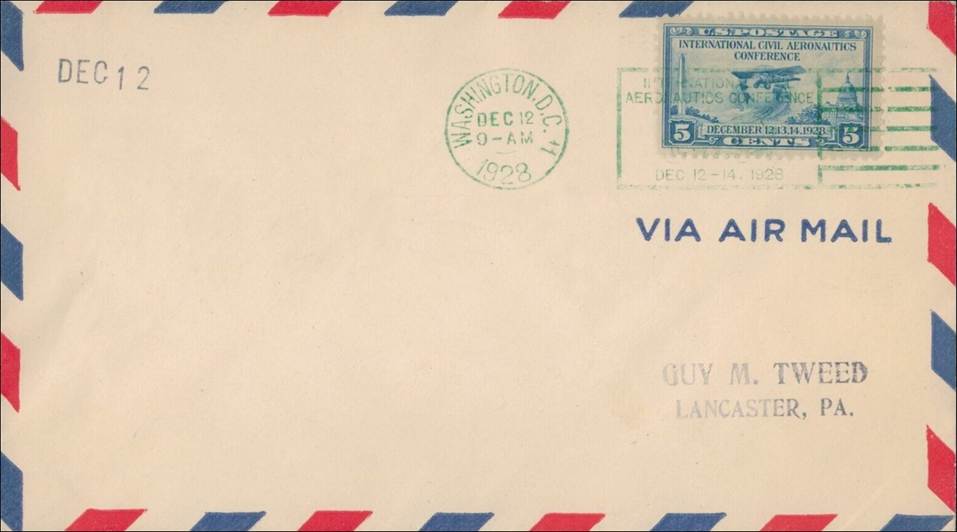
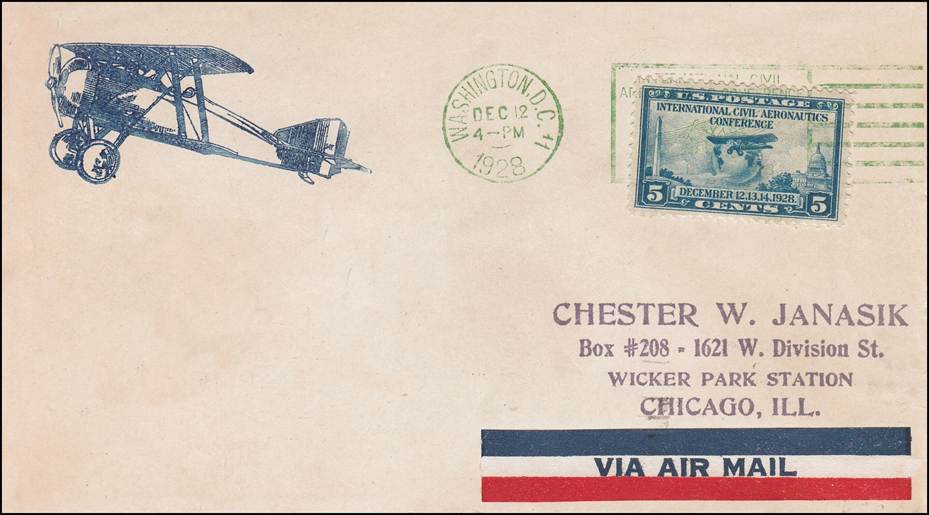
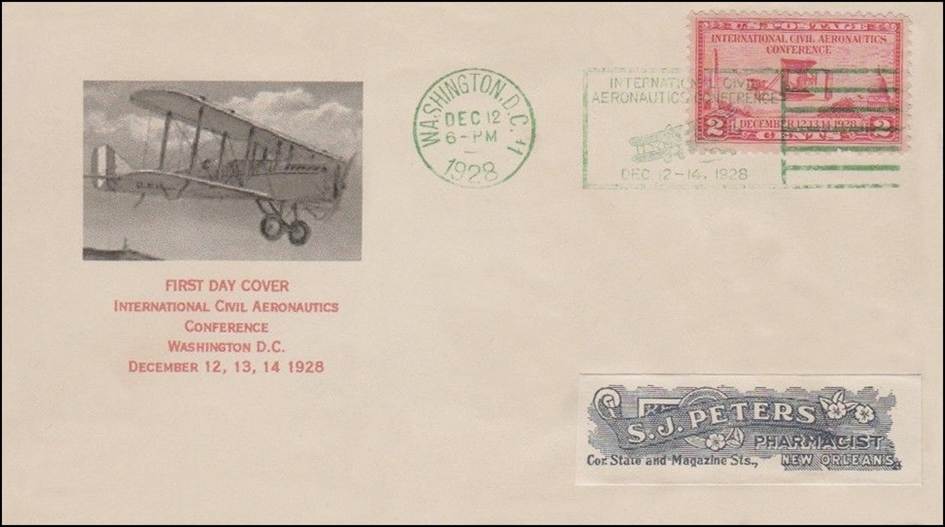
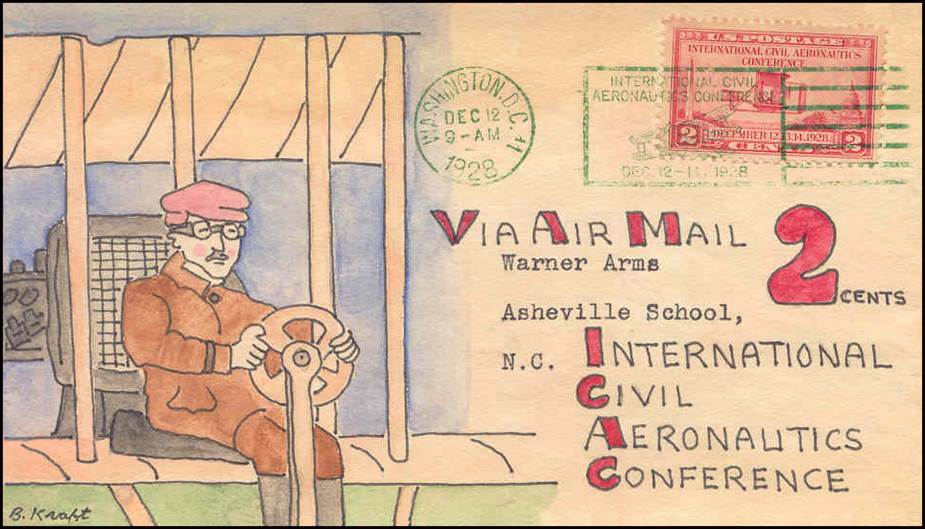
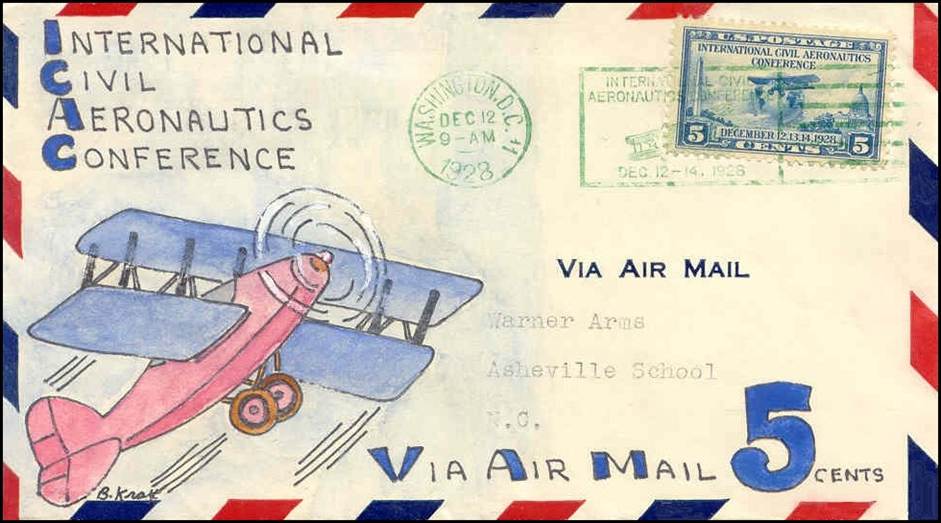
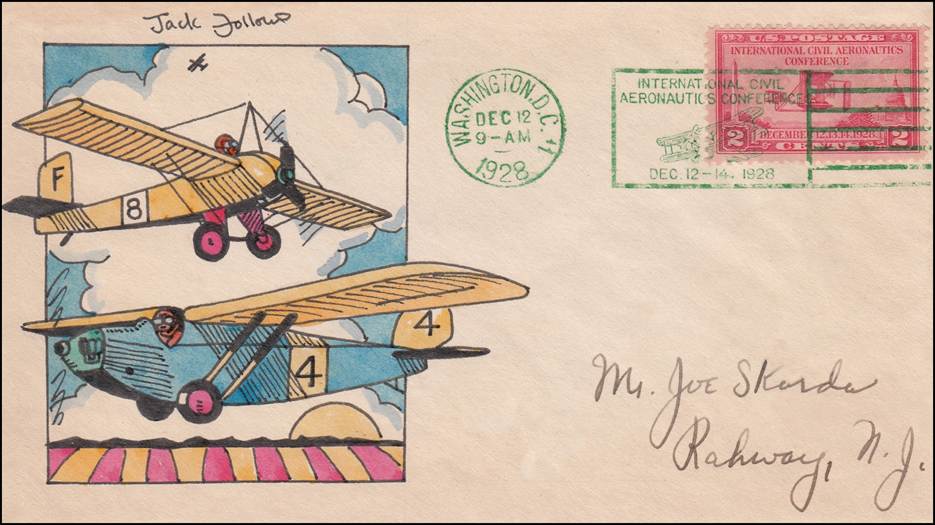
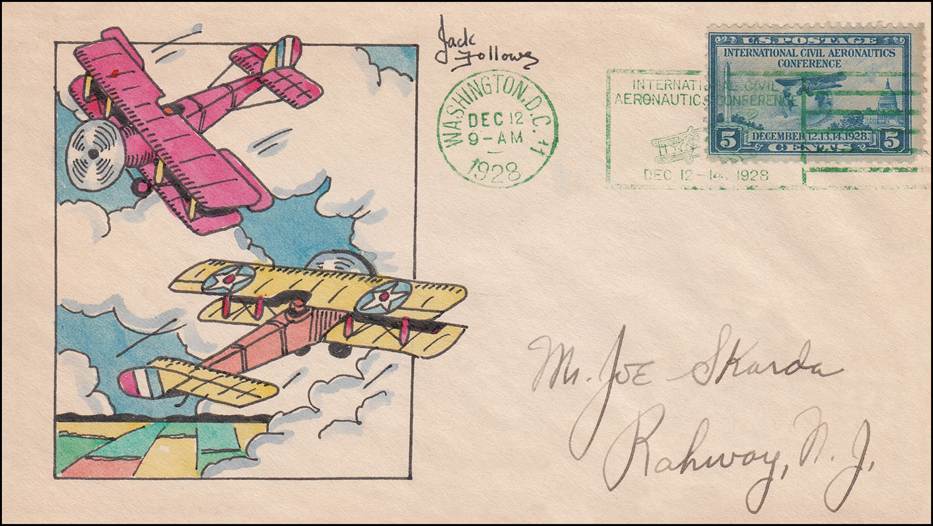
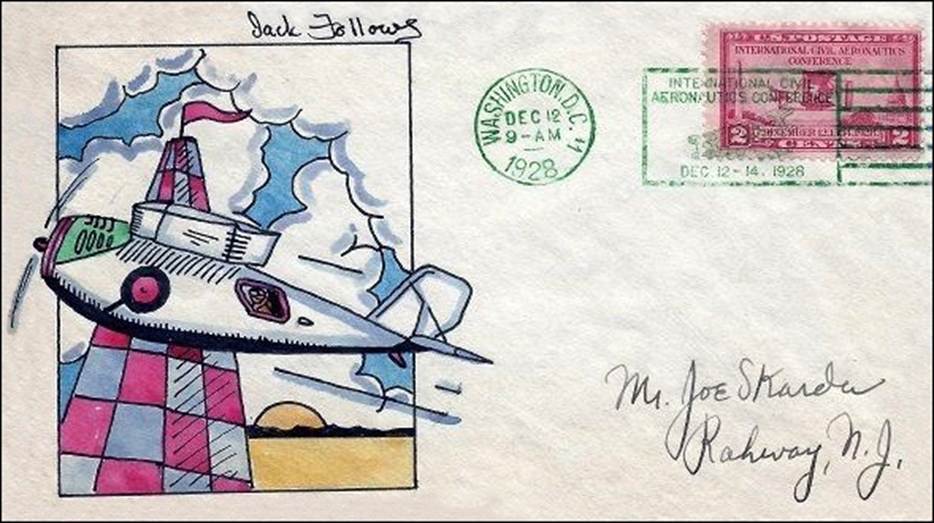
The First Day Covers bear the conference first-day logo in green and a Washington, D.C., DEC. 12, 1928 circular date stamp. However, postmark dates range from 12 to 14 December 1928. More information on the stamp issue can be found by clicking on: USA - 1928 - International Conference on Civil Aeronautics.
The Smithsonian National Postal Museum website offers several virtual exhibitions available worldwide. One of these is titled “The 1928 International Civil Aeronautics Conference Stamps – The Unintended Legacy of a Forgotten Conference”, created by Calvin Mitchell. To prepare the web pages for this exhibition, the author consulted much material listed in the “References and Acknowledgments” subpage; among these, is this web page of the Postal History of ICAO.
Calvin Mitchell has been a philatelist for 60 years and specializes in collecting stamps, postal history and first day covers. He was the Smithsonian National Postal Museum’s Assistant Curator of Philately.
The following picture is an excerpt from the website (Photo Credit: Smithsonian Postal Museum). The image is an official photograph of the airplane used by the Wright Brothers during their successful flight of 1903. This photograph was the source of the design on the 2-cent stamp.
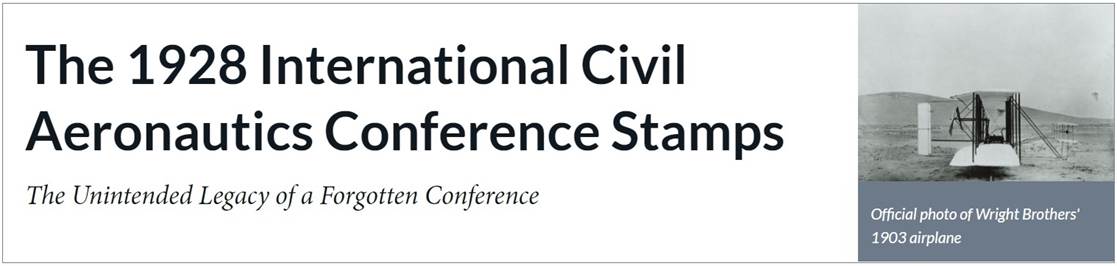
See at the following links: https://postalmuseum.si.edu/exhibition/the-1928-international-civil-aeronautics-conference-stamps and
|
|
||
|
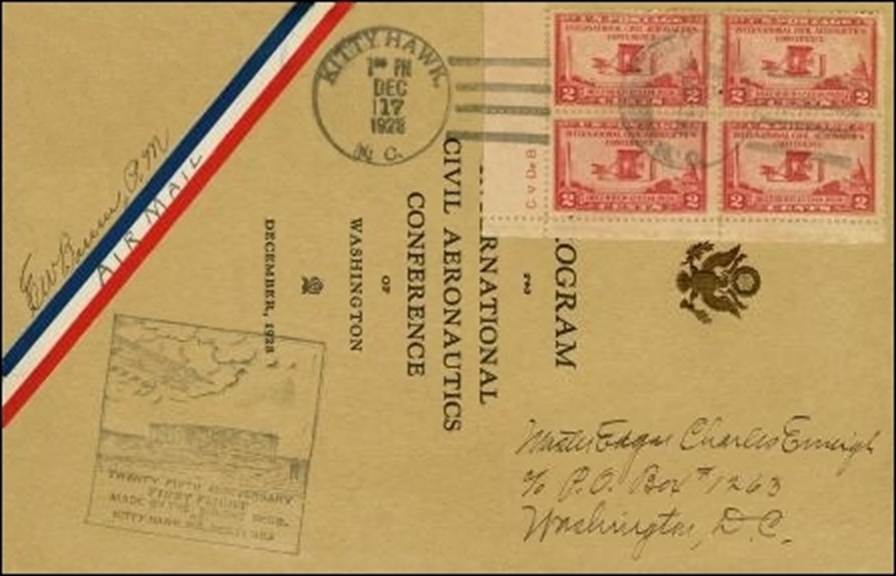
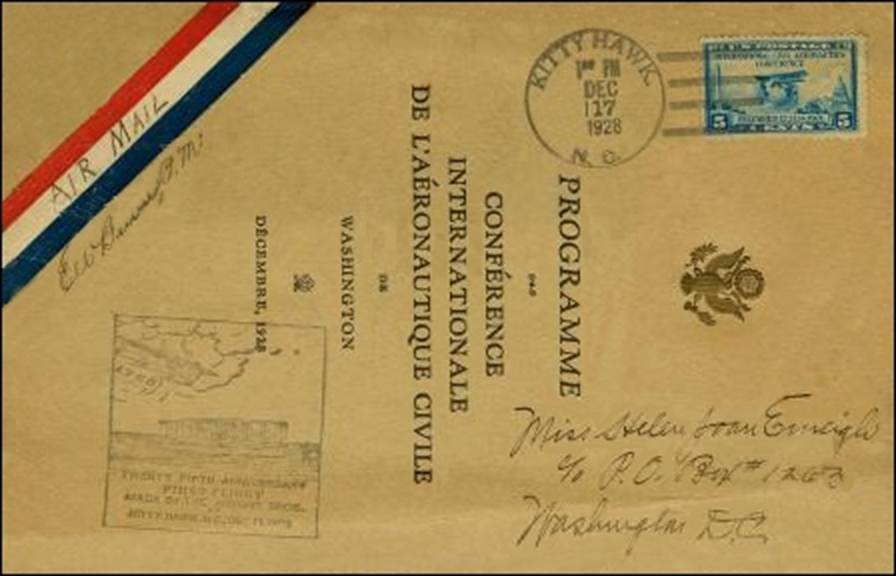
International Civil Aeronautics Conference of Washington programs in English and French with the 2 stamps issued for the Conference, both addressed to Washington, DC, signed by Kitty Hawk postmaster Elijah W. Baum, cacheted for the 25th anniversary of the Wright Brothers’ flight. Siderographer’s initials in the lower-left margin of the 2-cent block: C.V. De B. (Clyde Volchester De Binder).
|
||
|
|
||
|
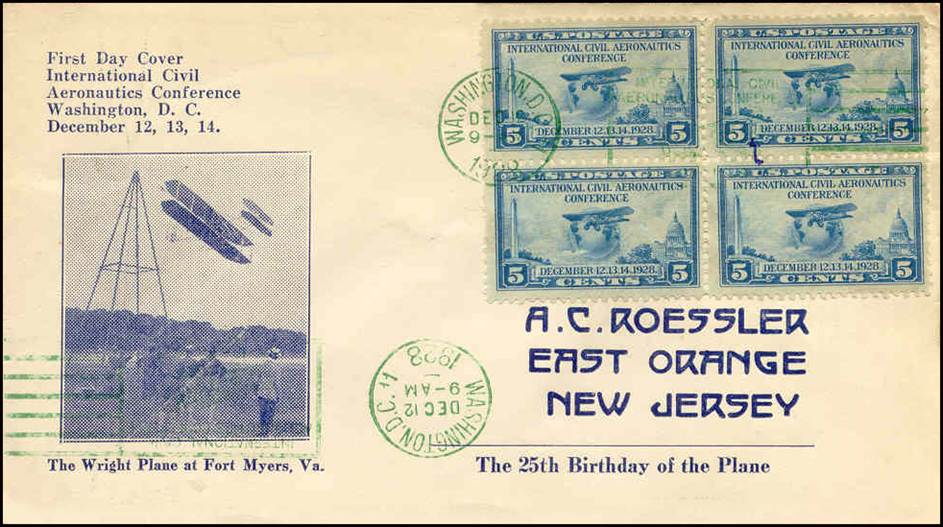
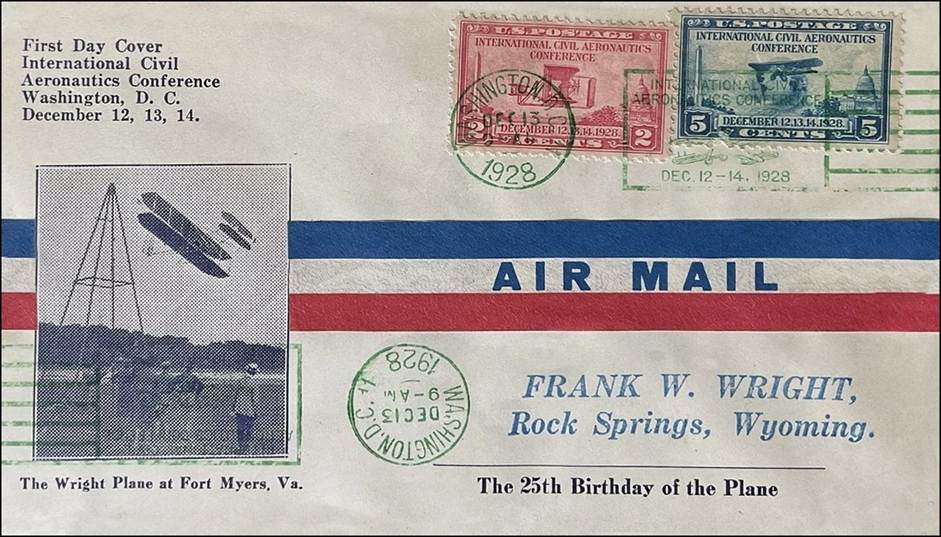
First Day Cover by A.C. Roessler, Cachetmaker. Albert C. Roessler (1883-1952) was a stamp dealer who was best known for his cacheted covers, and examples of his work are sought by collectors. Within a few years he was established as a stamp dealer in east Orange, N.J., after a period of Nassau Street (New York) activity. With the coming of air mail in the US in 1918, Roessler began the creation of cacheted covers. Roessler is known for his unique border graphics, original artwork, and rubber-stamped cachets used for both FDC and first flight covers.
|
||
|
|
||
|
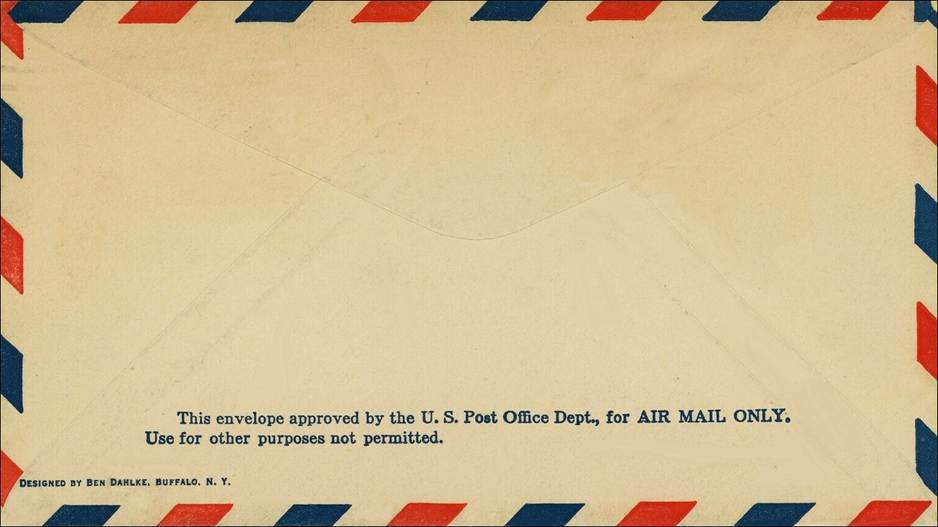
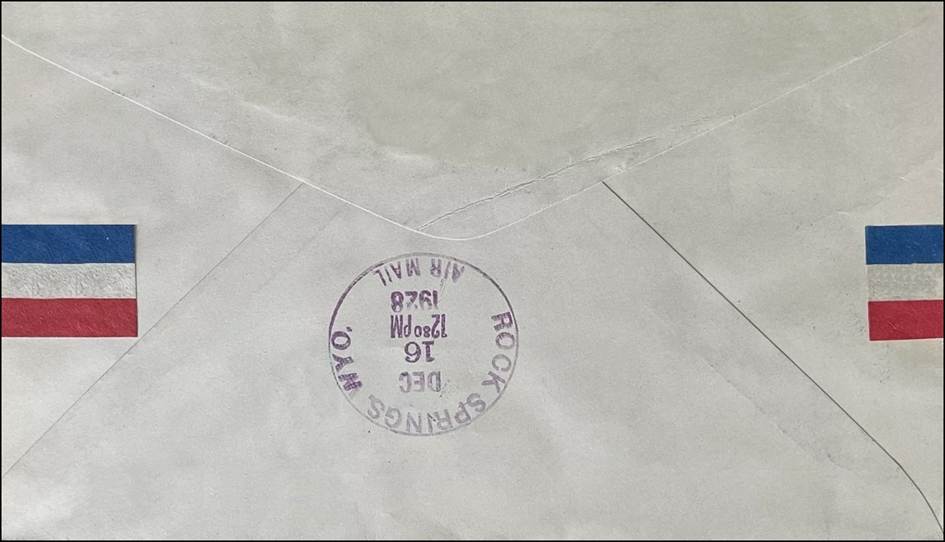
First Day Cover (front and back): A.C. Roessler (New Jersey stamp dealer-publisher-cachet maker) cachet depicting the Wright Brothers plane at Fort Myers, VA, USA
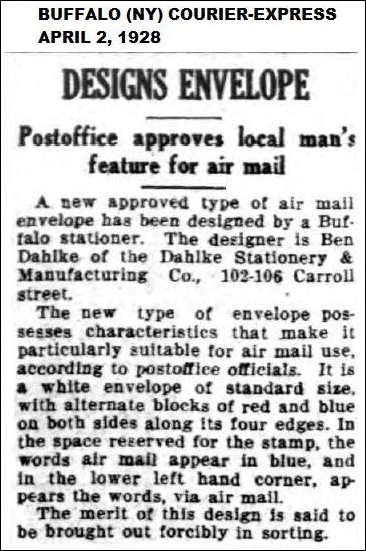
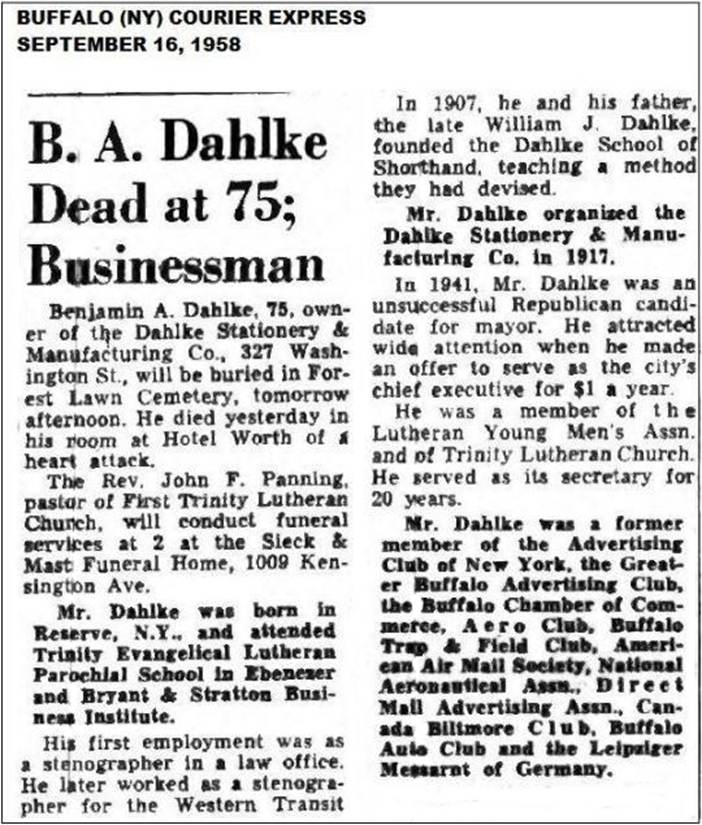
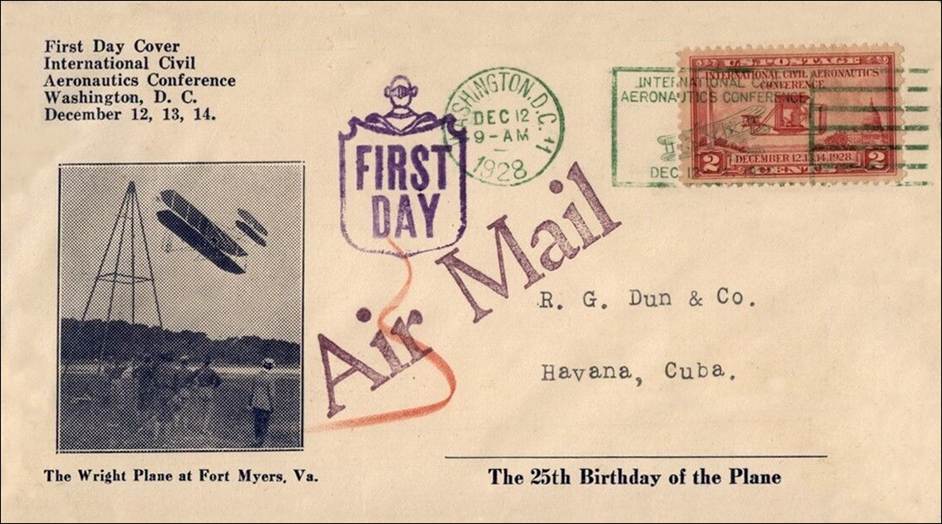
The above cover was approved by the U.S. Post Office Department, based on a design produced by Ben Dahlke. See below for more information related to Ben Dahlke (Excerpts from the Buffalo Courier-Express (New York).
|
||
|
|
||
|
First Day Cover: A.C. Roessler (New Jersey stamp dealer-publisher-cachet maker) cachet depicting the Wright Brothers plane at Fort Myers, VA, USA. Special FIRST DAY and AIR MAIL hand-stamps.
|
||
|
|
||
|
First Day Cover: A.C. Roessler (New Jersey stamp dealer-publisher-cachet maker) cachet depicting the Wright Brothers plane at Fort Myers, VA, USA
|
||
|
|
||
|
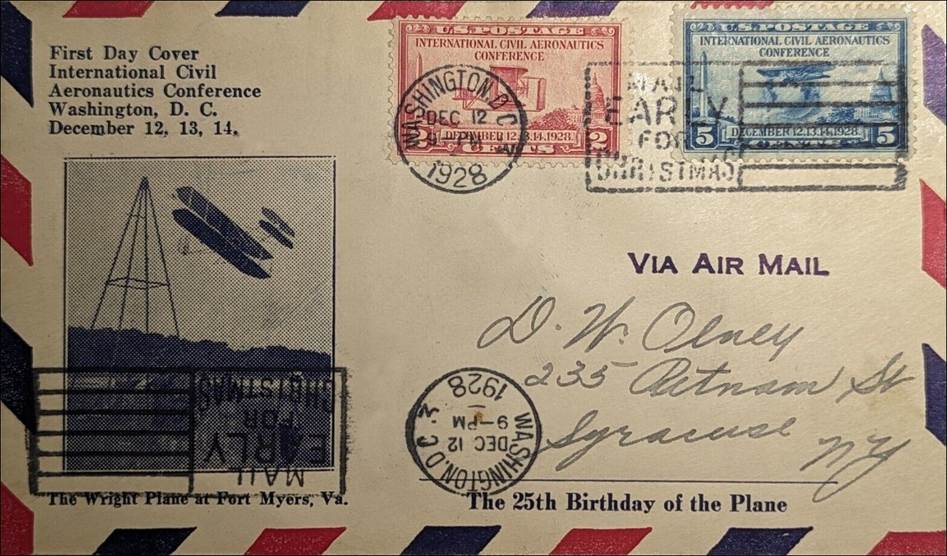
First Day Cover: A.C. Roessler cachet depicting the Wright Brothers plane at Fort Myers, VA, USA. Airmail cover (front and back)
|
||
|
|
||
|
First Day Cover (Sc649-650 2B): A.C. Roessler cachet depicting the Wright Brothers plane at Fort Myers, VA, USA. Airmail cover (front and back).
|
||
|
|
||
|
USA 1928 Two Roessler cacheted first day cards with blocks of four stamps of the International Civil Aeronautics Conference issue. Kitty Hawk North Carolina to East Orange Newark. 25th Anniversary of Wright Brothers first flight.
|
||
|
|
||
|
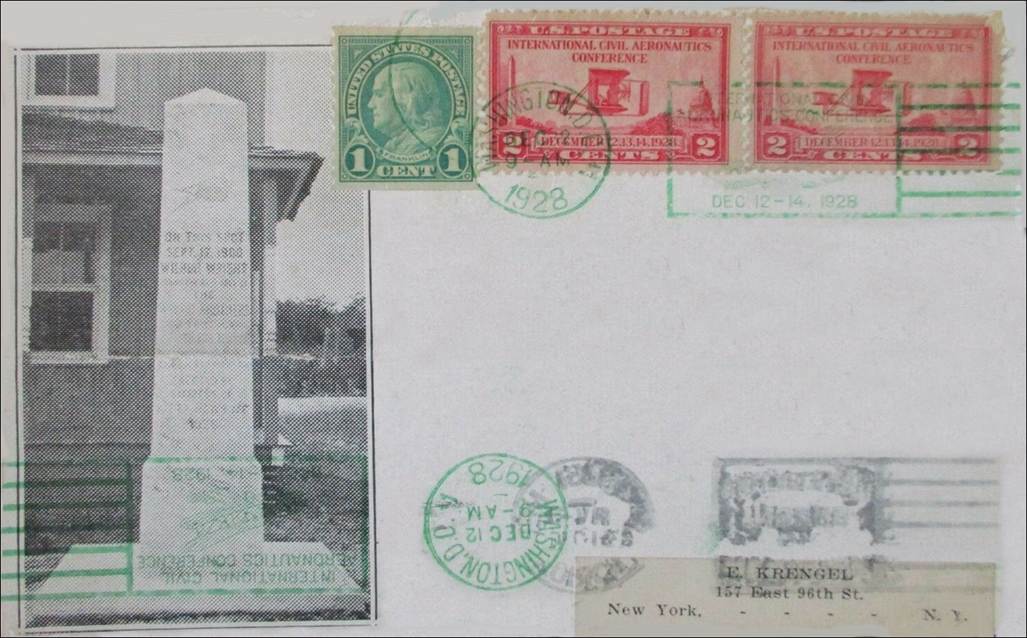
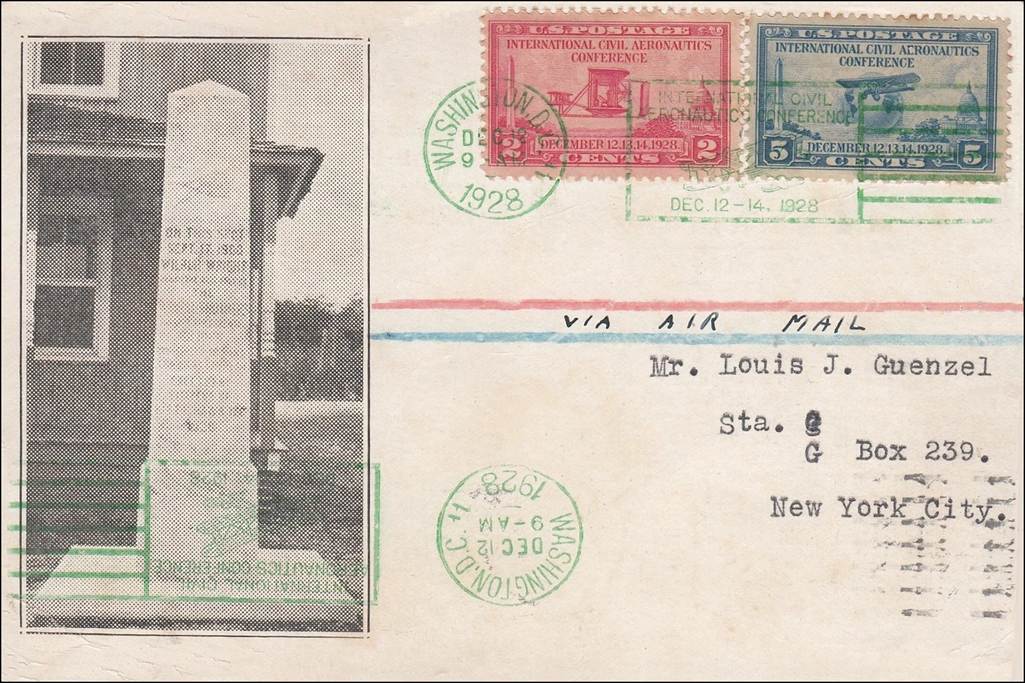
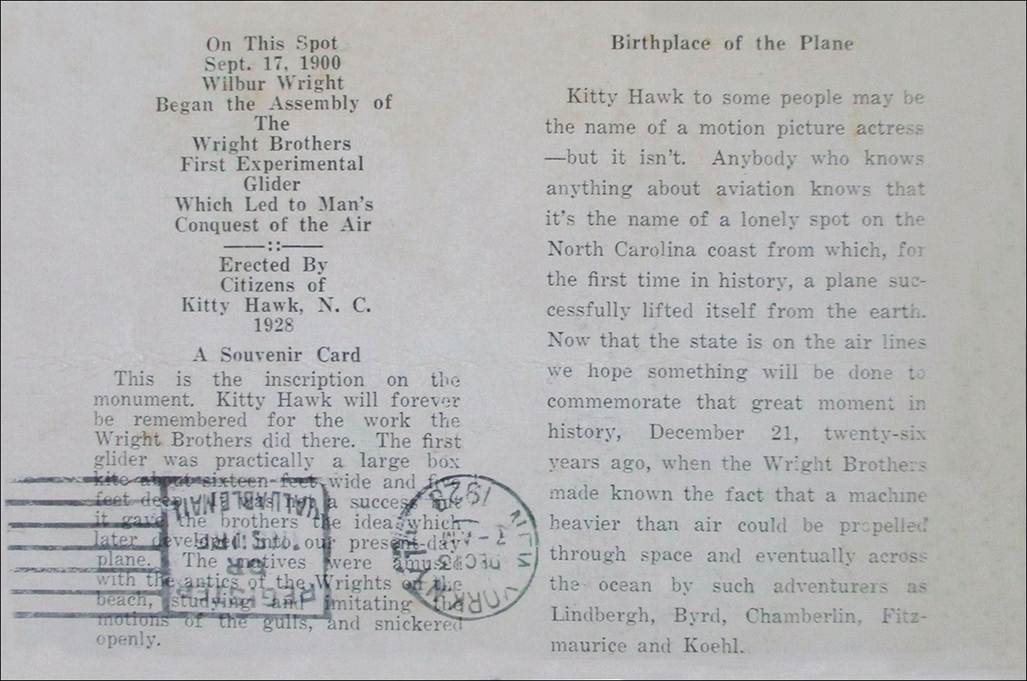
Postcards (fronts and back) showing the Wright Brothers’ shop and the monument erected in front of it. The back of the postcard provides the text engraved on it and historical notes on the birth of the plane.
|
||
|
|
||
|
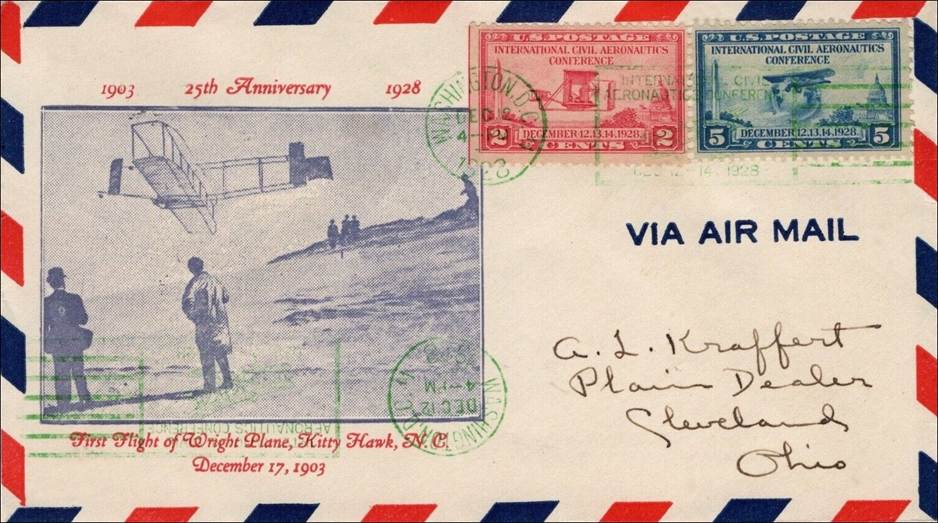
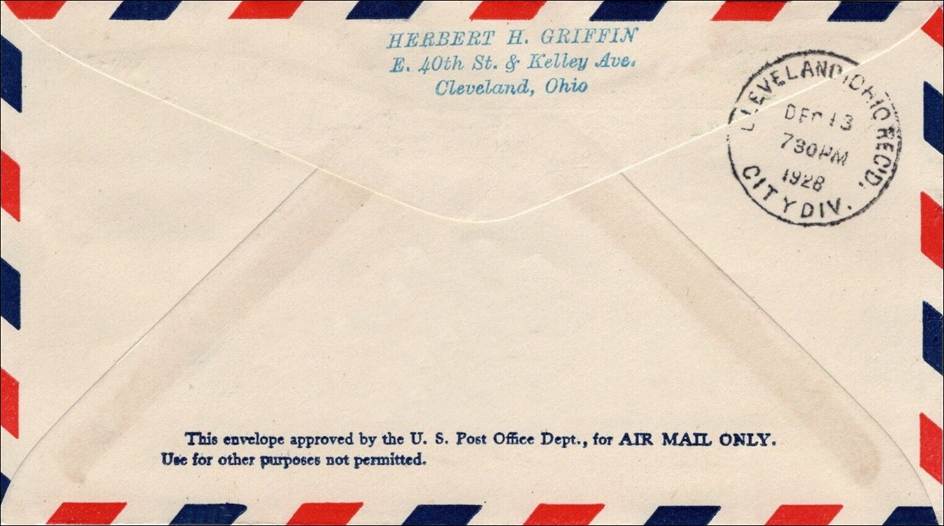
Herbert H. Griffin First Day Cover (recto and verso). The cachet shows a picture of the Flyer I taking off in 1903. Herbert H. Griffin was well known in the FDC circles as cachet maker.
|
||
|
|
||
|
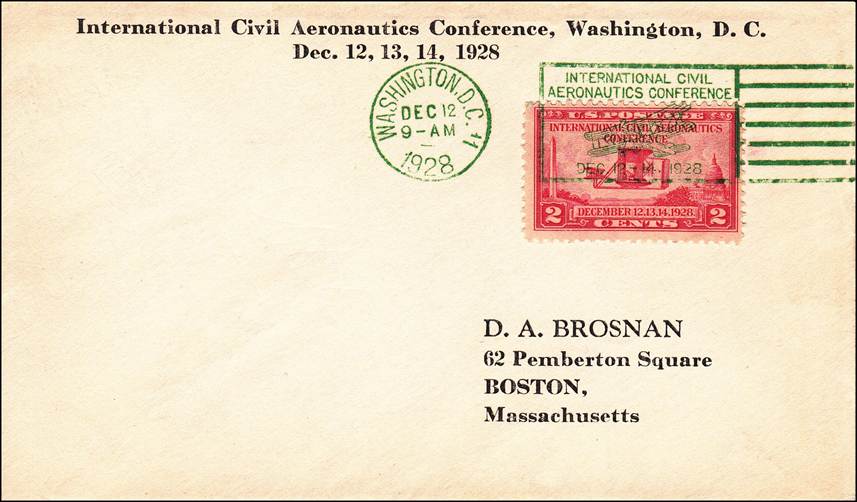
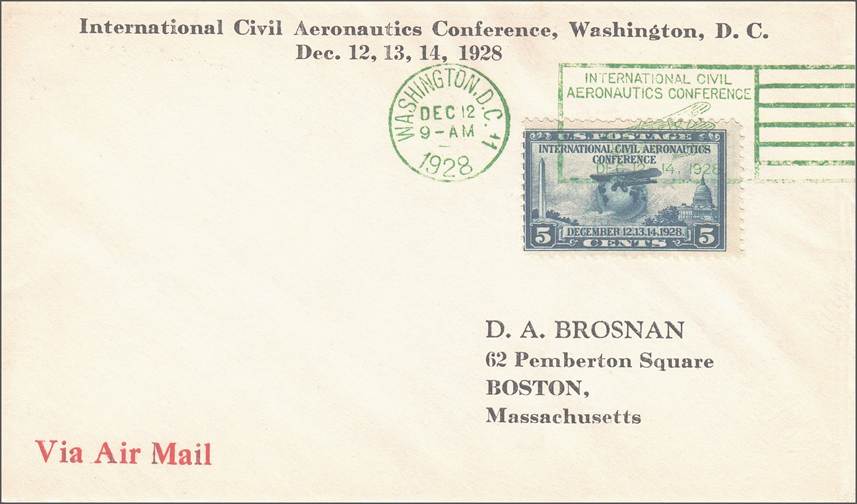
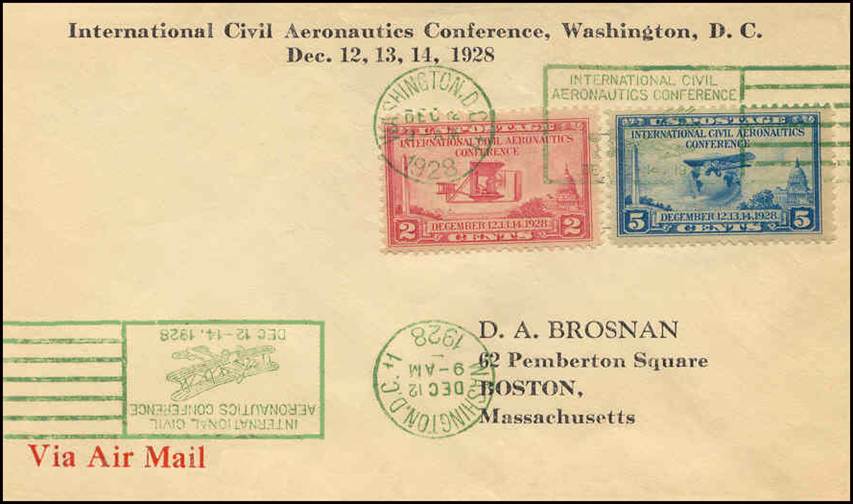
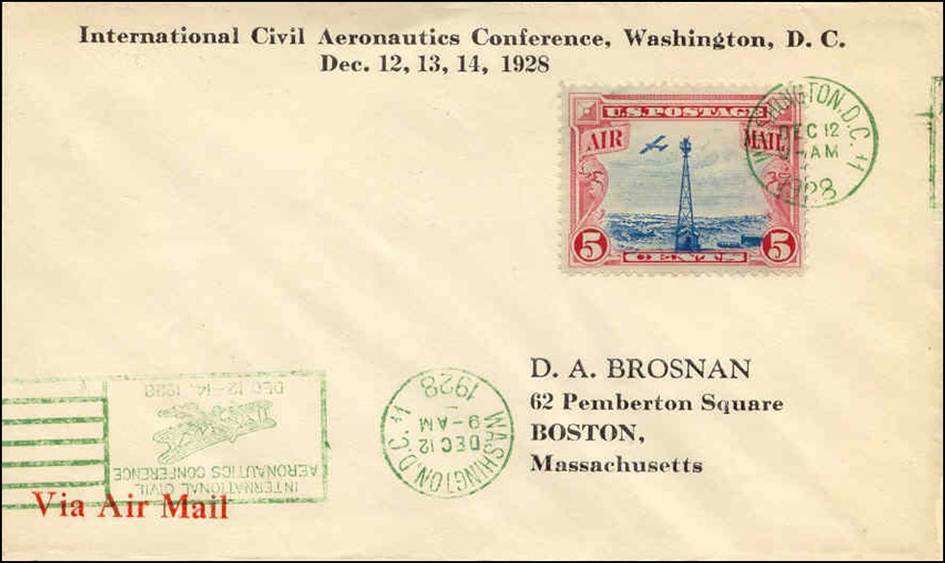
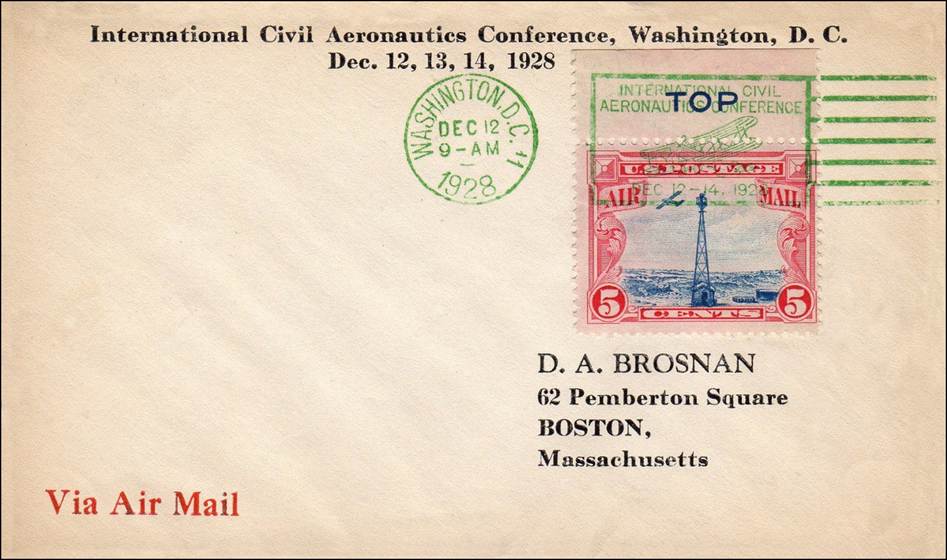
Official First Day Covers: Dominic A. Brosnan cachet. Dominic A. Brosnan, owner of Old Stamp Exchange at 62 Pemberton Square, Boston, MA, manufactured FDC Cachets from 1928 to 1930. The first Brosnan Cachet was based on the issue for the International Civil Aeronautics Conference.
|
||
|
|
||
|
First Day Cover: Dominic A. Brosnan cachet – The 5-cent denomination US airmail stamp shown above (Air beacon, Sherman Hill and Rocky Mountains) was issued 25 July 1928 to meet the new airmail letter postage rate; effective 1 August 1928, the rate was reduced to 5 cents per ounce.
|
||
|
|
||
|
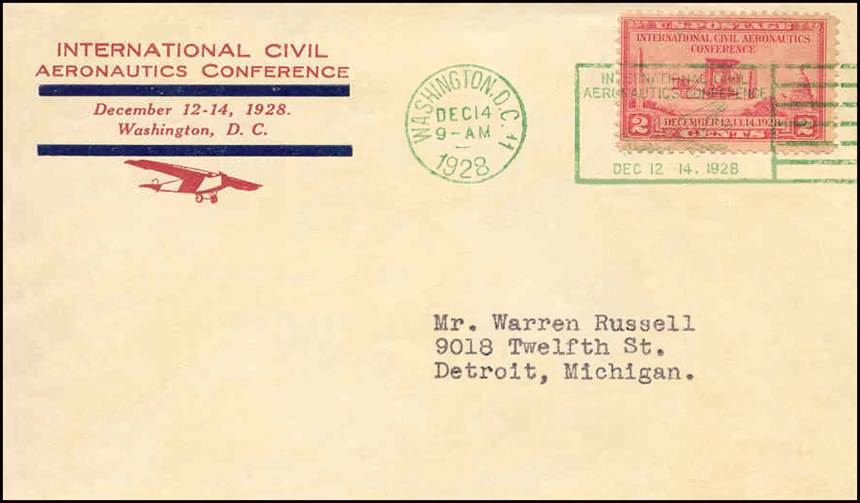
First Day Covers: Milton T. Mauck cachet. He was a pioneer FDC (First Day Cover) and FFC (First Flight Cover) servicer and cachet maker operating during the 1920s at 911 Harlem Ave, Baltimore, MD, at least as early as 18 May 1925; later he moved to New Jersey. A contemporary of Roessler, Mauck closely followed Roessler’s early adoption of cachets for commemorative issues, but a step or two behind the innovative Roessler. Picture of an airplane personally drawn by Mauck. Note that on the green cachet, picture and text are reduced in size.
|
||
|
|
||
|
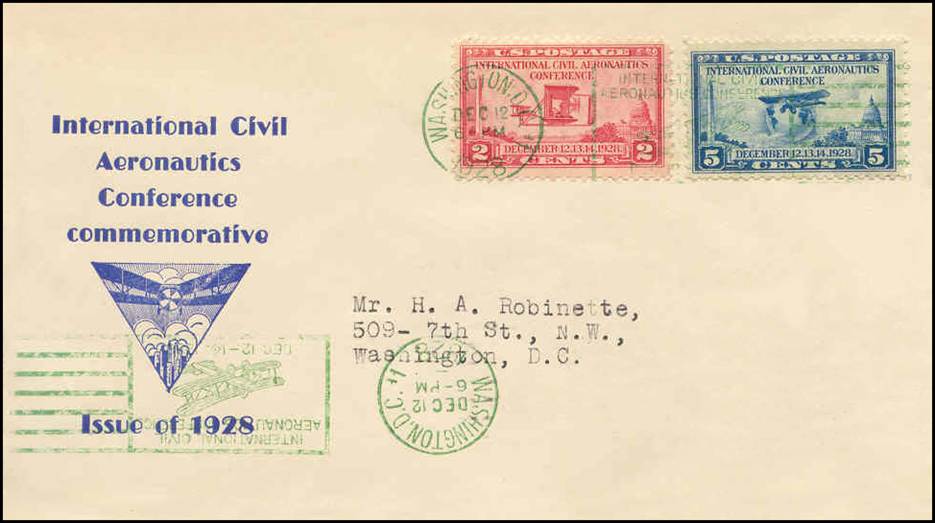
First Day Cover on a Michael Sanders cachet serviced by H. F. Colman, typewriter-addressed in Colman's distinctive addressing style to Mr. H. A. Robinette of Washington, DC. Michael (Mike) Sanders cachetmaker was operating from : General Delivery, New York 7, New York, USA. Born about 1900. he began collecting stamps in 1925. Printer and cachetmaker in the 1930s, he started an FDC partnership with Walter Czubay in 1934; he produced cachets for Winfred M. Grandy and John C. Von Losberg. Sanders’ printed cachets are characterized by bold lettering, usually in red and/or blue. Sanders died about 1957.
|
||
|
|
||
|
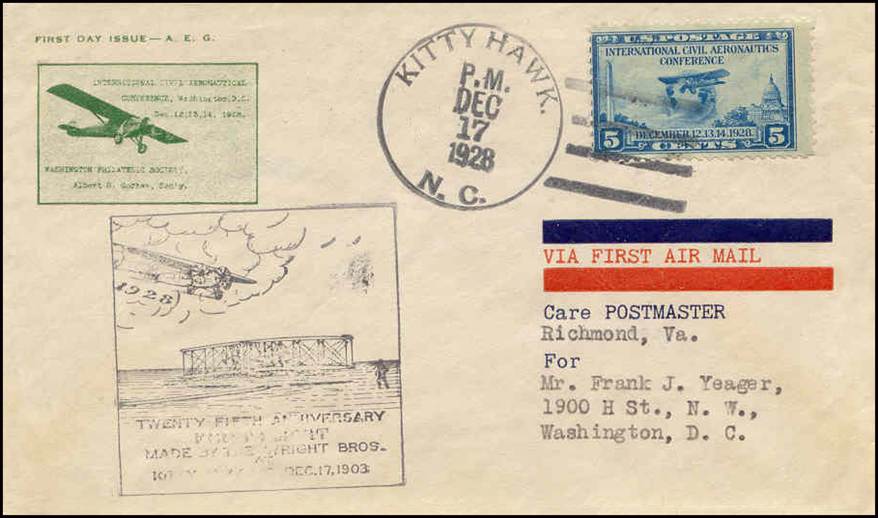
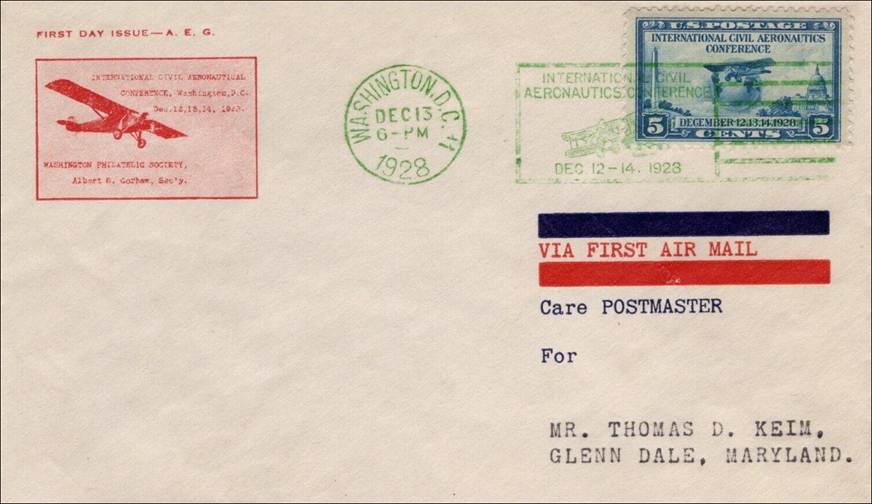
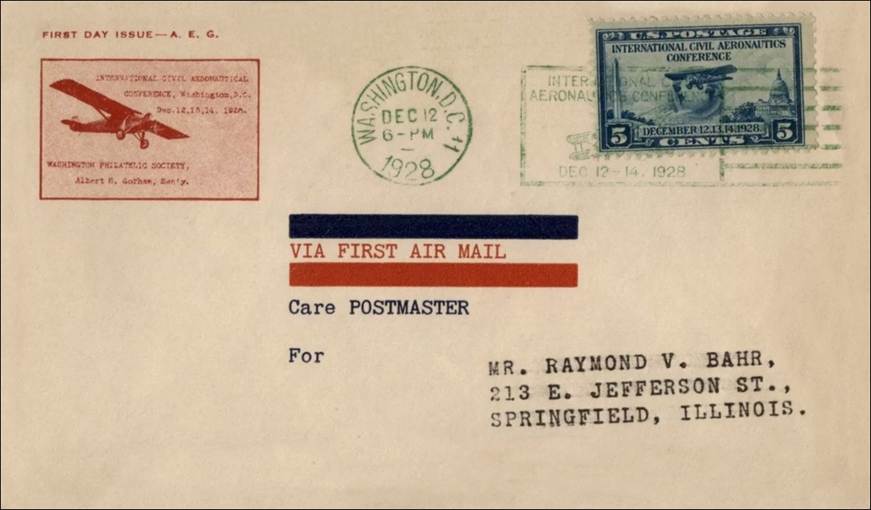
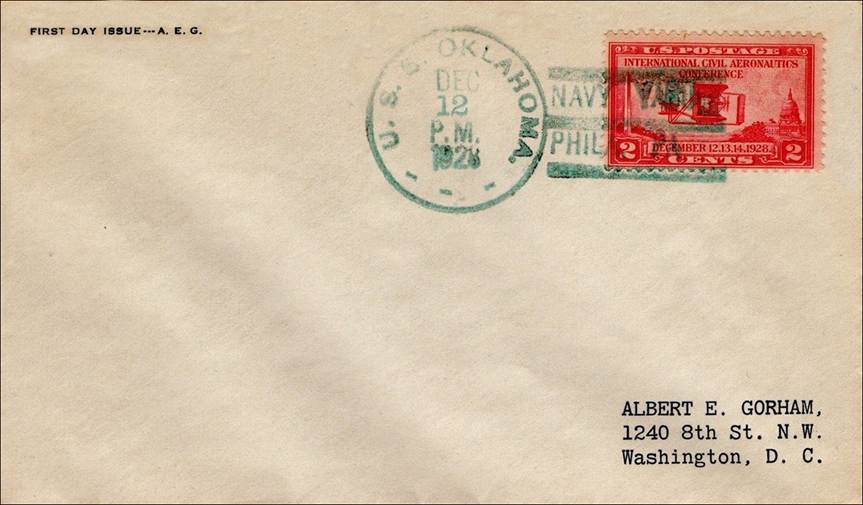
First Day Cover: Green cachet (with Lindbergh’s Spirit of St. Louis) by A. E. G., Albert E. Gorham, Secretary of the Washington Philatelic Society. Born in 1871, Albert E. Gorham of Washington, D.C., was one of the most prolific FDC Cachet makers and Servicers of the 1920s, honoured by election as President of the Society for Philatelic Americans in 1931. Herbert H. Griffin was well known in the FDC circles as cachet maker.
|
||
|
|
||
|
The above cachet also exists in red.
|
||
|
|
||
|
A. E. G., Albert E. Gorham Cover Cancel on the U.S.S. Oklahama. The U.S.S. Oklahama was built by the New York Shipbuilding Corporation for the United States Navy, notable for being the first American class of oil-burning dreadnoughts. Commissioned in 1916, the ship served in World War I as a part of Battleship Division Six, protecting Allied convoys on their way across the Atlantic. After the war, she served in both the United States Battle Fleet and Scouting Fleet. Oklahoma was modernized between 1927 and 1929. In 1936, she rescued American citizens and refugees from the Spanish Civil War. On returning to the West Coast in August of the same year, Oklahoma spent the rest of her service in the Pacific. On 7 December 1941, during the Japanese attack on Pearl Harbor, several torpedoes from torpedo bombers hit the Oklahoma's hull and the ship capsized. A total of 429 crew died.
|
||
|
|
||
|
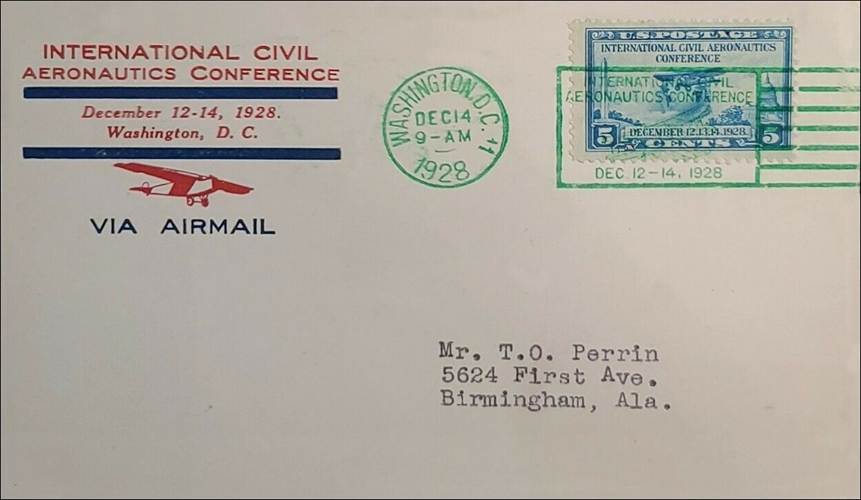
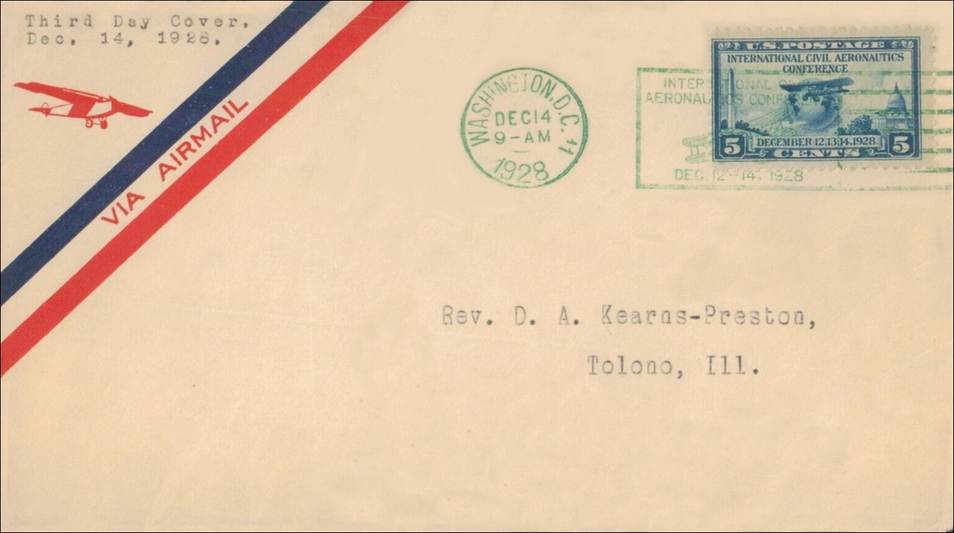
Last Day of Issue (14 December 1928). The lower cover shows the 5-cent stamp with VIA AIRMAIL added. Bradie Buchanan Cachet (in red and blue, with Lindbergh’s Spirit of St. Louis). Best known for generic or general-purpose cachets, Bradie Buchanan produced FDC Cachets in East Liverpool, OH from 1927 to 1960.
|
||
|
|
||
First Day Covers – Black and green cachets.
|
||
|
|
||
First Day Cover with oval cancels at Washington, D.C. Cachet by E.F. Miller?
|
||
|
|
||
|
First Day Air Mail Covers of this issue with black/blue and red strips (diagonally). Lindbergh’s Spirit of St. Louis, |
||
|
|
||
|
|
||
|
Air Mail Covers with blue and red strips,
|
||
|
|
||
|
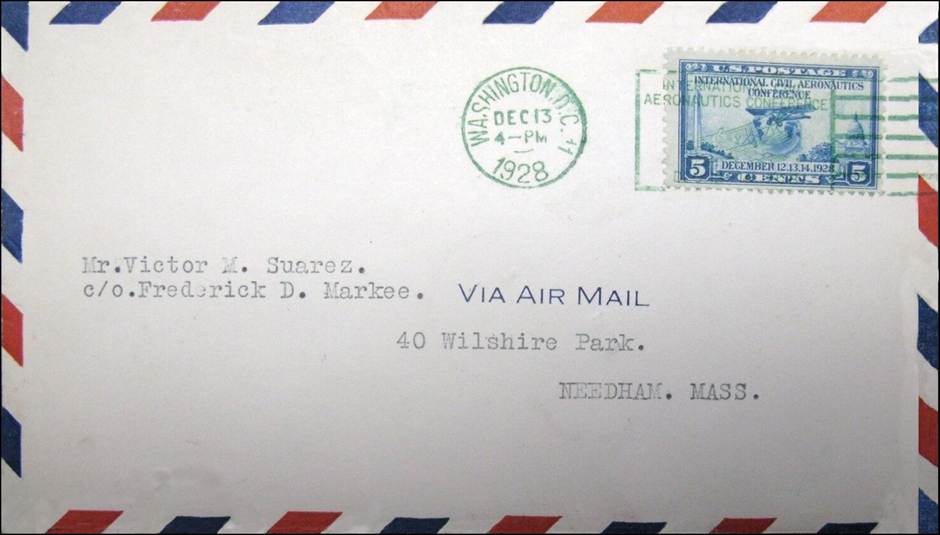
Last Day Air Mail Cover franked with 5-cent blue stamp (front and back). Black and red strips.
|
||
|
|
||
|
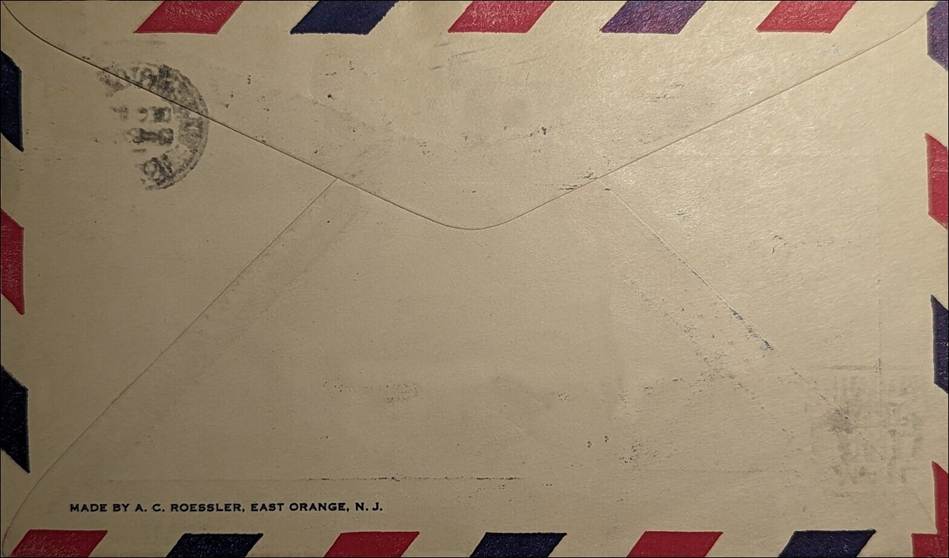
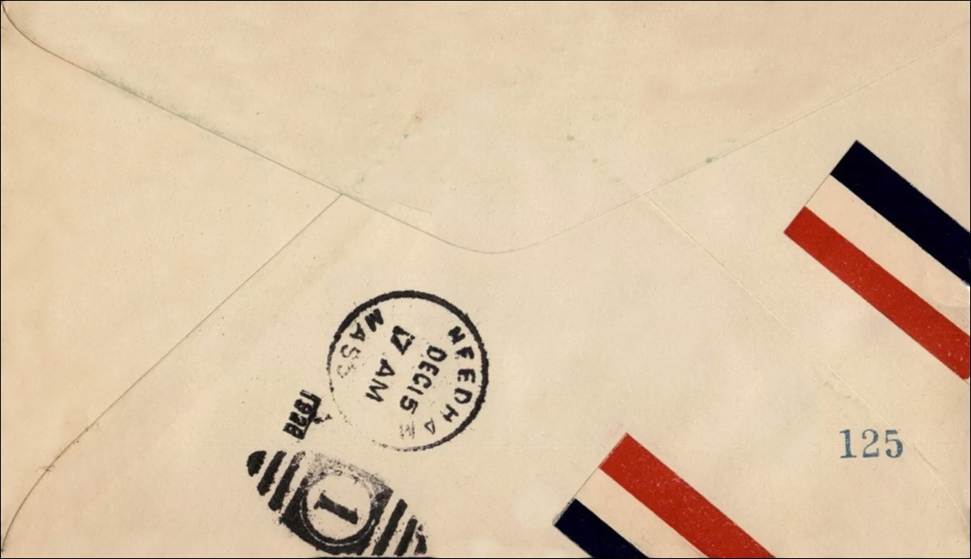
First Day Air Mail Cover franked with 5-cent blue stamp (front and back). Black and red strips with AIR MAIL.
|
||
|
|
||
|
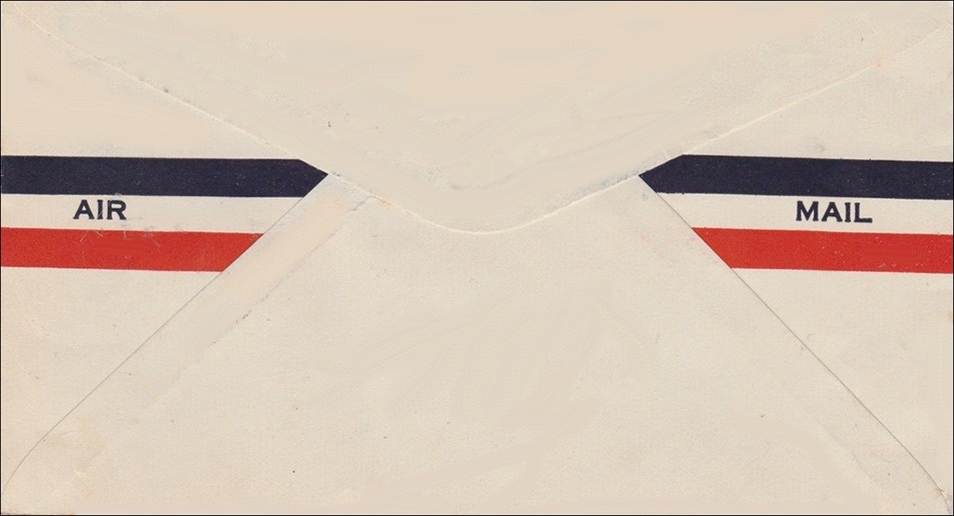
First Day Air Mail Cover franked with both stamps of this issue (combo) (front and back). Black and red strips with AIR MAIL.
|
||
|
|
||
|
First Day Air Mail Cover franked with 5-cent blue stamp (front and back). Black and red strips with AIR MAIL.
|
||
|
|
||
|
|
||
|
|
||
|
|
||
|
|
||
|
Standard Air Mail Covers.
|
||
|
|
||
|
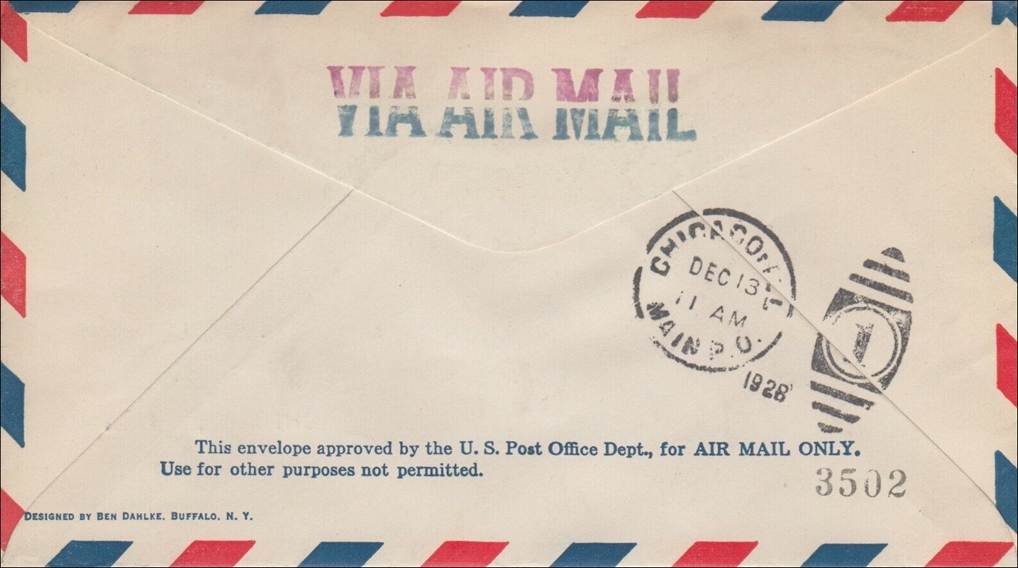
Standard Air Mail Cover (front and back) for use of AIR MAIL only.
|
||
|
|
||
First Day Cover franked with 5-cent blue stamp.The hand design of cachet shows a biplane close to the Nieuport 28 C.1, although the shape of the drift looks different. The drift seems to wear French colours.Without the time or infrastructure in the United States to equip units to send overseas using aircraft designed and built in the U.S., the American Expeditionary Forces (AEF) Air Service acquired Allied aircraft designs already in service with the French and British air services. On 30 August 1917, the American and French governments agreed to a contract for the purchase of 1,500 Breguet 14 B.2 bombers-reconnaissance planes, 2,000 SPAD XIII, and 1,500 Nieuport 28 pursuits for delivery by 1 July 1918.
|
||
|
|
||
First Day Cover – The cachet shows an Airco (designed by Geoffrey de Havilland) D.H.4 aircraft adopted by the US Post Office to carry airmail. In 1919, the DH-4B was standardized by the US Post Office, being modified to be flown from the rear cockpit with a 180 kg watertight mail compartment replacing the forward cockpit. The airmail DH-4B aircraft were later modified with revised landing gear and an enlarged rudder. DH-4s were used to establish a coast-to-coast, transcontinental airmail service, between San Francisco and New York, a distance of 4,310 km, involving night flight, the first services starting on 21 August 1924. The DH-4 continued in Post Office service until 1927, when the last airmail routes were passed to private contractors.
|
||
|
|
||
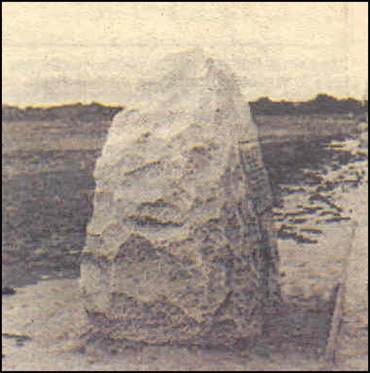
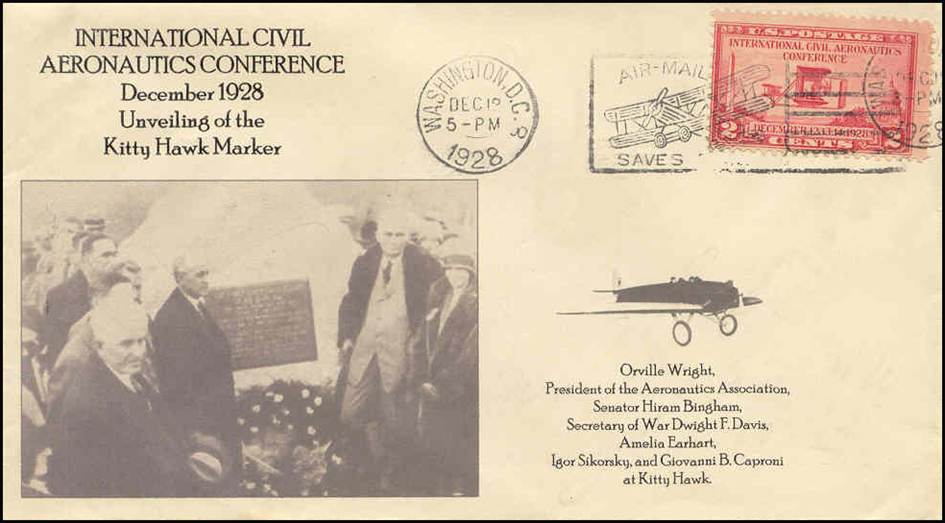
Granite boulder: On 17 December 1928, 200 delegates from the conference, Orville Wright and other members of the Wright family and friends and a few thousand visitors made a pilgrimage to Kill Devil Hill, where a granite marker was dedicated. It was carved to resemble a bronze boulder and carried a bronze tablet with the following inscription: THE FIRST SUCCESSFUL FLIGHT OF AN AIRPLANE MADE FROM THIS SPOT BY ORVILLE WRIGHT DECEMBER 17, 1903 IN A MACHINE DESIGNED AND BUILT BY WILBUR AND ORVILLE WRIGHT. THIS TABLET WAS ERECTED BY THE NATIONAL AERONAUTIC ASSOCIATION OF THE USA DECEMBER 17, 1928 TO COMMEMORATE THE 25TH ANNIVERSARY OF THIS EVENT. Measuring approximately six feet by four feet, the marker had cost $2,500. It was placed at the top of a small mound facing Kill Devil Hill. Determining the exact location was difficult, because of the dunes and hills had shifted since the Wright Brothers’ 1903 flight.
|
||
|
|
||
|
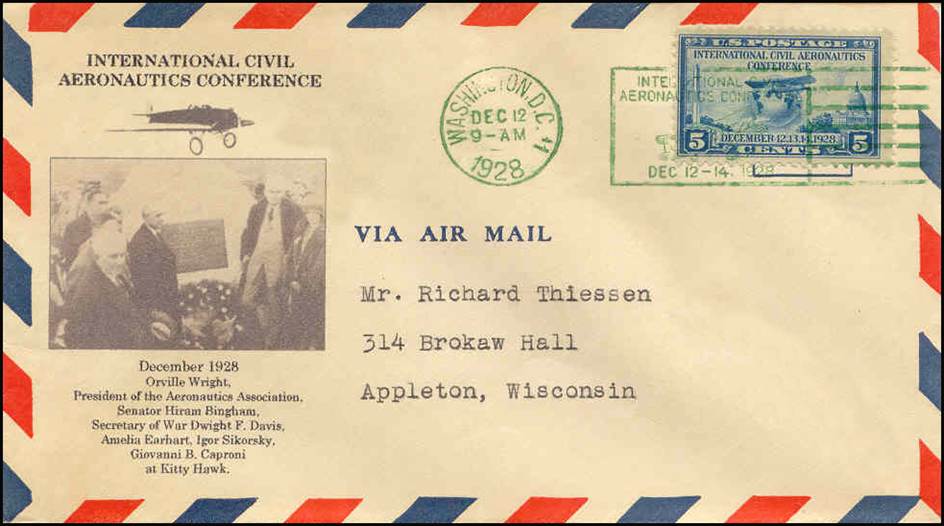
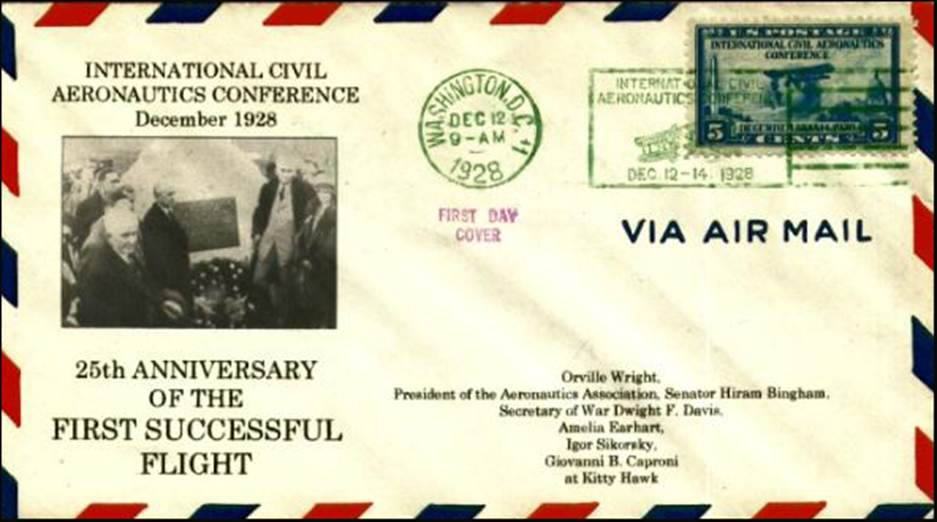
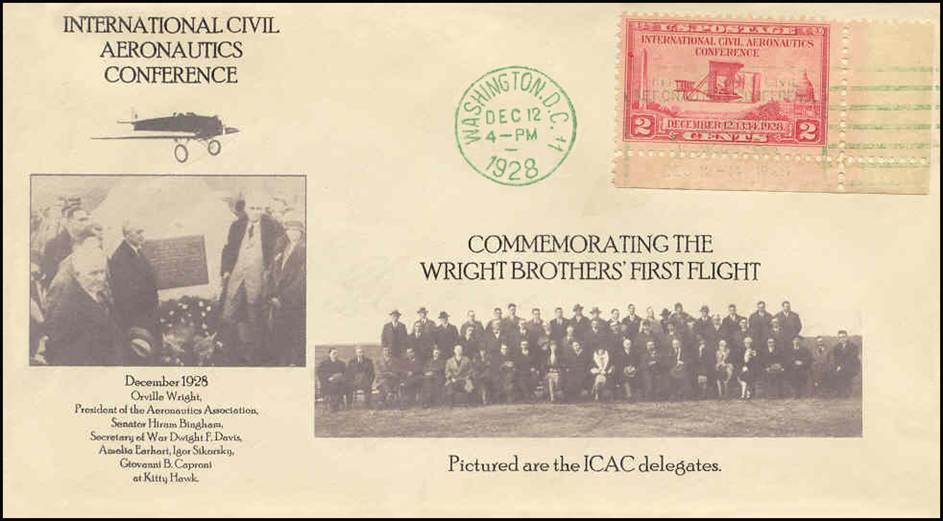
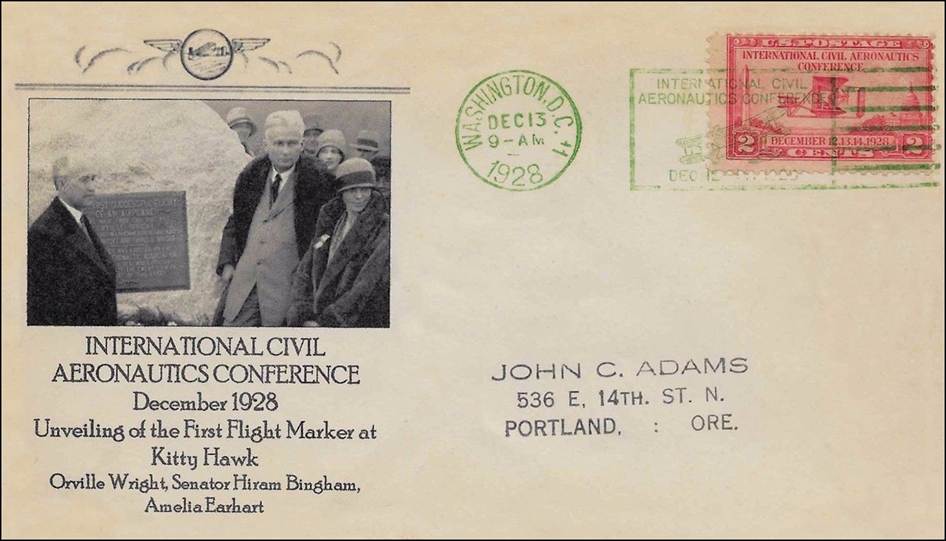
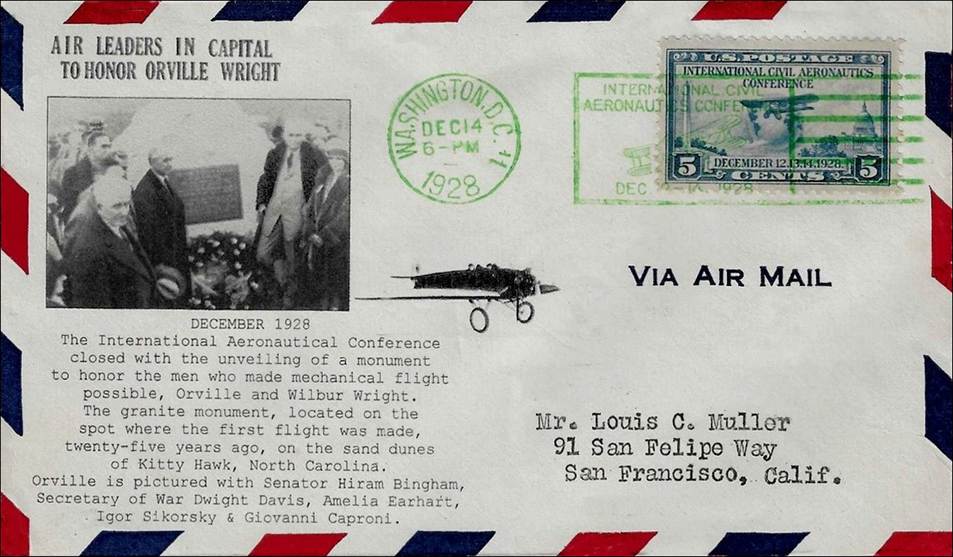
First Day Covers - On the left side: Picture showing Orville Wright, President of the Aeronautics Association, Senator Hiram Bingham, Secretary of War Dwight F. Davis, Amelia Earhart, Igor Sikorsky, Giovanni Battista Caproni (Italian aircraft manufacturer) at Kitty Hawk on 17 December 1928. |
||
|
|
||
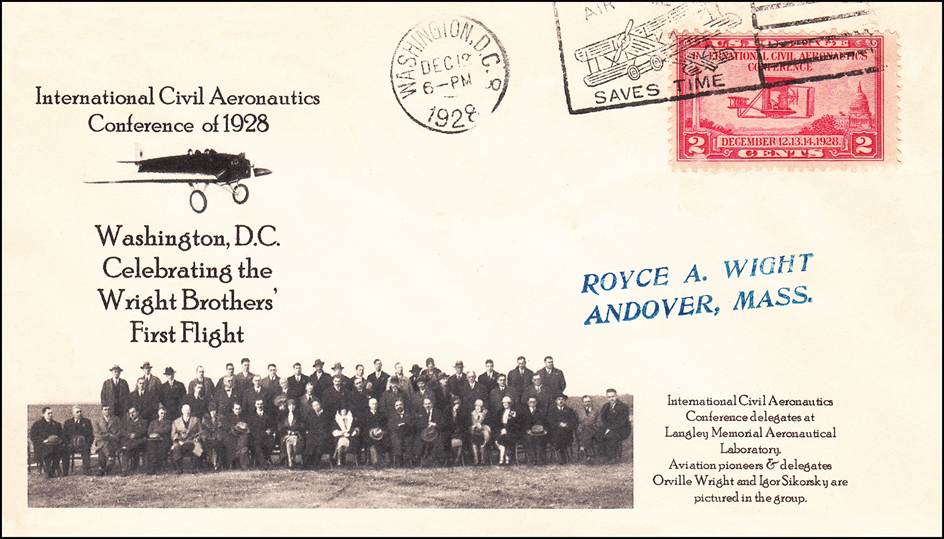
Picture of the delegates to the International Civil Aeronautics Conference.On the afternoon of 17 December 1928, the Delegates to the ICAC arrived at the Kill Devil Hills (at Kitty Hawk, N.C., USA) memorial site, twenty-five years after the Wrights' historic flight. At two o'clock, Secretary of War Dwight F. Davis laid the cornerstone of the planned national monument at the top of the dune. Senator Hiram Bingham, president of the National Aeronautical Association, spoke and unveiled an inscribed ten-ton granite boulder to mark the site. The delegates' final arrival in Washington, D.C., from Kitty Hawk marked the last official activity related to the conference. The picture of the aviation pioneer’s group was taken at Langley Memorial Aeronautical Laboratory (Virginia, USA), established in 1917 by the National Advisory Committee for Aeronautics (NACA) and named for aviation pioneer Samuel Pierpont Langley.
|
||
|
|
||
|
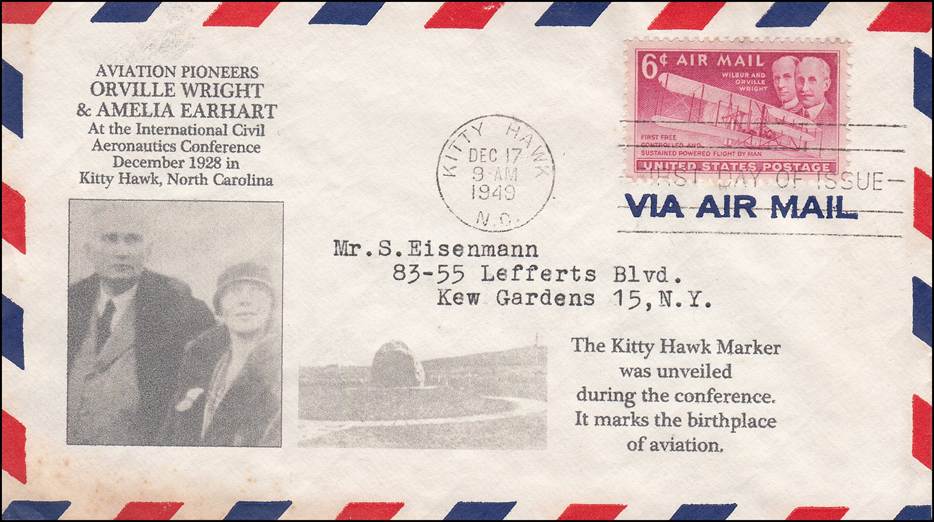
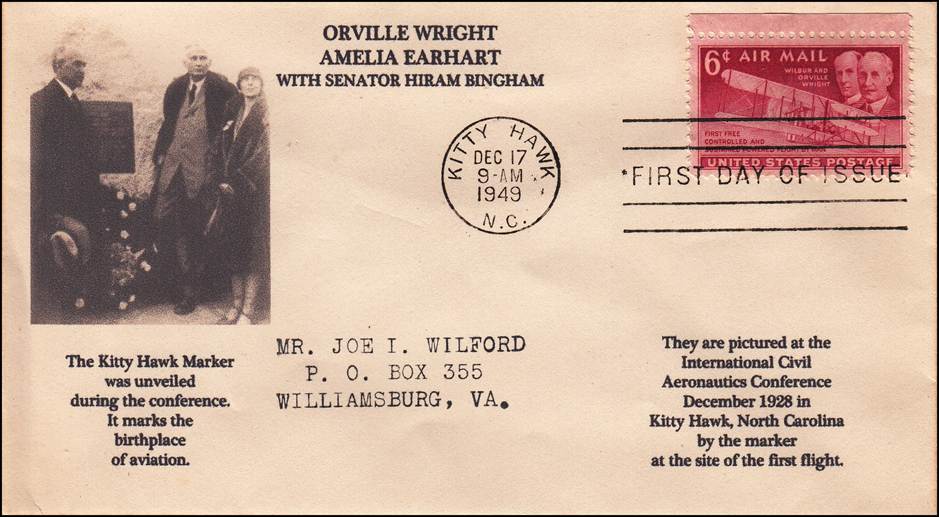
First Day Cover with cancel dated 17 December 1949, commemorating the 50th anniversary of the Wright’s feat. Picture showing Orville Wright, President of the Aeronautics Association, and Amelia Earhart. The second picture shows the Kitty Hawk Marker from where Orville Wright took off on 17 December 1903 in a machine designed and built by Wilbur and Orville Wright.
|
||
|
|
||
|
First Day Cover with cancel on 17 December 1949, commemorating the 50th anniversary of the Wright’s feat - Picture showing Orville Wright, President of the Aeronautics Association, Amelia Earhart, and Senator Hiram Bingham, Secretary of War Dwight F. Davis, pictured in front of the Kitty Hawk Marker unveiled during the International Civil Aeronautics Conference in 1928.
|
||
|
|
||
|
Last day cover with cancel on 14 December 1928. The text is self-explaining.
|
||
|
|
||
|
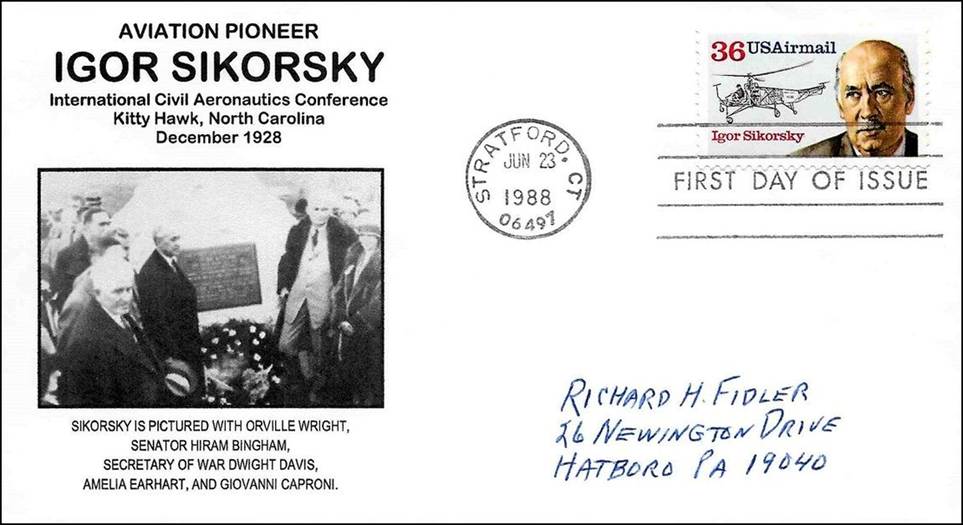
First Day Cover with cancel dated 23 June 1988, commemorating the 85th anniversary of the Wright’s feat and the unveiling of the bronze tablet at Kitty Hawk in 1928. The stamp shows a picture of Igor Sikorsky (1889-1972) and the Vought-Sikorsky VS-300 helicopter prototype built in 1939 (the first viable American helicopter, which pioneered the rotor configuration used by most helicopters today). On the left side of the cover: Picture showing Orville Wright, President of the Aeronautics Association, Senator Hiram Bingham, Secretary of War Dwight F. Davis, Amelia Earhart, Igor Sikorsky, Giovanni Battista Caproni (Italian aircraft manufacturer) at Kitty Hawk on 17 December 1928.
|
||
|
|
||
|
|
||
|
|
||
|
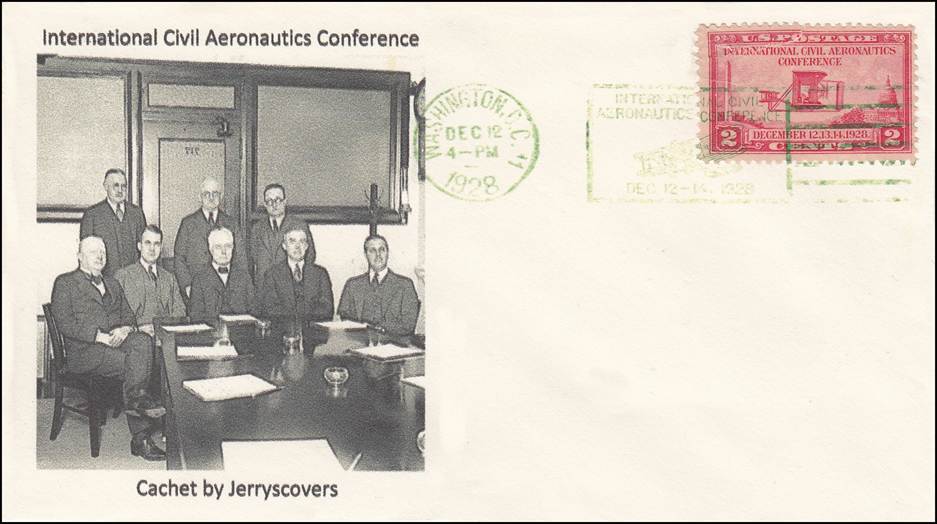
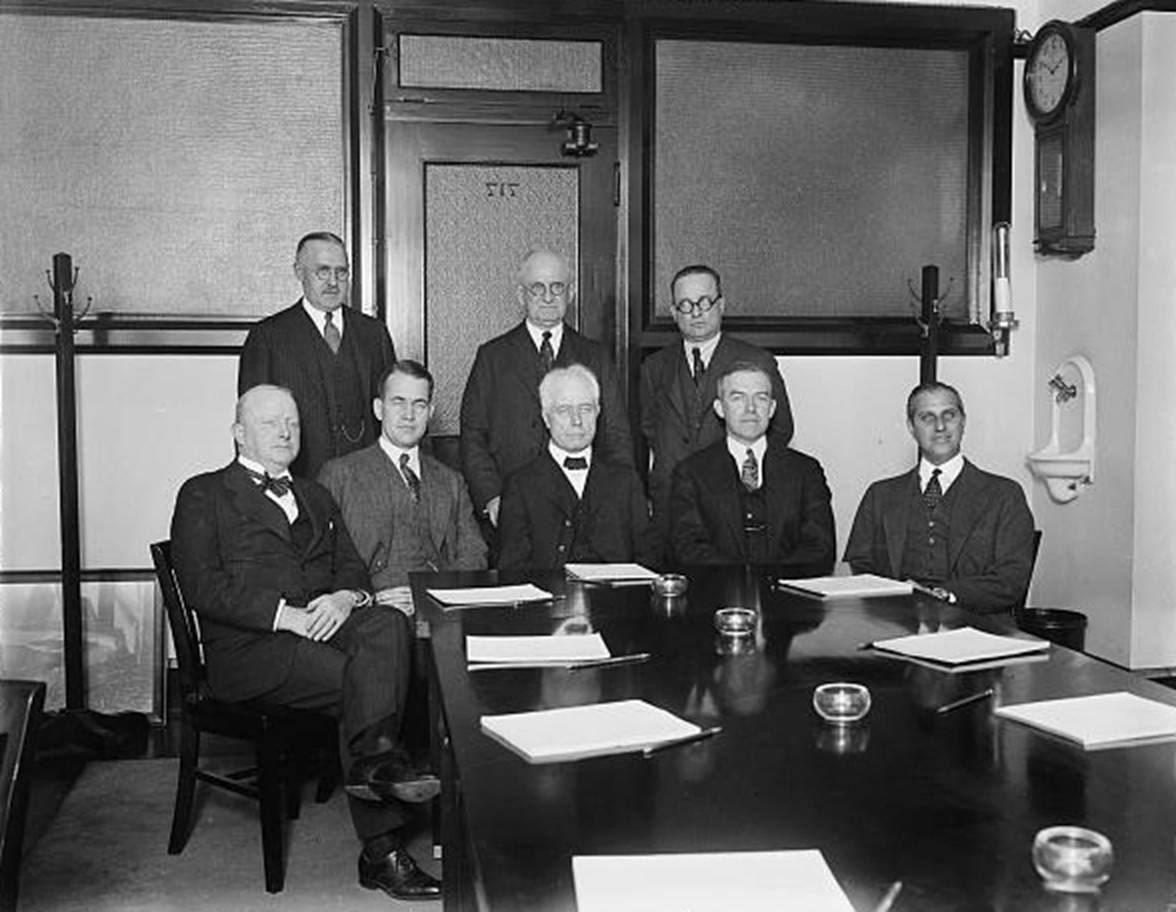
First Day Cover commemorating the International Civil Aeronautics Conference. Cachet is a one-of-a-kind add-on by Jerry's Covers and shows the US Delegation to the International Civil Aeronautics Conference; see the original picture below the first day cover. Sitting left to right: Nelson T. Johnson, Assistant Secretary of State; Edward P. Warner, Assistant Secretary of the Navy; Wm. F. Whiting, Secretary of Commerce; P. MacCracken, Assistant Secretary of Commerce; Harry F. Guggenheim, president of Guggenheim Fund for promotion of aeronautics. Standing left to right: Lester D. Gardner, president Aeronautical Chamber of Commerce; Joseph S. Ames, Chairman, National Advisory Committee for Aeronautics; and W.I. Glover, Assistant Postmaster General.
|
||
|
|
||
|
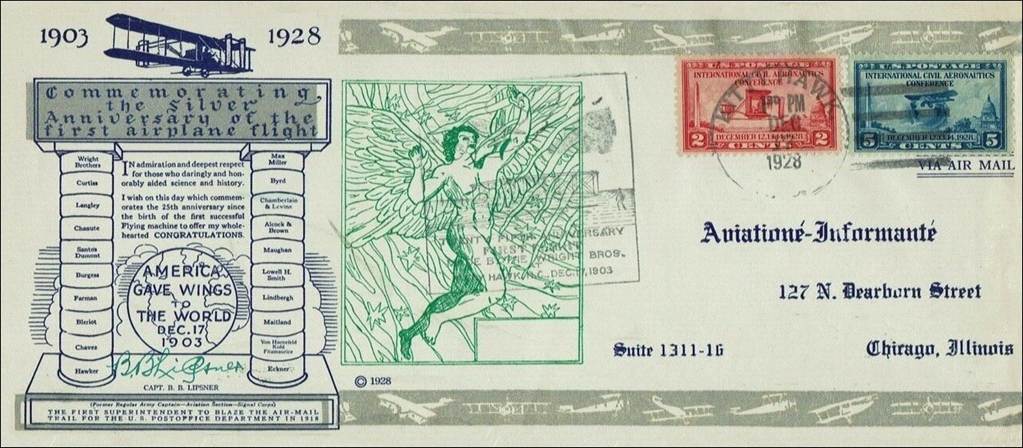
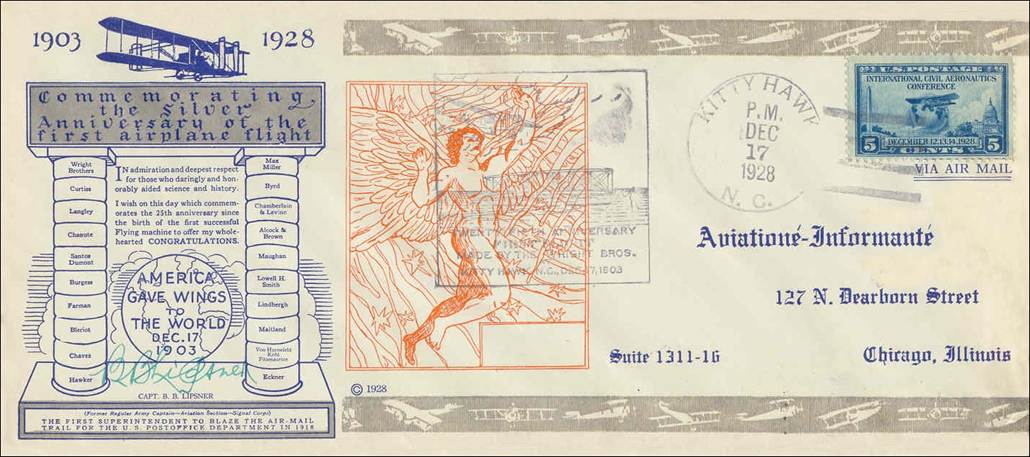
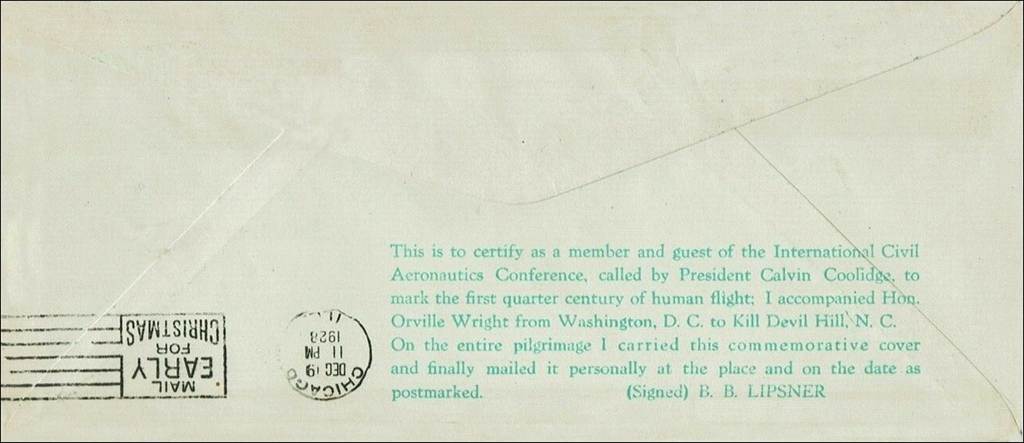
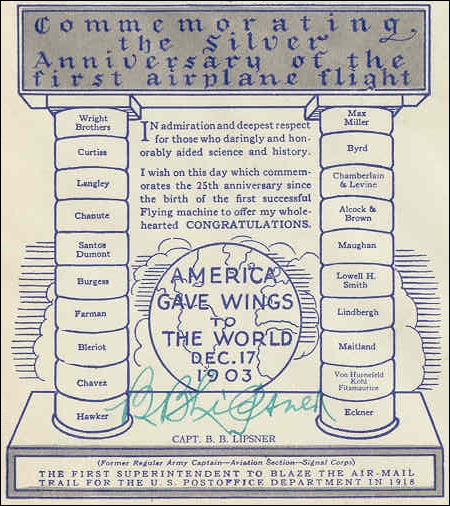
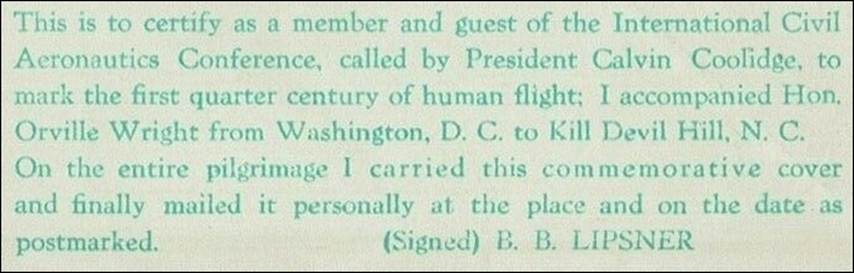
Commemorative covers (17 December 1928 cancel) personally signed by Capt. Benjamin B. Lipsner, America's first Air Mail Superintendent in 1918, members and guests of the International Civil Aeronautics Conference, who accompanied Orville Wright from Washington, D.C. to Kill Devil Hill, N.C. The printed cachet at left and rubberstamped cachet in the centre commemorate the 25th Silver Anniversary of the "First Flight by the Wright Brothers". The front is printed in three inks: blue for the leftmost cachet and address, silver for the shading in the cachet and strips at the top and bottom outlining airplanes, and green (or orange) for the allegory of flight. The cachet at left bears a tribute to the Wright Brothers by Captain B.B. Lipsner. There is also a black hand stamp at the front centre that reads: “Twenty-Fifth Anniversary First Flight made by the Wright Bros. at Kitty Hawk, N.C., Dec. 17, 1903”. Beyond the attractiveness of this cover below, is the content of the cachet: two columns made up of the names of flight and airplane pioneers. Over half of them have been honoured on stamps issued by the United States or other nations for their contributions to the development of aeronautics. On the back is a green hand stamp that reads: “This is to certify as a member and guest of the International Civil Aeronautics Conference, called by President Calvin Coolidge, to mark the first quarter-century of human flight, I accompanied Hon. Orville Wright from Washington, D.C., to Kill Devil Hill, N.C. On the entire pilgrimage, I carried this cover and finally mailed it personally at the place and on the date as postmarked. (Signed) B.B. Lispner.”
|
||
|
|
||
|
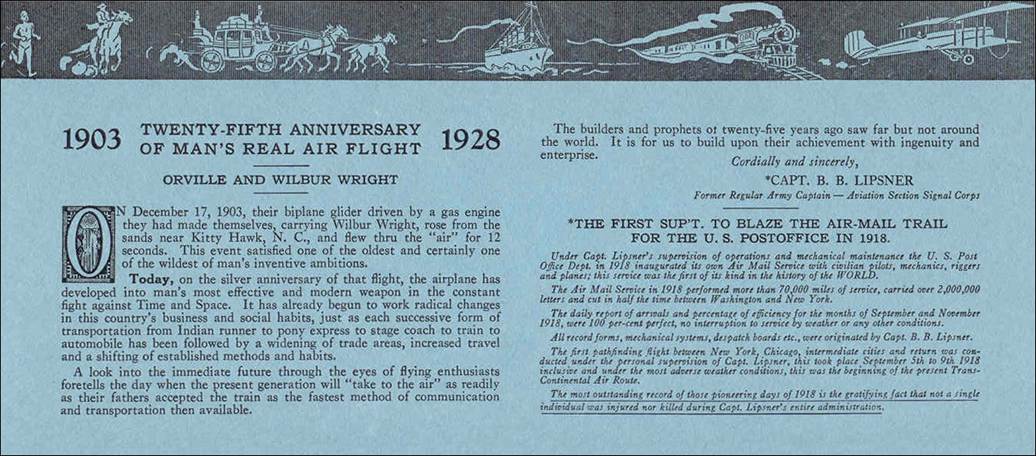
Insert of the above covers. Captain Lipsner tells about the event.
|
||
|
|
||
|
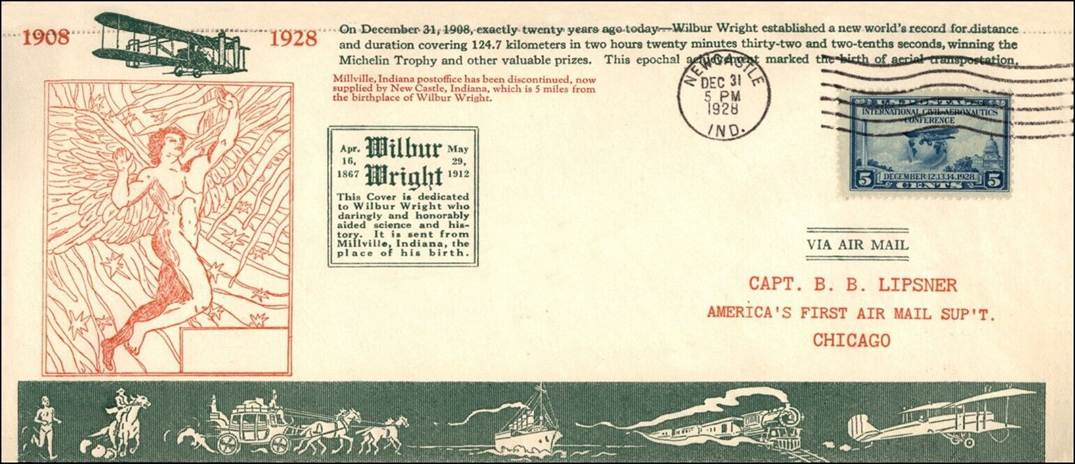
Cover commemorating the 20th anniversary of the new world record for distance and duration won by Wilbur Wright in 1908, receiving the first Michelin Trophy and other valuable prizes. This epochal achievement marked the birth of aerial transportation. Note the similarities of this cover with preceding covers. The International Michelin Trophy was a prize given over eight years by Michelin et Cie, the French tire company, to the Aéro-Club de France, to award on behalf of the Fédération Aéronautique Internationale. The winner would be the pilot who by sunset, 31 December of each year, held the record which had been established by the Aéro-Club.
|
||
|
|
||
|
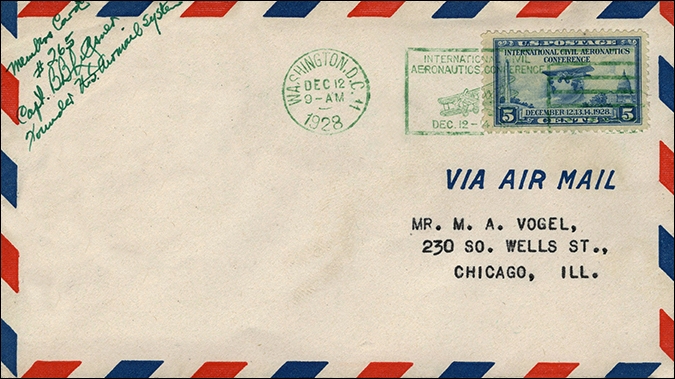
First day airmail cover (front and back) sent by Conference attendee Benjamin Lipsner, a retired army captain and pivotal figure in early U.S. airmail. His Delegate’s number was 265.
|
DUE TO SPACE LIMITATIONS, THE REST OF THIS PAGE CAN BE VIEWED BY CLICKING
ON THE FOLLOWING LINK: PAGE 2.