STAMP ISSUES RELATED TO ICAO (1994-1995)
Uganda - 50th Anniversary of ICAO
|
Issue date: 14/11/1994
|
|||||||||||||
|
|
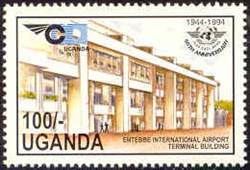
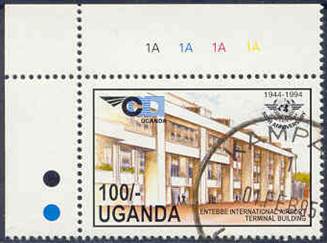
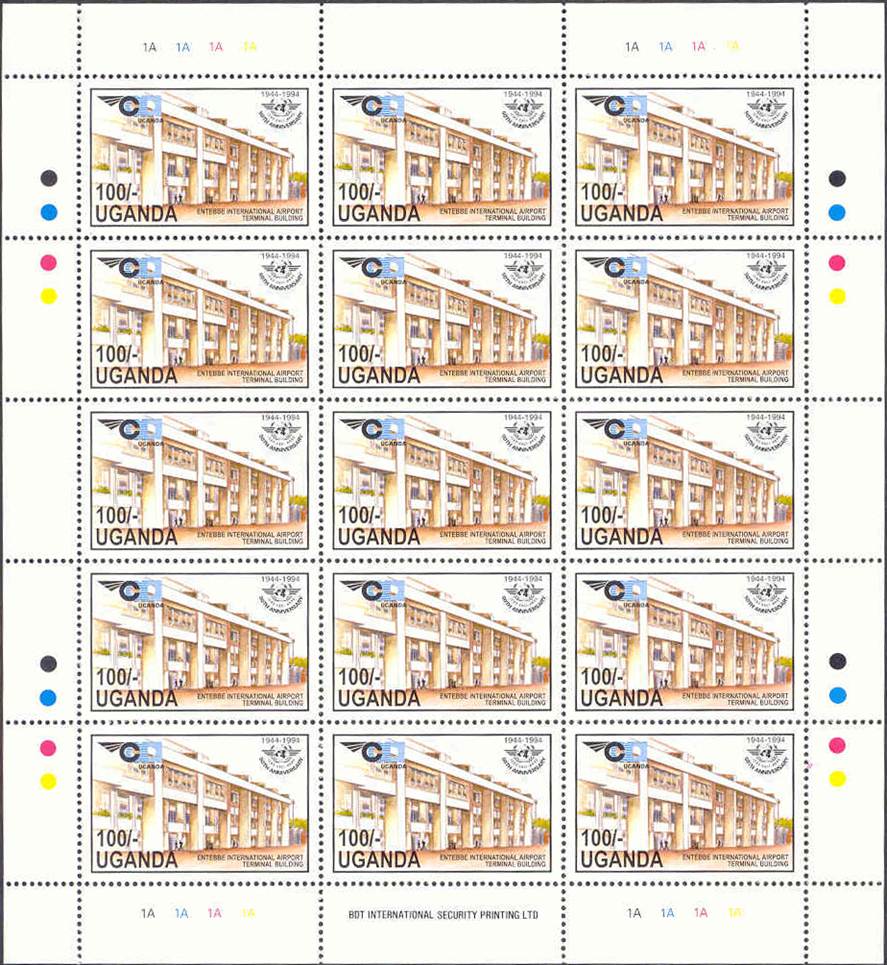
Depicts the impressive and efficient terminal building at the Entebbe International Airport, just outside the capital city of Kampala, and the ICAO logo. |
||||||||||||
|
|
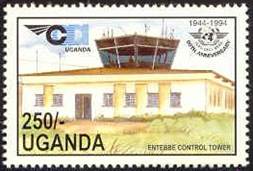
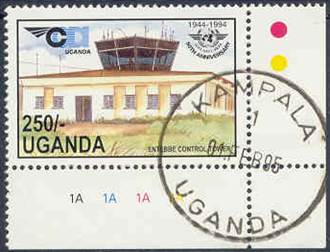
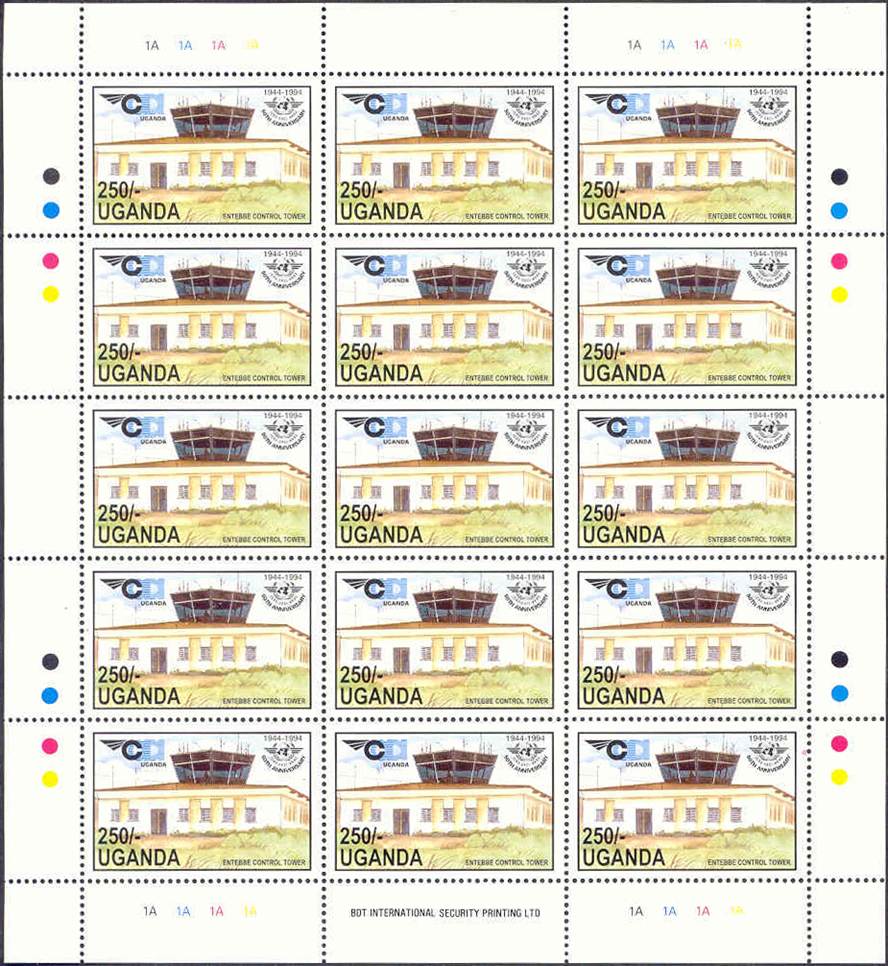
Depicts the control tower at the Entebbe International Airport (tower above roof of airport) and the ICAO logo. The air traffic controllers work in this Control Tower to ensure the safety of all travel across the skies of Uganda. |
||||||||||||
|
|
|
Cancelled to Order (CTO). |
|||||||||||
|
Full sheets of 15 stamps.
|
|||||||||||||
|
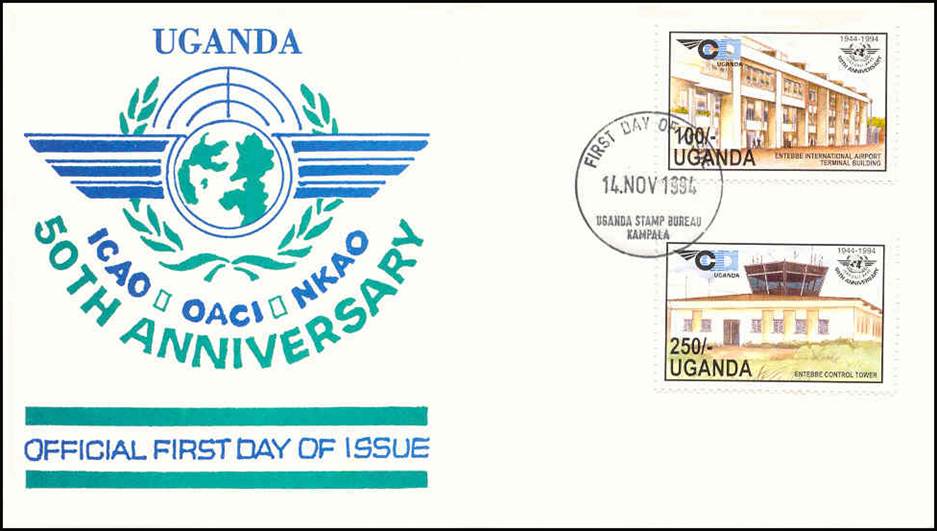
Official First Day Cover with unusual design of the ICAO emblem in the cachet. Two types of cancels by the Uganda Stamp Bureau. Note that the acronym of the Organization should be written ИКАО instead of NKAO.
|
|||||||||||||
|
Private FDC:
The above cover celebrates Anniversaries and Events held/commemorated in Uganda in 1994 (see cachet from left to right, top to down):
|
|||||||||||||
|
Background: The two stamps of this issue highlight important aspects of the international airport in Entebbe, a short distance away from the capital of Kampala.
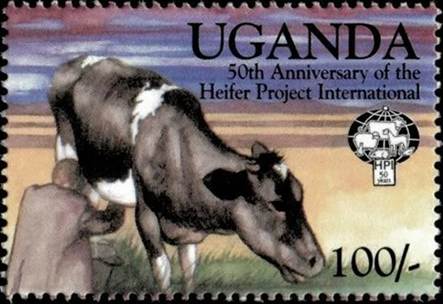
Details about the Heifer Project International: In 1936, as a Church of the Brethren relief worker, Dan West (USA, 1893–1971) travelled to Spain in order to serve as a relief worker following the Spanish Civil War (1936-1939). Sitting under an almond tree one day, he also felt the challenge of feeding hungry people as ubiquitous images of poverty and deprivation surrounded him daily. His project’s core idea, born from the experience providing milk rations, was to give families pregnant heifers that would provide milk for years and could then pass on the first female calf to another family in need, i.e., this establishment of a self-sustaining cycle of aid and empowerment.
On his return to the US in 1938, Dan West took the idea to his neighbours and church resulting in a volunteer Heifers for Relief Committee in 1939. It gained approval as a national project in June 1942; in January 1943, it was renamed Heifer Project Committee. The first shipment of 17 heifers left for Puerto Rico on 14 July 1944. On that day, one man’s vision became a reality. The first cows were named "Faith", "Hope", and "Charity", and recipient families had to promise that they would donate the first female calf to another poor family. Later known as The Heifer Project, its continuing process would geometrically multiply animals worldwide as hundreds of cattle produced thousands of calves, and those thousands would likewise produce millions. Following the death of Dan West in 1971, the project was incorporated as Heifer Project International (HPI). Heifer International started working in Uganda in 1982. |
|||||||||||||